



Colombia Votes for New Congress as Security Fears and Political Tensions Loom
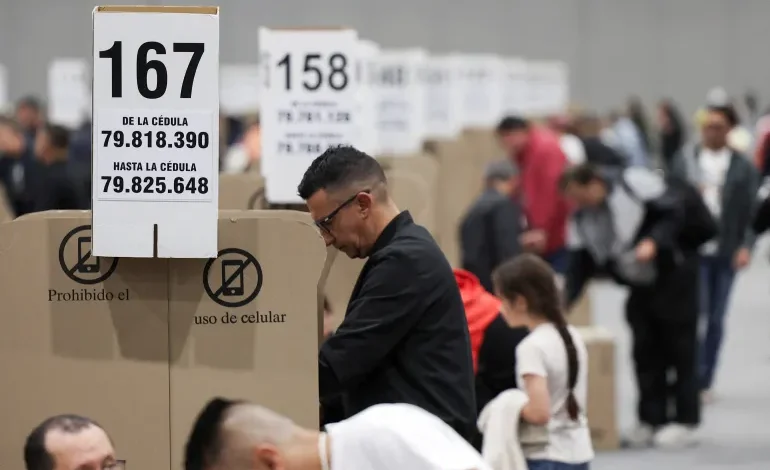

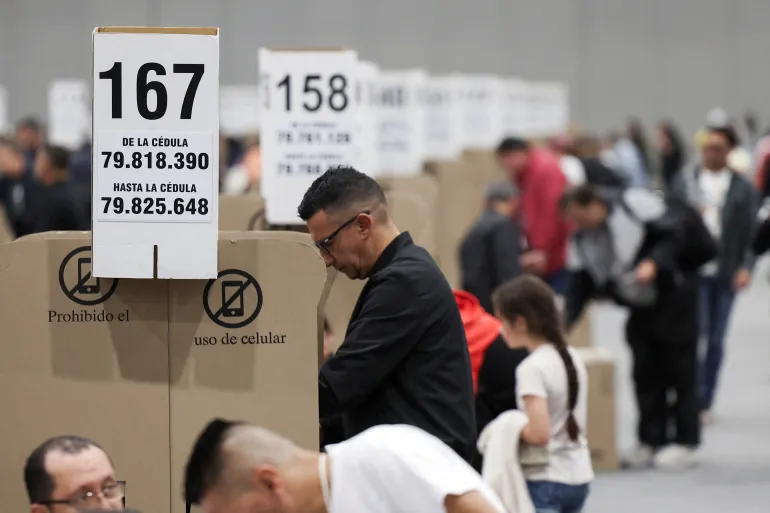
Colombians headed to the polls on Sunday to elect a new Congress and narrow down the field of presidential contenders, voting under tight security as the country grapples with the risk of political violence and mounting international pressure.
Roughly 41.2 million eligible voters were expected to participate, choosing from more than 3,000 candidates competing for 102 Senate seats and 182 seats in the House of Representatives.
The vote also serves another purpose: selecting presidential candidates for Colombia’s three main political blocs, the left, the centre-left and the right. The winners of those internal contests will advance to the presidential election, whose first round is scheduled for May 31.
Some of the country’s best-known figures will not appear in the primaries themselves. Leading contenders such as leftist Ivan Cepeda, right-wing candidate Abelarda de la Espriella and centrist Sergio Fajardo are sitting out the internal vote but are still expected to compete in the presidential race later this year.
For many voters, the election represents a moment of political decision in a country still wrestling with armed violence and political polarization.
Federico Rodriguez, a 32-year-old business administrator who cast his vote in the capital Bogota, described the process as a crucial step for the country.
“The most important thing is for Colombia to decide its future and for the results to be respected,” Rodriguez told the Reuters news agency.
Security concerns have hovered over the election throughout the campaign. Large rural areas remain under the influence of armed groups, and authorities deployed more than 126,000 law enforcement officers across the country to secure polling stations.
Even before voting began, tensions surfaced along Colombia’s border with Venezuela. Defence Minister Pedro Sanchez said authorities had detected a group of at least 2,400 people allegedly attempting to cross the border through an illegal route while heading to vote, despite official border closures during the election period.
“They are doing so illegally,” Sanchez said, adding that “This is a clear case of a crime being committed.”
President Gustavo Petro also raised alarms over the situation, describing it as “large-scale fraud” and an “avalanche of illegal voting”. He urged local authorities in the border city of Cucuta to investigate.
“Sixty buses have been detained, and the company responsible for bringing massive numbers of voters from across the border must be investigated immediately,” Petro wrote on X.
The election is unfolding near the end of Petro’s presidency. The left-wing leader will leave office in August and is constitutionally barred from seeking a second term.
During his time in office, Petro has often struggled to push legislation through Congress. Unlike previous administrations that tended to enjoy legislative alignment, his government frequently faced resistance from lawmakers, making Sunday’s vote particularly significant for shaping the next political balance of power.
Petro himself has also voiced concerns about the integrity of the election system, questioning the software used in the vote-counting process. He pointed to the 2022 legislative election, when his Historic Pact coalition gained more than 390,000 additional votes after a recount.
Beyond domestic politics, Colombia’s next leadership will inherit a complicated relationship with Washington. Petro’s presidency has been marked by repeated clashes with US President Donald Trump, whose administration has increased pressure on governments across Latin America.
The two leaders traded sharp accusations earlier in their relationship. Trump called Petro a “sick man” and an “illegal drug leader”, accusing Colombia of allowing narcotics to flow into the United States.
Their feud began after Petro initially refused to accept US deportation flights carrying Colombian migrants, citing alleged human rights concerns. Trump framed the refusal as a threat to US “national security” and threatened sanctions on Colombian imports. Petro eventually reversed course.
Tensions did not end there. Petro later condemned US attacks on boats in the Caribbean and Pacific, comparing the strikes to murder. He also criticized a US military operation in Venezuela aimed at capturing then-President Nicolas Maduro, describing it as “kidnapping”.
Despite the strained relationship, the two leaders met at the White House last month, both describing the talks as productive while acknowledging that significant disagreements remain.
Whoever emerges as Colombia’s next president will likely face the same geopolitical pressures. Trump has intensified his focus on South and Central America, increasing economic pressure on Cuba while continuing military cooperation with Israel in the war against Iran.


The latest news in your social feeds
Subscribe to our social media platforms to stay tuned