
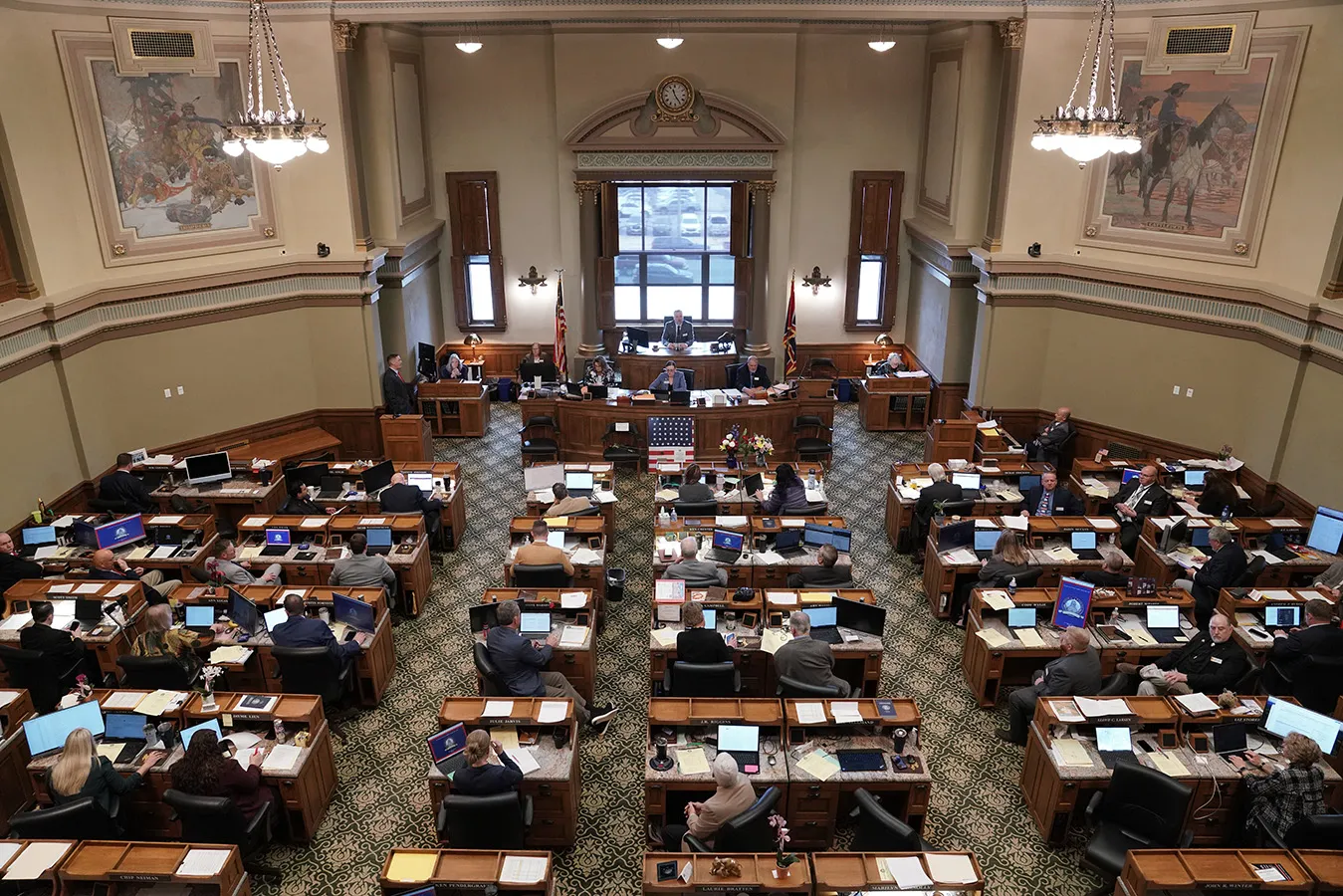

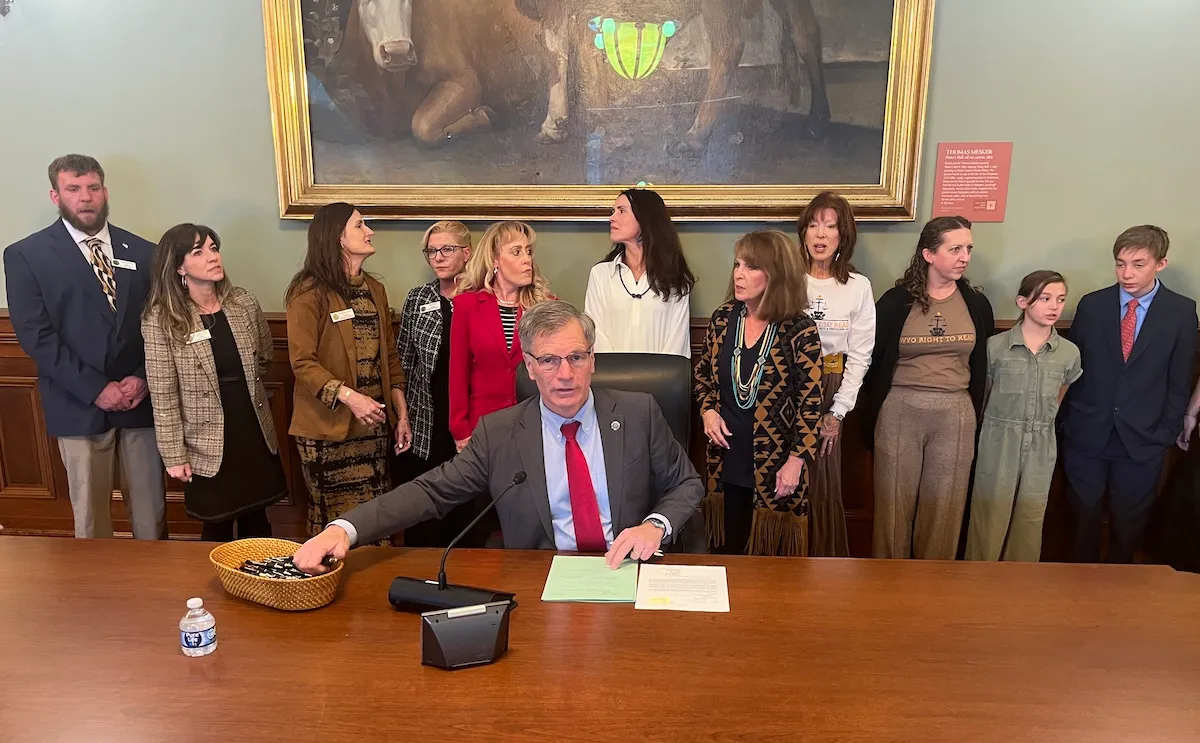



Gov. Mark Gordon signed Senate File 59 into law Friday, establishing an evidence-based K-12 literacy program that advocates say represents a monumental shift in how Wyoming teaches children to read—and a long-overdue victory for struggling students.
The bill, nearly a decade in the making, aims to ensure every student develops strong language and literacy skills through systematic instruction, intervention and professional development. It will replace outdated teaching methods and bring all Wyoming districts into alignment with proven approaches.
“Reading is the foundation for every child’s success in school and in life,” Gordon said in a statement. “Senate File 59 keeps the focus where it should be, on Wyoming students.”
The push for reform was driven by parents, educators and advocates who spent years lobbying lawmakers, often sharing personal stories of children who fell through the cracks. Retired reading specialist Gay Wilson recalled teaching a Cheyenne high school junior who read at a second-grade level—a student who had received extra support for years but never “the correct reading instruction.”
“Here’s a kid who’s going to graduate this year, and he’s going to get a diploma, but he’s probably going to be reading at a third-grade level,” Wilson said. “It’s common across the state.”
The need is clear. In 2024, only 36% of Wyoming fourth graders and 29% of eighth graders scored at or above proficient in reading on national tests. Thirty-two percent of fourth graders performed below basic levels—a slight increase from 2022.
The bill’s journey through the Legislature was not smooth. While it cruised through the Senate, it faced House resistance from lawmakers concerned about teacher training burdens and local control. Rep. Landon Brown, R-Cheyenne, urged passage after seven years of interim study: “Ladies and gentlemen, it is about the kids.”
Rep. Steve Johnson, R-Cheyenne, who worked in a trade requiring technical manuals, noted a “disproportionate number of young men who had high school diplomas, who were practically functionally illiterate.”
The House ultimately passed an amended version, and the final bill received 76 ayes and 15 nays across both chambers.
For advocates like Annie McGlothlin of WYO Right to Read, whose dyslexic grandchild sparked her involvement, the signing is just the beginning. “You might think passing the law would be the end, but really it is the beginning,” she said.
Megan Hesser, who began lobbying in 2020, couldn’t help but think of students lost along the way. “How many kids have we lost and left behind in the six years it’s taken us to get here?” she asked.


The latest news in your social feeds
Subscribe to our social media platforms to stay tuned