
Iran Names Mojtaba Khamenei as Supreme Leader After Father’s Assassination


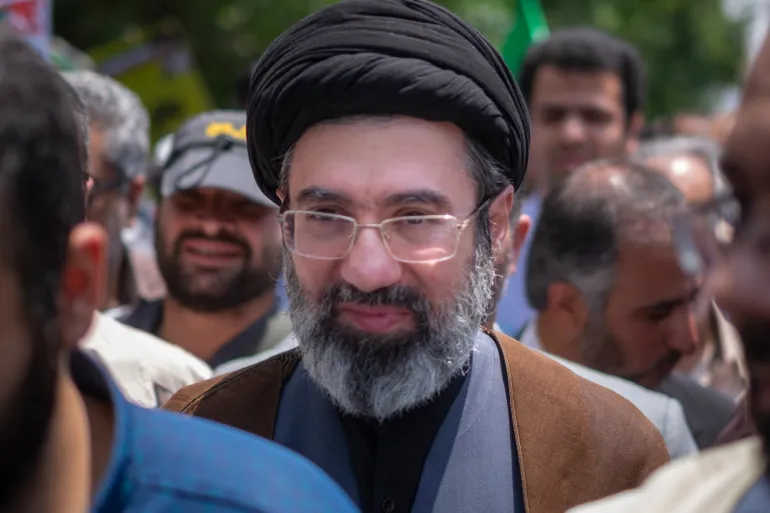
Iran’s clerical establishment has moved quickly to close ranks after the killing of Ayatollah Ali Khamenei, naming his son Mojtaba Khamenei as the country’s new supreme leader just over a week after a joint United States-Israeli strike killed the longtime ruler of the Islamic Republic.
The 56-year-old was formally selected by clerics on Sunday, placing him at the center of the most serious crisis Iran has faced since the establishment of the Islamic Republic 47 years ago. The war triggered by the strikes on Tehran has already spread across the region, forcing Iran’s leadership to consolidate power rapidly.
Iran’s political and military leadership signaled immediate support. The Islamic Revolutionary Guard Corps (IRGC), key state institutions and the armed forces all pledged backing to the new leader within hours of the announcement.
Ali Larijani, secretary of Iran’s Supreme National Security Council and currently responsible for managing the country’s wartime security strategy, urged unity around the appointment. Parliament Speaker Mohammad Bagher Ghalibaf echoed that line, describing loyalty to the new leader as a “religious and national duty”.
Mojtaba Khamenei enters the role with considerable influence but little formal political experience. He has never run for office or been subjected to a public vote. Still, for decades he has operated inside the inner circle of power surrounding his father, building close relationships with senior figures in the IRGC and conservative clerical networks.
In recent years, he had increasingly been mentioned as a possible successor. His appointment now appears to confirm that the more hardline factions within Iran’s political establishment remain firmly in control as the war with the United States and Israel enters its second week.
Analysts say the appointment signals continuity more than transformation. Rami Khouri, a distinguished public policy fellow at the American University of Beirut, said Khamenei’s rise indicates that the Iranian system is attempting to demonstrate resilience rather than rethink its political course.
He described the selection as “continuity”, noting that it remains unclear whether the new leader would eventually pursue negotiations once the war subsides.
Either way, he said, the decision carries a strong symbolic message.
Iran is “telling the Americans and Israelis, ‘You wanted to get rid of our system? Well … this is a more radical person than his father who was assassinated,’” he said.
Inside Iran’s religious leadership, the reasoning behind the choice was framed in ideological terms. Heidari Alekasir, a member of the Assembly of Experts responsible for selecting the supreme leader, said the late Khamenei himself had advised that Iran’s top leader should “be hated by the enemy” rather than praised by it.
“Even the Great Satan [US] has mentioned his name,” the cleric said, referring to earlier comments by US President Donald Trump that Mojtaba Khamenei would be an “unacceptable” choice.
Washington and Israel have already signaled that any successor to the late leader could remain a military target. Israel’s military previously warned that “we will not hesitate to target you”.
Trump reinforced that pressure on Sunday, suggesting that Iran’s leadership ultimately cannot survive without Washington’s approval.
“He’s going to have to get approval from us,” Trump told ABC News. “If he doesn’t get approval from us, he’s not going to last long,” Trump said.
Iranian officials have dismissed the idea that outside powers could influence the selection process. The Assembly of Experts — an 88-member clerical body responsible for appointing the supreme leader — said it “did not hesitate for a minute” in reaching its decision despite what it called “the brutal aggression of the criminal America and the evil Zionist regime”.
Before the announcement, members of the body had already signaled that a majority consensus had been reached, though the candidate’s name was not publicly revealed. One member said at the time, “The path of Imam Khomeini and the path of the martyr Imam Khamenei has been chosen. The name of Khamenei will continue.”
Mojtaba Khamenei was educated in the conservative seminaries of Qom, the main center of Shia theological scholarship in Iran, and holds the clerical rank of hojjatoleslam — a mid-level clerical position.
His father ruled Iran for 37 years, succeeding Ayatollah Ruhollah Khomeini, the leader of the 1979 Islamic Revolution. Ali Khamenei was killed in a US-Israeli strike on Tehran on February 28, an attack that effectively opened the current war and triggered a wave of instability across the Middle East.
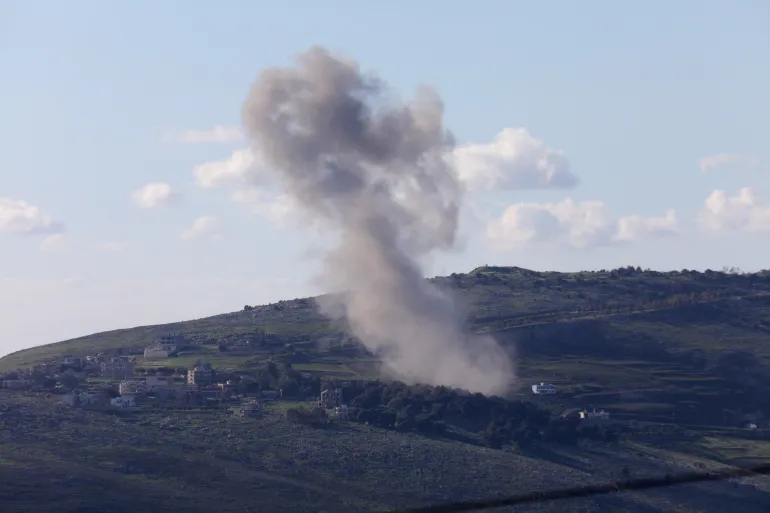
The conflict has already escalated sharply. Israeli officials have openly warned that any new Iranian leader could also become a target, while Trump has suggested that the war might only end once Iran’s military and leadership are dismantled.
At the same time, Iranian politicians have responded with open defiance. Parliament Speaker Mohammad Bagher Qalibaf mocked Washington’s demands in a message posted on X.
“The fate of dear Iran, which is more precious than life, will be determined solely by the proud Iranian nation, not by [Jeffrey] Epstein’s gang,” he wrote.

The latest news in your social feeds
Subscribe to our social media platforms to stay tuned