




War Shock: Iran Conflict Sends Oil Prices Surging, Threatens Global Economy

The United States–Israeli war on Iran is already pushing fuel prices higher around the world, and economists warn the impact could last weeks or even months, even if the fighting ends quickly.
Eight days into the conflict, energy markets are moving beyond fear of geopolitical escalation and beginning to deal with real disruptions: damaged infrastructure, halted production and rising risks to shipping routes. For global consumers and businesses, that combination could mean sustained pressure on fuel costs.
The situation also creates a political challenge for US President Donald Trump as the country approaches midterm elections. Energy prices are highly visible to voters, and wars abroad tend to complicate domestic political messaging.
Global oil prices have already jumped more than 25 percent since the war began, driving up fuel costs across multiple economies.
In the United States, the national average price of petrol reached $3.41 per gallon ($0.9 a litre) on Saturday, according to the American Automobile Association (AAA). That represents an increase of $0.43 in just one week.
Financial institutions say the pressure may not be over yet. Goldman Sachs has warned that oil prices could exceed $100 per barrel if shipping disruptions persist.
US crude settled just under $91 per barrel on Friday, marking the largest weekly gain on record in data going back to 1983, another sign that markets expect continuing volatility.
“The market is shifting from pricing pure geopolitical risk to grappling with tangible operational disruption, as refinery shutdowns and export constraints begin to impair crude processing and regional supply flows,” analysts at JP Morgan said earlier this week, according to Reuters.
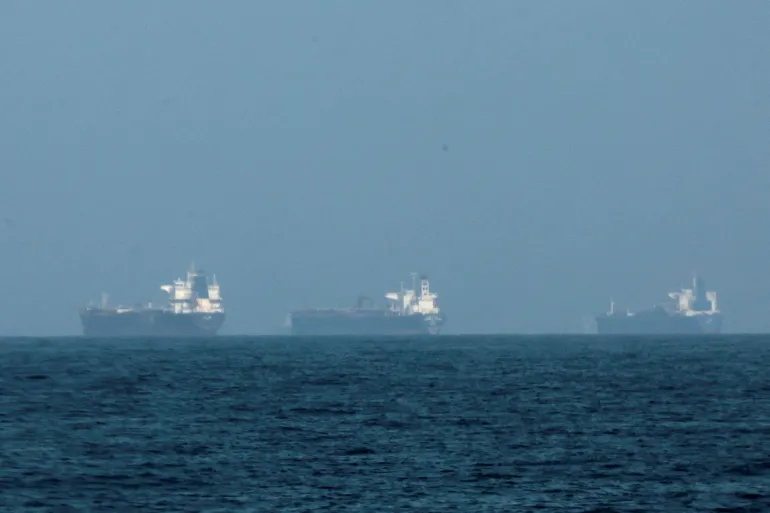
At the centre of the disruption is the Strait of Hormuz, the narrow maritime corridor between Iran and Oman that serves as one of the world’s most important energy chokepoints.
Iranian forces have targeted ships moving through the strait and struck energy infrastructure across the region. The resulting security risks have forced producers to suspend shipments of large volumes of oil and gas.
Roughly a fifth of global crude and natural gas supply has been affected so far.
The shutdown of shipping routes has prevented major producers, including Saudi Arabia, the United Arab Emirates, Iraq and Kuwait, from exporting as much as 140 million barrels of oil to international markets. That amount equals about 1.4 days of total global demand.
Because more than 80 percent of world trade moves by sea, disruptions in such a critical waterway could have ripple effects well beyond the energy sector, increasing freight costs and slowing the delivery of goods.
Djibouti’s finance minister, Ilyas M. Dawaleh, warned that the war could hit developing economies particularly hard.
The fighting would “bring severe economic consequences for developing countries”, he said, adding that small states dependent on maritime trade “risk being pulled into deeper economic uncertainty as external shocks ripple across the region and #Africa”.
Egypt has also raised alarm about the economic impact. President Abdel Fattah el-Sisi said last week that the country’s economy was already in a “state of near-emergency” as inflationary pressures mount.
At the same time, the region’s oil and gas storage facilities are rapidly filling as exports stall.
According to analysts and industry sources cited by Reuters, storage capacity in the Gulf is approaching its limits, forcing oilfields in Iraq and Kuwait to reduce production. The United Arab Emirates may soon have to follow.
“At some point soon, everyone will also shut in if vessels do not come,” a source at a state oil company in the region told Reuters.
Even after the war ends, restoring normal output could take time. Amir Zaman, head of the Americas commercial team at Rystad Energy, said oilfields that are forced to shut down often require careful technical processes before production can resume.
“The conflict could be ended, but it could take days or weeks or months, depending on the types of fields, age of the field, the type of shut-in that they’ve had to do before you can get production back up to what it once was,” he said.
Meanwhile, direct attacks on energy infrastructure are adding to the disruption.
Iranian forces have targeted refineries and export terminals across the Gulf, forcing several facilities to shut down. Some sites have sustained damage and will require repairs before operations can restart.
Qatar has already declared force majeure on its natural gas exports following Iranian drone attacks earlier in the week. Industry sources told Reuters that returning to normal production levels could take at least a month.
The country accounts for about 20 percent of the world’s liquefied natural gas (LNG) supply, meaning the disruption could quickly affect global gas markets.
Saudi Arabia has also been hit. Saudi Aramco closed the major Ras Tanura refinery and crude export terminal after attacks, though the extent of the damage has not been publicly detailed.



The latest news in your social feeds
Subscribe to our social media platforms to stay tuned