

Trump Signals Sanctions Relief to Ease Oil Prices During Iran War
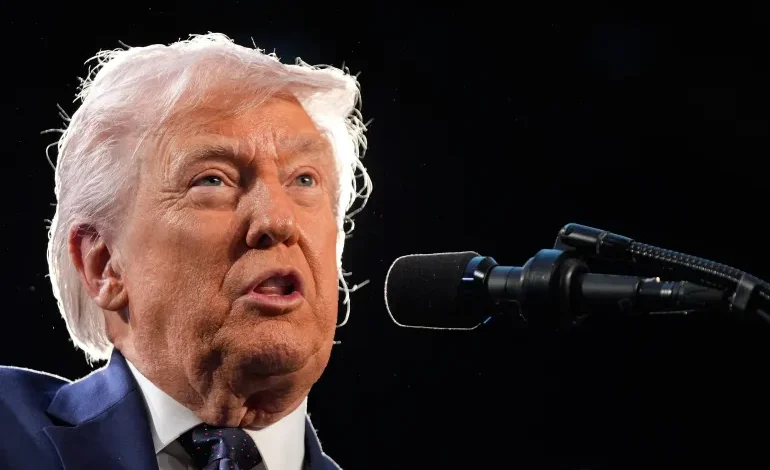

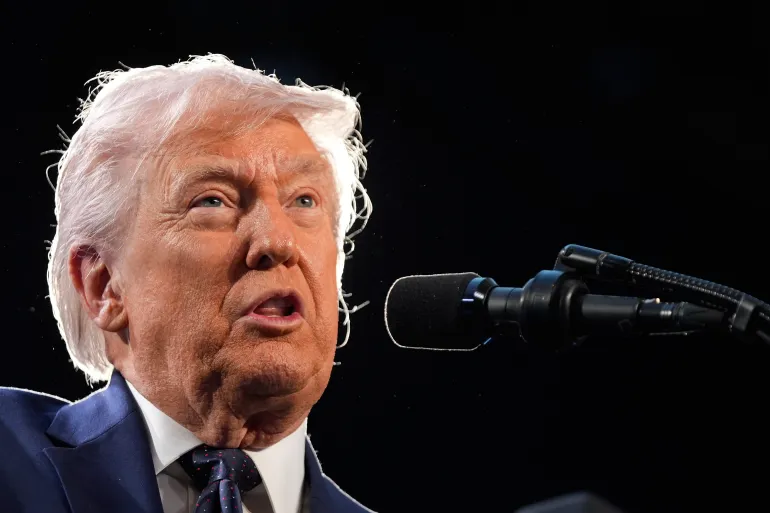
US President Donald Trump says his administration is prepared to lift some sanctions on oil-producing countries in an effort to keep global energy prices under control as the war involving the United States, Israel and Iran continues to rattle markets.
Speaking Monday at a news conference at his golf club in Miami, Florida, Trump suggested the move could help stabilize supplies after crude prices swung sharply in recent days.
“So, we have sanctions on some countries. We’re going to take those sanctions off until this straightens out,” Trump said.
“Then, who knows, maybe we won’t have to put them on – there’ll be so much peace,” he added.
Trump did not specify which countries could receive sanctions relief. The United States currently maintains major oil-sector sanctions on Russia, Iran and Venezuela.
According to Reuters, citing multiple unnamed sources, the administration has been considering easing restrictions on Russian oil exports as part of broader efforts to prevent a sustained surge in prices.
The Treasury Department has already taken a limited step in that direction. Last week, US Treasury Secretary Scott Bessent announced a 30-day waiver allowing Russian oil sales to India, reflecting concerns about tightening global supplies.
Energy markets have been highly volatile since the United States and Israel launched strikes on Iran on February 28. Oil prices briefly surged toward $120 a barrel before retreating below $90 during Monday’s trading.
After Trump’s comments, prices continued to ease somewhat, with Brent crude trading around $84 a barrel as of early Tuesday.
Still, the broader outlook remains uncertain. Since the start of the conflict, global oil prices have jumped as much as 50 percent compared with levels before the war.
A major driver of the volatility has been disruption around the Strait of Hormuz, one of the world’s most critical oil shipping routes. Iranian threats have effectively shut the strait, through which roughly one-fifth of global oil supply normally passes.
The disruption has forced major Gulf producers to cut output as tankers avoid the region and shipments pile up without routes to global markets.
Energy infrastructure across the region has also come under pressure. Israeli strikes have targeted Iranian oil facilities, while drone attacks — widely attributed to Iran — have hit oil and gas infrastructure in US-aligned Gulf states including Qatar, Saudi Arabia and Kuwait.
Analysts warn that if the Strait of Hormuz remains closed for an extended period, prices could climb sharply.
“I would say that it is possible for prices to reach new all-time highs in the coming weeks, but this is contingent on the Strait of Hormuz remaining closed in the weeks ahead,” said Homayoun Falakshahi, head of crude oil analysis at global trade intelligence firm Kpler.
“If the strait stays closed through April, then prices could continue to jump,” he added.
The energy shock is unfolding as Trump sends mixed signals about the trajectory of the war itself. During Monday’s news conference, the president said he expected the conflict to end “very soon”, while also insisting the military campaign would continue until Iran is fully defeated.
Those remarks echoed comments Trump made earlier in the day when addressing Republican lawmakers.
He said the United States had “already won in many ways, but we haven’t won enough”.
In a separate interview with CBS News, Trump described the military campaign as “very complete, pretty much” and said it was “very far ahead of schedule”.



The latest news in your social feeds
Subscribe to our social media platforms to stay tuned