

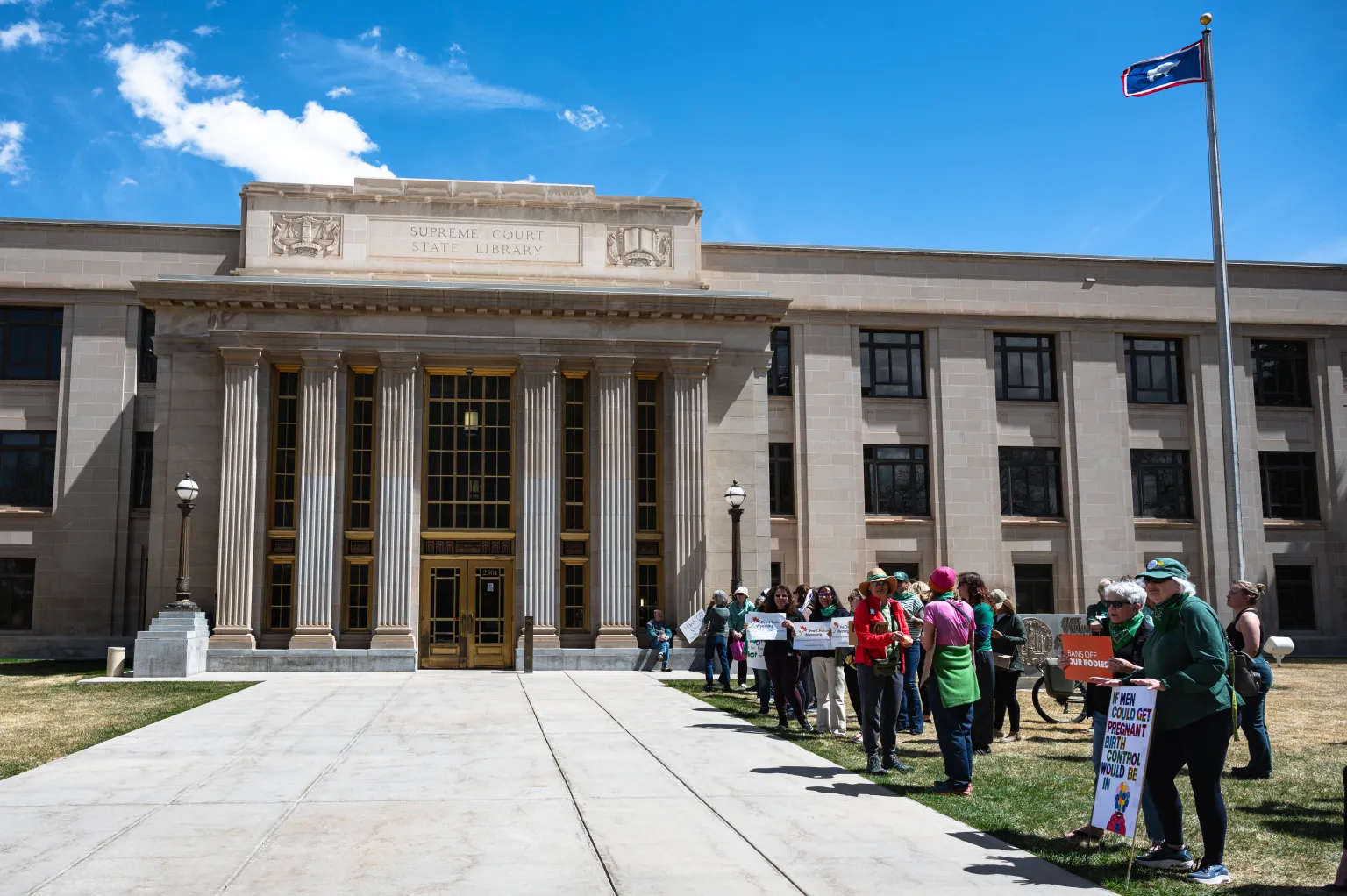
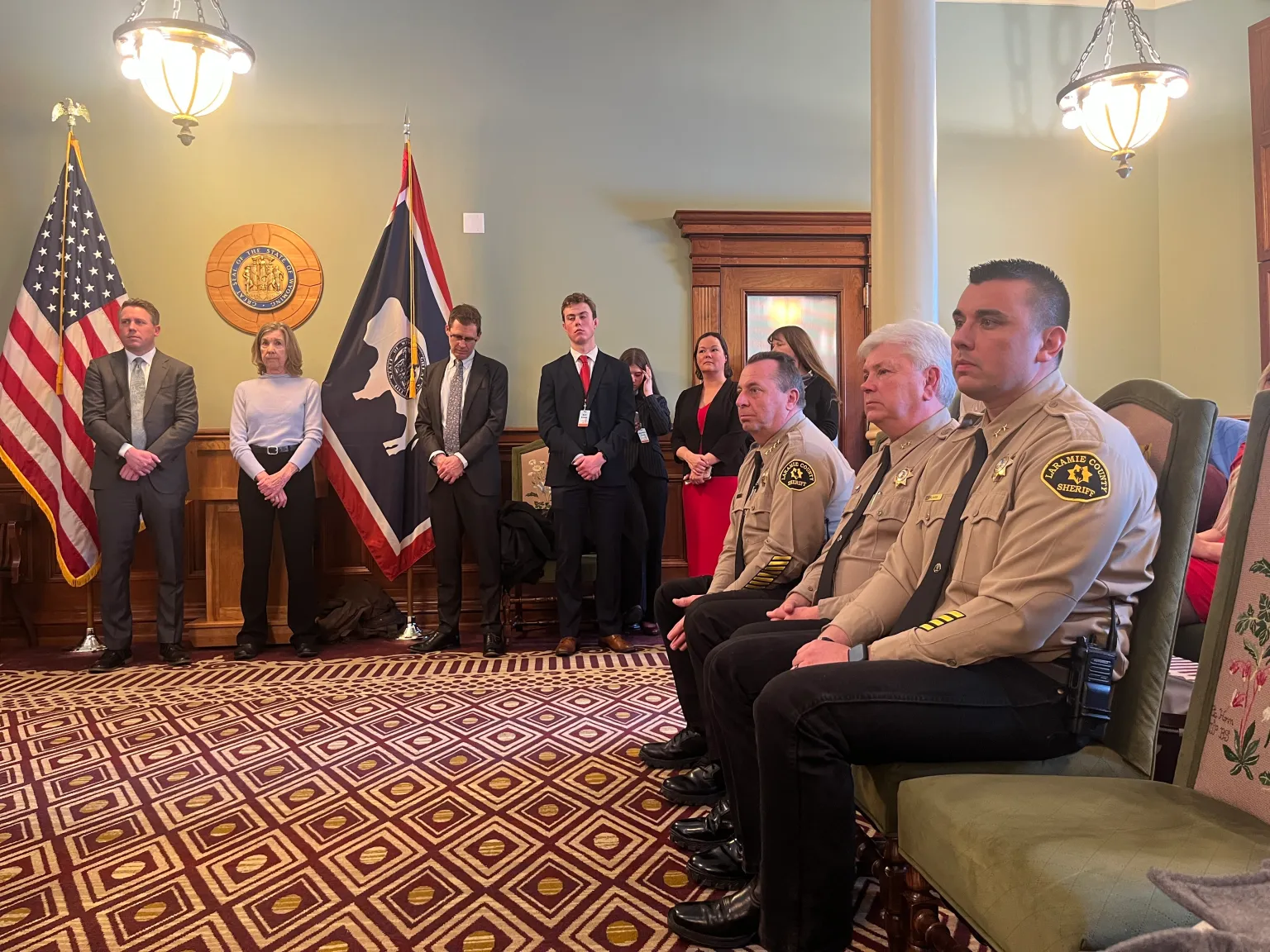



The same group that successfully defeated Wyoming’s previous abortion bans has opened a new legal battle, asking a judge to block the state’s newly signed “Human Heartbeat Act” just one day after Gov. Mark Gordon signed it into law.
The challenge, filed Tuesday, adds the new restriction to an existing lawsuit against two anti-abortion laws passed last year. The motion argues the Human Heartbeat Act “transgresses the constitutional guarantee” of individuals’ ability “to make health care decisions without interference from the government.”
The law bans abortion as soon as there’s a “detectable fetal heartbeat,” which can occur as early as six weeks—often before women know they’re pregnant. It went into effect immediately Monday when Gordon signed it, despite the governor’s warning that it would likely end up in court.
“Regrettably, this Act represents another well-intentioned but likely fragile legal effort with significant risk of ending in the courts rather than in lasting, durable policy,” Gordon wrote in his signing message.
Julie Burkhart, president of Wellspring Health Access—Wyoming’s lone abortion clinic and a plaintiff in the lawsuit—said shortly after the signing that she planned to challenge the law. Wellspring has served more than 899 abortion patients, according to the new filing.
The law requires health care providers to check for a fetal heartbeat before terminating a pregnancy, except in medical emergencies. Violations would be a felony punishable by up to five years in prison, a $10,000 fine, and loss of professional license.
The legal challenge argues the law provides no “workable definition” of “detectable fetal heartbeat” or “medical emergency,” leaving doctors uncertain and unwilling to provide care after six weeks. The filing also notes physicians consider “fetal heartbeat” a misnomer at six weeks, as embryos haven’t fully developed cardiac valves.
The law will also impact Chelsea’s Fund, another plaintiff that helps pay for abortion services, by increasing costs and potentially exposing the organization to criminal liability.
The new abortion restriction comes after January’s Wyoming Supreme Court decision striking down two 2023 abortion bans as unconstitutional. Central to those challenges is a 2012 constitutional amendment protecting people’s rights to make their own health care decisions.
If a judge approves, the challenge will join litigation against two other anti-abortion laws currently on hold—one requiring transvaginal ultrasounds with a 48-hour wait, and another requiring abortion facilities to be licensed as ambulatory surgical centers, which advocates say could force the state’s only clinic to close.



The latest news in your social feeds
Subscribe to our social media platforms to stay tuned