
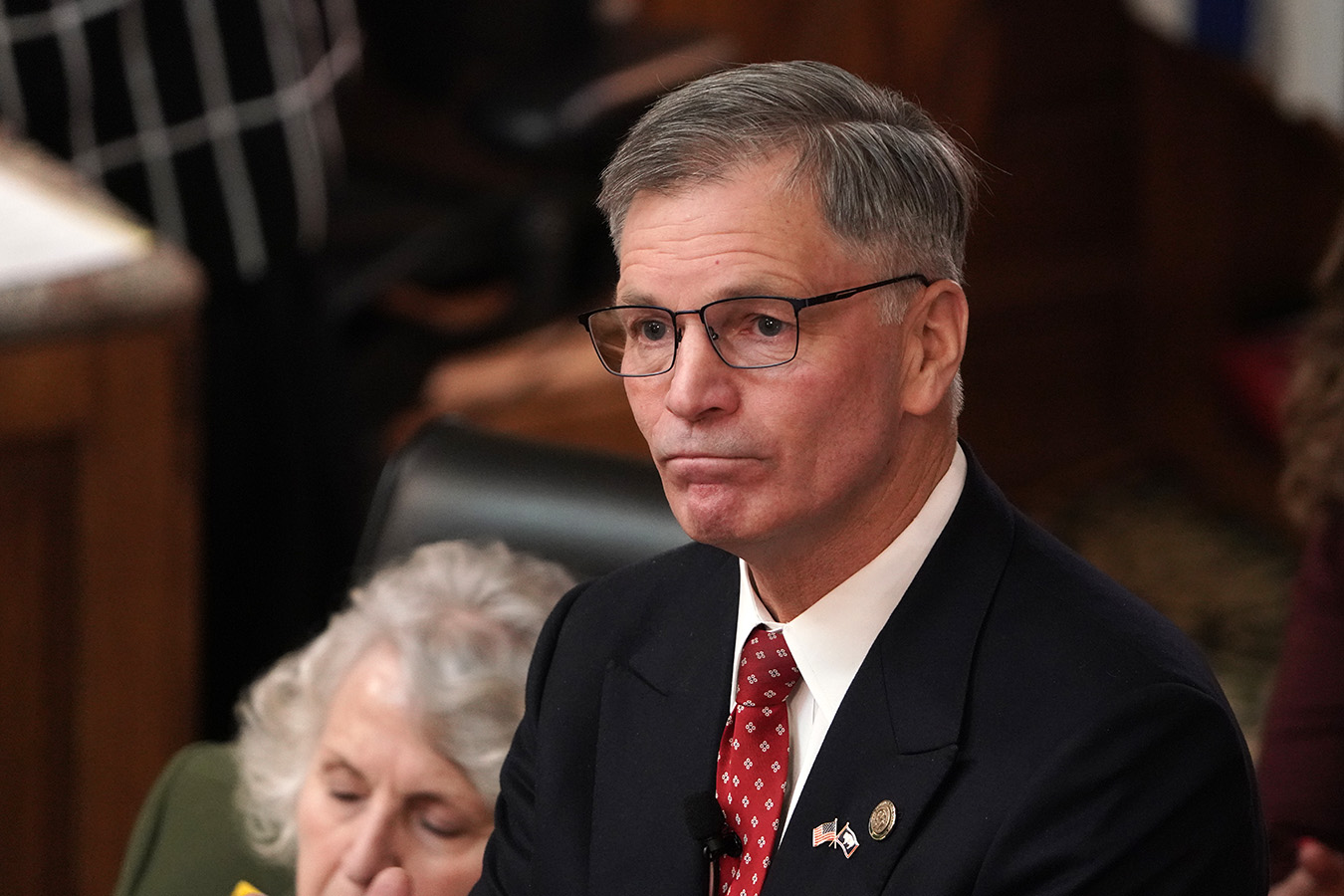



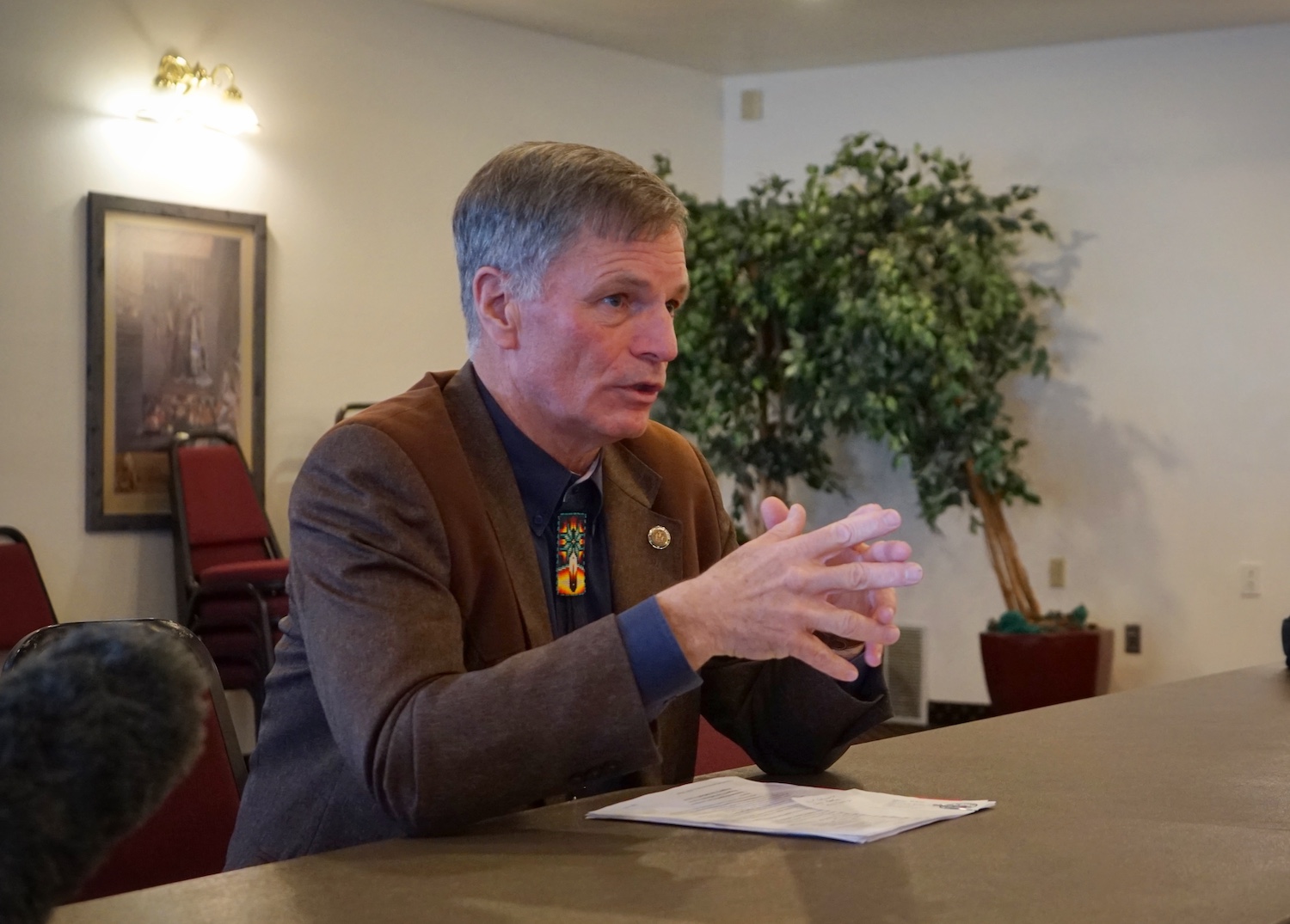


Gov. Mark Gordon announced Monday that he would let the Wyoming Legislature’s K-12 school funding recalibration bill become law without his signature, citing concerns that it disadvantages smaller districts, usurps local authority and fails to address essential operational funding needs.
Calling the legislation a “starting point,” Gordon explained in a letter to legislative leadership that he declined to sign Senate File 81 because of its restrictive “instructional silo” approach, which funnels funding specifically to classroom instruction. While acknowledging the approach is “well intentioned” to maximize resources in the classroom, Gordon argued that school districts require funding for operational needs beyond instruction.
“Efficient and effective school district leadership encompasses a wide range of operational endeavors, such as transportation, student activities, nutrition, school safety, and many others,” Gordon wrote.
His concerns echoed those of several representatives during floor debate. Rep. JD Williams, R-Lusk, brought multiple amendments seeking more flexible spending, warning that smaller districts would be disproportionately bound by categorical funding.
“I don’t think the goal is to cut the secretaries, the custodians, paraprofessionals or extracurricular programs, but these are the hard conversations that I am having with my districts that are a direct result of moving from the block grant model to siloed categorical funding,” Williams said.
But supporters argued the focus on classroom funding would ensure better teacher pay. Rep. Pepper Ottman, R-Riverton, said the bill came about partly “because we had the task and the assignment of making sure that some of our teachers were given the proper raises.” Rep. John Bear, R-Gillette, added that “the classroom is really where the money needs to be focused.”
Gordon warned that restricting funding to certain categories may force districts into “an untenable position of either running the operational aspect of the district at a deficit or severely diminishing the operations,” which could ultimately compromise the instructional benefit of better-paid teachers. He said these effects would be especially magnified in small, rural districts.
The governor also raised concerns about encroachment on local control. “I firmly believe that the best government is the one closest to the people. When the state government becomes overly prescriptive to school districts, local control is sacrificed,” he wrote.
Gordon noted he could not exercise line-item vetoes on the bill because it does not include multiple appropriations. He expressed hope his concerns would be addressed as the Select Committee on School Finance Recalibration continues its work.


The latest news in your social feeds
Subscribe to our social media platforms to stay tuned