


Putin Signals Russia Ready to Resume Energy Cooperation With Europe Amid Oil Shock
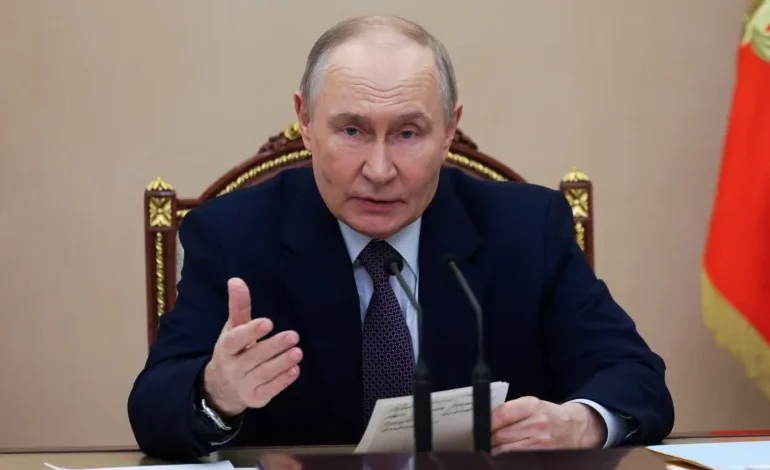

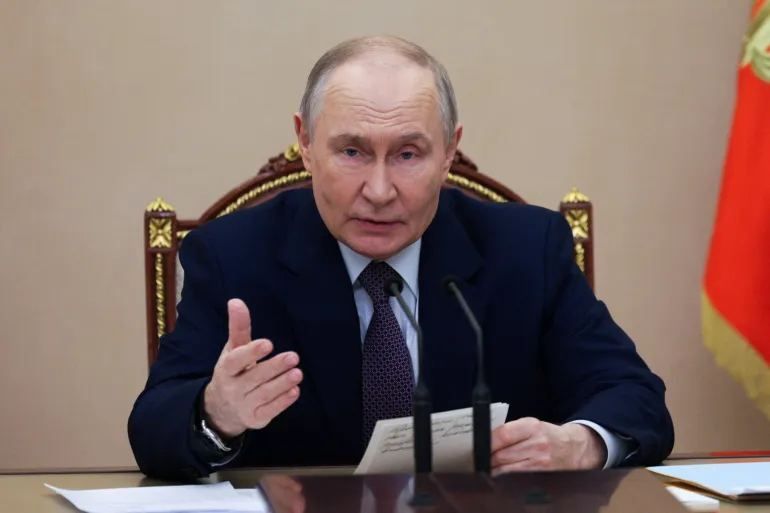
Russian President Vladimir Putin said Russia is prepared to resume oil and gas cooperation with Europe under certain conditions, as the war involving the United States, Israel and Iran disrupts global energy flows and pushes prices higher.
Speaking in televised remarks on Monday, Putin said Moscow remains open to renewed long-term energy partnerships with European buyers, despite the sharp reduction in trade that followed sanctions linked to the Ukraine conflict.
“If European companies and European buyers suddenly decide to reorient themselves and provide us with long-term, sustainable cooperation, free from political pressures, free from political pressures, then yes, we’ve never refused it. We’re ready to work with Europeans too,” Putin said during a meeting with government officials and executives from Russia’s major oil and gas companies.
His comments come at a moment of turbulence in global energy markets. The ongoing conflict in the Middle East has disrupted shipments through the Strait of Hormuz, one of the world’s most important energy transit routes, through which roughly one-fifth of global oil and liquefied natural gas flows normally pass.
With Iranian actions effectively halting shipping through the strait, markets have reacted sharply.
Oil prices surged above $100 per barrel on Monday, reaching levels not seen since the early months following the escalation of the Ukraine conflict in 2022.
Brent crude, the international benchmark, rose more than 30 percent on Sunday and briefly climbed above $119 per barrel as traders reacted to the potential for prolonged disruptions to global energy supplies.
Against that backdrop, Putin suggested Russian energy companies should take advantage of the changing market dynamics created by the Middle East conflict.
The offer of renewed cooperation also reflects how Europe’s energy landscape has shifted over the past several years.
Since 2022, European countries have significantly reduced their purchases of Russian oil and gas as part of sanctions introduced by the European Union and the Group of Seven (G7). Maritime imports of Russian crude were banned by the EU in 2022, and pipeline flows through the Druzhba route toward Hungary and Slovakia have been disrupted since January after damage to infrastructure in Ukraine.
Despite those changes, energy pressures continue to shape policy discussions in Europe.
Putin’s remarks came only hours after Hungarian Prime Minister Viktor Orbán called on the European Union to suspend sanctions on Russian oil and gas in response to the surge in global energy prices linked to the Middle East conflict.
Meanwhile, G7 countries said Monday they were prepared to take “necessary measures” if market volatility continues, though they stopped short of announcing a coordinated release of emergency oil reserves.
Russia has also been reviewing its long-term export strategy. Last week, Putin instructed the government to consider redirecting remaining energy flows away from European markets before the European Union begins implementing its plan to phase out Russian fossil fuels entirely.
Before the Ukraine conflict, Europe imported more than 40 percent of its natural gas from Russia. By 2025, Russia’s combined pipeline gas and liquefied natural gas deliveries accounted for roughly 13 percent of total EU imports.
The shift has led Russia to expand energy sales to Asian markets, where oil and gas exports have become an increasingly important part of its trade.
The latest news in your social feeds
Subscribe to our social media platforms to stay tuned