




Oil markets whipsaw as war signals confuse traders

Oil prices have been swinging sharply as traders struggle to interpret a stream of mixed signals about the impact of the United States and Israel’s war on Iran.
On Tuesday, Brent crude — the global benchmark — dropped 17 percent, briefly falling below $80 per barrel. The market then quickly reversed course, rebounding toward $90 after US Energy Secretary Chris Wright posted on social media that the US Navy had escorted an oil tanker through the Strait of Hormuz. The message was deleted shortly afterward.
The rapid sequence of events only deepened the uncertainty already gripping energy markets.
White House Press Secretary Karoline Leavitt later clarified that there had been no armed escort through the strait. Shipping through the narrow waterway has largely stalled amid Iranian threats and the escalating regional conflict.
Oil prices dropped again early Wednesday after The Wall Street Journal reported that the International Energy Agency was considering a record release of strategic reserves in an attempt to stabilize global supply. Following that report, Brent crude futures were trading below $85 per barrel at around 02:00 GMT.
Even with the latest volatility, oil prices remain significantly elevated. After climbing as much as 50 percent to nearly $120 per barrel at the height of the panic, prices are still about 17 percent higher than they were before US and Israeli forces launched strikes on Iran on February 28.
Energy markets remain highly sensitive to developments around the Strait of Hormuz, a critical maritime route that carries roughly one-fifth of the world’s oil supply. The conflict has brought traffic through the corridor close to a halt while attacks on energy facilities across the region continue to raise concerns about supply disruptions.
The effective shutdown of the waterway has forced several major producers — including Saudi Arabia, the United Arab Emirates, Kuwait and Iraq — to cut output. Tankers are struggling to move cargo while storage facilities are gradually filling up.
A prolonged surge in oil prices could ripple through the global economy. According to analysis by the International Monetary Fund, every 10 percent rise in oil prices tends to push inflation up by 0.4 percent while reducing economic growth by about 0.15 percent.
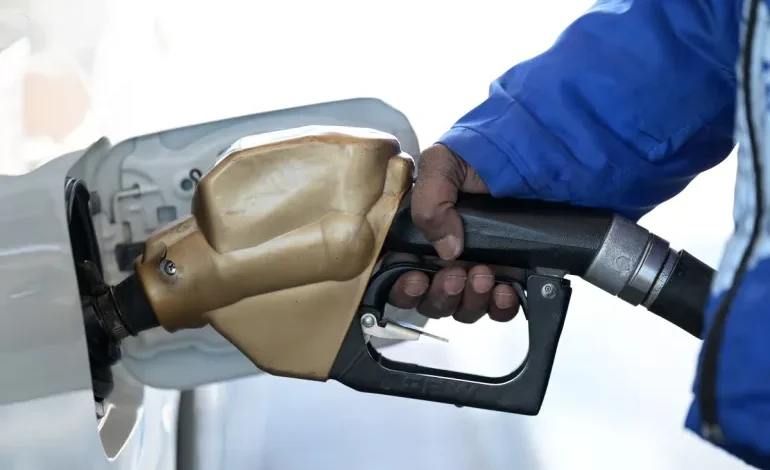
The pressure is already visible in fuel markets. US petroleum prices have increased by roughly 17 percent since the conflict began, while governments in South Korea, Thailand, Bangladesh and Pakistan have introduced measures such as price caps and rationing to shield consumers.
President Donald Trump has repeatedly suggested that the US Navy could be deployed to reopen the Strait of Hormuz if necessary. But some analysts remain skeptical about how effective such an effort would be given the scale of disruption and the risks posed by nearby Iranian missile and drone systems.
US military officials said Tuesday that American forces had struck 16 Iranian mine-laying vessels near the strait after Trump warned Tehran against deploying sea mines in the shipping lane.
At the same time, the administration has offered conflicting messages about the timeline of the war, adding to the sense of instability in markets. Trump said Tuesday that the conflict could end “very soon”, but also insisted that operations would continue until “the enemy is totally and decisively defeated” and that US forces had not yet “won enough”.
Chad Norville, president of the energy industry publication Rigzone, said the turbulence reflects a rare moment when geopolitical risk has moved from theory into immediate market pricing.
“Analysts talk about geopolitical risk constantly, but most of the time, it remains hypothetical. What we saw this week was the market briefly treating that risk as real and repricing supply disruption in earnest,” Norville said.
“At the same time, escorting a single tanker does not materially change the supply equation when well over a hundred vessels typically move through the strait each day. What the market is really trying to determine is whether the overall flow of oil can revert to normal operations,” Norville said.



The latest news in your social feeds
Subscribe to our social media platforms to stay tuned