





With input from the Investor’s Business Daily, CNBC, Quartz, the Wall Street Journal, and Forbes.
Shares of Oracle surged Wednesday after the tech giant delivered stronger-than-expected quarterly results and reassured investors that its aggressive push into artificial intelligence infrastructure won’t blow up its balance sheet.
The stock climbed about 12% following the company’s third-quarter earnings report, giving Wall Street a dose of confidence after weeks of anxiety about how software firms are funding massive AI data-center buildouts.
Still, the rally only partly repairs the damage: Oracle shares remain roughly 15% lower so far this year, reflecting broader concerns about an AI bubble and heavy spending across the tech sector.
Oracle reported $17.2 billion in quarterly revenue, with cloud computing doing much of the heavy lifting. Cloud revenue — including infrastructure and software-as-a-service — rose 44% year over year to $8.9 billion, while cloud infrastructure alone jumped 84% to $4.9 billion.
Those numbers suggest that demand for AI-driven computing power is still accelerating, despite recent skepticism among investors about whether the industry’s spending spree can pay off.
Analysts said the results help reinforce the idea that the AI boom is translating into real business.
Dan Dan Ives said the figures show a “very healthy and robust AI Revolution demand story,” adding that the report should come as a “huge relief” for the broader tech and software sector.
A big chunk of the investor call focused on how Oracle plans to expand its AI cloud without drowning in debt.
CEO Clayton Magouyrk highlighted what the company calls its “bring-your-own-hardware” model, which lets large customers supply their own chips and computing gear inside Oracle’s cloud infrastructure. That setup reduces the company’s upfront capital costs and helps keep cash flow positive even as demand for AI computing explodes.
“We’ve signed more than $29 billion of contracts across multiple customers using that model,” Magouyrk said on the call, adding that customer prepayments and hardware contributions allow Oracle to keep expanding without taking on large cash losses.
He also tried to ease concerns about financing, saying the company does not plan to issue any additional bonds in 2026 beyond the debt already announced. Last month Oracle said it could raise up to $50 billion through a mix of debt and equity to fund data-center expansion.
The company is rapidly building out infrastructure to serve the surge in demand for AI computing.
Magouyrk said Oracle delivered about 90% of its planned 400-megawatt data centers on or ahead of schedule during the quarter — an important milestone as tech companies race to expand capacity for training and running AI models.
Behind the scenes, Oracle has also been signing large multi-year contracts with companies that want dedicated computing resources for AI workloads.
Those deals have helped drive the company’s backlog sharply higher, suggesting strong revenue visibility for the years ahead.
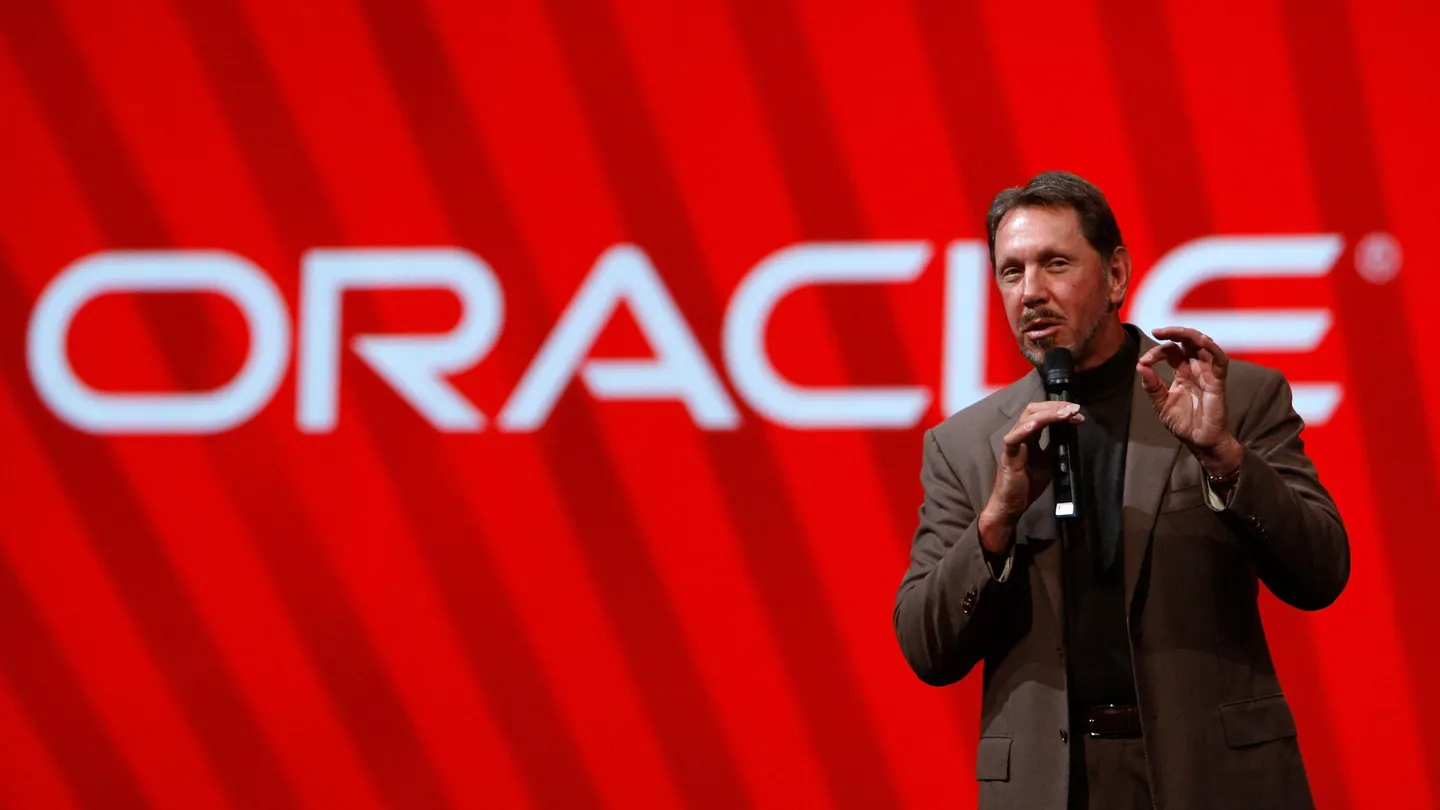
The earnings call also turned philosophical. Founder Larry Ellison used the moment to push back against a growing narrative in Silicon Valley that AI agents could eventually replace large parts of enterprise software.
Ellison argued the opposite: that AI could strengthen companies like Oracle that already sit deep inside corporate systems.
The company is building AI agents directly into its business software, while also creating entirely new applications powered by AI coding tools. According to Oracle executives, the disruption from AI will likely hit smaller, narrowly focused software vendors first rather than large enterprise platforms.
In other words, Oracle believes AI won’t destroy the software industry — it will reshape it, and the company wants to be one of the winners.
The upbeat earnings come after a rough stretch for software stocks. Investors have recently worried that the race to build AI infrastructure could become financially unsustainable.
Some companies are spending billions on chips, servers and data centers before seeing returns, raising fears of a repeat of past tech bubbles.
Oracle hasn’t been immune to those concerns. The stock had fallen more than 50% from its peak last September, one of the steepest declines among major tech names during the AI-driven selloff.
Despite the volatility, Oracle is trying to reposition itself as both a software powerhouse and an AI infrastructure provider.
The pitch to investors is simple: instead of being disrupted by AI, the company wants to supply the computing backbone that powers it.
Wednesday’s earnings report suggests that strategy is starting to resonate again on Wall Street — even if the long-term debate over the economics of the AI boom is far from settled.



The latest news in your social feeds
Subscribe to our social media platforms to stay tuned