

Fuel and Fertilizer Pinch: Why US Farmers Are Bracing for Another Brutal Season

The New York Times, Investor’s Business Daily, the Wall Street Journal, Deutsche Welle contributed to this report.
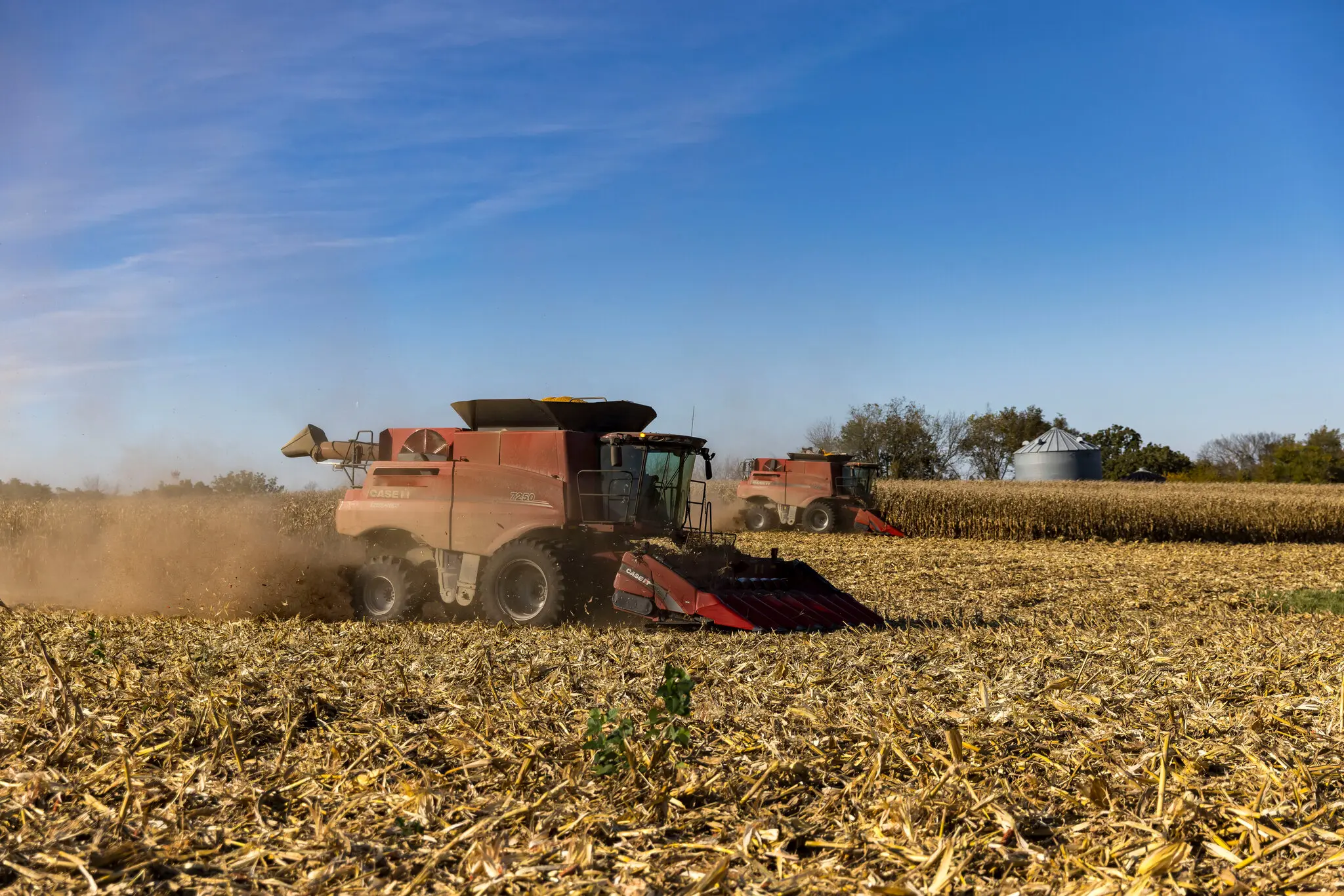
Even before the war in Iran jacked up diesel and fertilizer prices, most US farmers were already saying they felt worse off than a year ago. Now the squeeze has tightened: ships carrying raw materials can’t get through the Strait of Hormuz, supply chains are knotted, and the cost of the essentials that make a planting season possible just shot higher.
A January poll by Farm Journal found that a majority of farmers said they were either “much worse off” or “somewhat worse off” compared with the prior year — and the top worry wasn’t markets or weather, it was input costs. Seed, fertilizer, diesel: those bills determine whether a farm squeaks out a profit or slides into another year of losses. For many, the math was already ugly; the Iran war made the numbers worse overnight.
Diesel is a headline pain. The price of a gallon jumped nearly $1 in just a week — a brutal hit because tractors, sprayers and the trucks that haul supplies and harvests all drink diesel. Fertilizer, too, has spiked: a ton of urea was changing hands at the port of New Orleans, LA, US for about $585, up from roughly $470 before the conflict. That spread matters: nitrogen is the single biggest input for corn yields, and spring planting decisions often hinge on whether farmers have locked in fertilizer prices.
“Even before any of this happened, we were already at a break-even or lose proposition on most row crops in South Carolina,” said Harry Ott, summing up the mood in parts of the Southeast.
Down in Nebraska, not everyone is caught flat-footed.
“Luckily for us, we have made most of our purchases already on the nitrogen products,” said Andy Jobman, who farms about 2,500 acres of corn, soybeans and alfalfa.
He bought early last fall — expensive then, still expensive now — and that pre-buy may be the difference between a small profit and a loss.
A lot of farmers, though, didn’t pre-buy. In a 2024 survey of corn growers, only 45% said they had finished fertilizer decisions by early March.
“Because of the poor farm conditions we were already in, a lot of people didn’t pre-buy,” said John Newton, the chief economist at the American Farm Bureau Federation.
That hesitation is costly now.
Why does the Strait matter so much for fertilizer? The Gulf region is central to the global fertilizer supply chain. Nitrogen fertilizer production relies on natural gas; major producers and exporters in the Middle East ship ammonia and urea through Hormuz. When production hubs like Ras Laffan get knocked offline — as they did after recent strikes — tens or hundreds of thousands of tons of fertilizer and feedstock are effectively sidelined. When that happens, buyers who can’t wait bid hard for available tons, and prices spike.
“The longer this goes on, the more the intermediate supply chains break down and it takes longer to put back together,” said Samuel Taylor, who runs Rabobank’s division for farm inputs.
That slow-recovery risk is a big reason analysts are warning about crop choices changing next season. If fertilizer is scarce or pricey, growers might switch to crops that need less nitrogen. In poorer countries that already use too little fertilizer, even modest price jumps can shrink yields and worsen food insecurity.
The global reverberations are already visible. India, a huge fertilizer buyer, can’t access its usual Gulf gas supplies and may be forced to bid on world markets; Brazil depends on Gulf urea for a large share of its nitrogen needs; and many African countries have so little buffer that any further rise in costs could depress planting and harvests. The United Nations estimates that a significant portion of global fertilizer trade goes through Hormuz; a prolonged closure or heavy disruption would tighten supplies fast.
Back at home, the picture is a string of structural stresses meeting a new shock. Crop growers have endured pandemic disruptions, the fallout from the Ukraine war, and persistent inflation. Prices paid to farmers for commodities haven’t kept pace with input inflation. Farm debt and bankruptcies are rising. For many growers, 2026 looks like it could be a third or fourth straight year with losses.
Washington has tried to help. The US Department of Agriculture rolled out a roughly $12 billion aid package for farmers, about half of which — roughly $6 billion — has been distributed. But the wallet hasn’t changed sentiment much. Nearly three-quarters of respondents to the Farm Journal survey said the crop sector felt like it was in a recession, and about two-thirds said the price of materials was the biggest barrier to turning a profit.
Farm groups are pushing for more aggressive moves. Zippy Duvall, president of the Farm Bureau, publicly urged Donald Trump to get the US Navy to escort fertilizer shipments through Hormuz. The ask is blunt: keep the ships safe, keep the cargo moving, and prevent a supply shock from turning into a food-security crisis.
Economists like Joseph Glauber warn the fallout could change planting decisions and push up food prices worldwide. Higher energy costs amplify the pain; diesel saps margins at every stage of the food supply chain, from field to fork.
Policy fixes are tricky. Some lawmakers are talking about another aid package, and there’s pressure to back measures that expand domestic fertilizer production or loosen trade barriers to help supplies. But these are medium- to long-term levers; they don’t solve a farmer who needs to plant this spring and is watching the cost of urea climb by the week.
What’s left for most growers is a lot of detailed, seat-of-the-pants decision-making. Lock the price now or gamble on a fall? Shift crops or hope for a rebound? For those who hedged early, the choice bought breathing room. For others, the war simply added one more item to an already long list of reasons to be pessimistic.
If the conflict eases and shipping resumes, markets could calm. If it doesn’t, this season might be when years of pressure finally ripple into fewer acres planted, tighter global supplies and yet higher food prices. Either way, American farmers will feel it in the fields long before most of us notice it at the grocery store.



The latest news in your social feeds
Subscribe to our social media platforms to stay tuned