

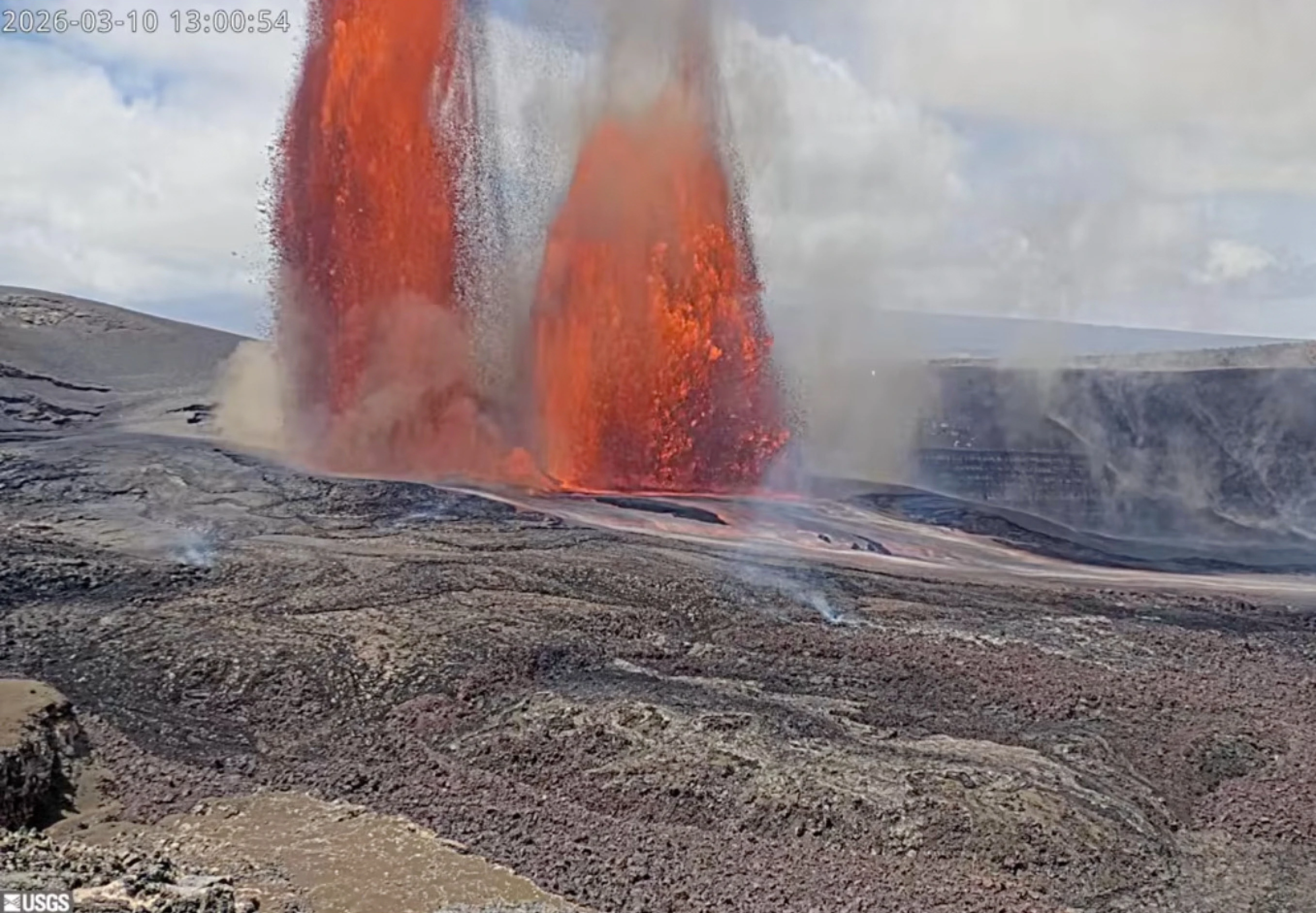



Kilauea sends lava fountains 1,000 feet into the air, prompting closures in Hawaii
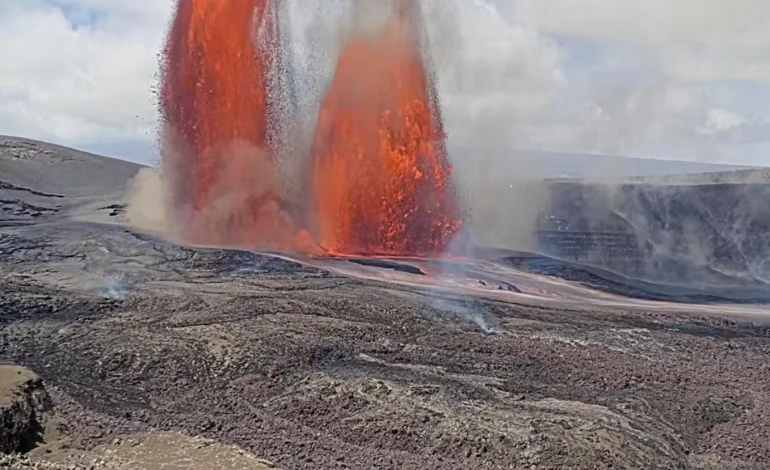

A dramatic eruption at Hawaii’s Kilauea volcano sent lava fountains soaring as high as 1,000 feet (300 meters) into the air on Tuesday, forcing temporary closures in a nearby national park and along a key highway.
The volcano, located on the Big Island of Hawaii, has been erupting on and off for more than a year. Tuesday’s event marked the 43rd lava-fountaining episode since the current eruption began in December 2024.
Livestream footage showed two bright-red lava fountains shooting into the sky, surrounded by thick smoke. Scientists say it is unclear how long the current burst of activity will last. Previous episodes have varied widely in duration — some lasting only a few hours, others continuing for several days.
Despite the dramatic display, the molten rock has remained confined within Kilauea’s summit crater inside Hawaii Volcanoes National Park. Officials say no homes or buildings are currently threatened.
However, the eruption has still caused disruptions for nearby communities.
Glassy volcanic fragments and ash — known as tephra — began falling around the area, prompting authorities to temporarily close sections of the national park near the summit. Part of Highway 11, a major road that circles the island, was also shut down on both sides of the park due to falling debris.
Local officials also opened an emergency shelter at a district gymnasium for residents and tourists who might be affected by the road closures or ashfall. According to county spokesperson Tom Callis, no one had used the shelter shortly after it opened.
The National Weather Service issued an ashfall warning as the eruption continued.
Health officials caution that volcanic tephra can irritate the eyes, skin and respiratory system. It can also create problems for water collection systems commonly used in some parts of the island.
During a previous eruption episode, ash fell so heavily that civil defense crews had to assist communities in clearing thick layers of volcanic material from homes and streets.
Kilauea is one of the most active volcanoes in the world and has a long history of eruptions that periodically reshape the island’s landscape while attracting scientists and tourists alike.



The latest news in your social feeds
Subscribe to our social media platforms to stay tuned