






CNBC, the Wall Street Journal, Investor’s Business Daily, Market Watch and Bloomberg contributed to this report.
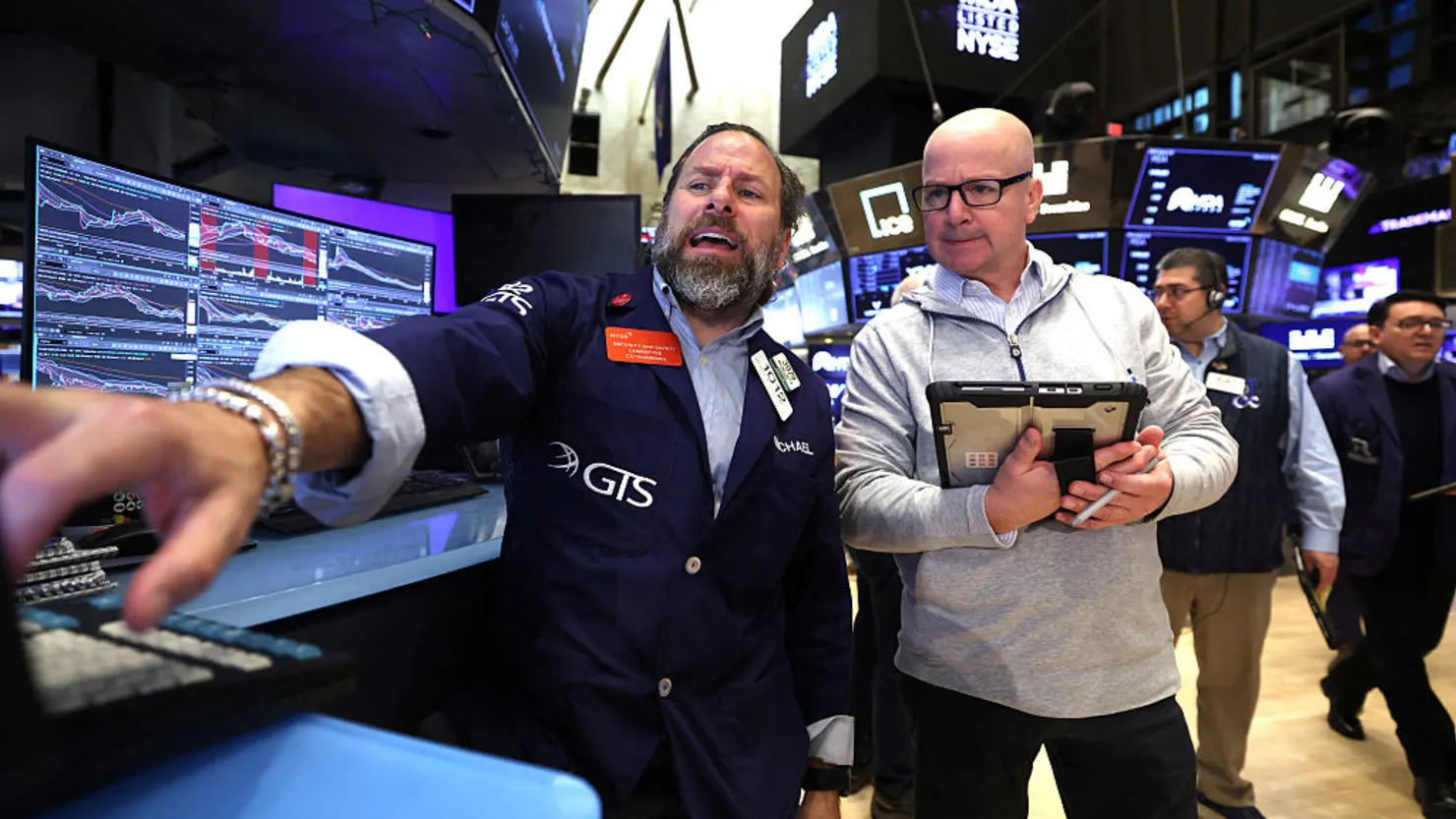
Stocks slid hard Thursday as a renewed shock in the oil market slammed risk assets and the Iran war kept investors on edge. The selling was broad — not a slow bleed, but a sharp leg down — with major indexes closing at their lowest levels of the year.
The Dow Jones Industrial Average tumbled 739.42 points, down 1.56%, to finish at 46,677.85, slipping below 47,000 for the first time this year. The S&P 500 lost 1.52% to close at 6,672.62, and the Nasdaq Composite dropped 1.78% to 22,311.98. All three benchmarks posted closing lows for 2026 — a clear sign that the market’s recent resilience is being tested.
The culprit? Oil. WTI and Brent both ripped higher after Iran’s new supreme leader, Mojtaba Khamenei, said the Strait of Hormuz should stay closed as “a tool to pressure the enemy.” That rhetoric pushed front-month crude sharply up: West Texas Intermediate jumped 9.72% to settle at $95.73 a barrel, while Brent surged 9.22% to $100.46 — the first close above $100 since August 2022.
The market’s math is simple and ugly. When oil spikes, energy-sensitive sectors, transportation costs and consumer-price expectations all get a lot noisier. Traders reacted fast: banks and big tech suffered, while oil majors and energy names quietly shrugged and moved higher. Morgan Stanley’s move to cap private-credit fund withdrawals didn’t help financial sentiment, either; risk-off flows accelerated.
The geopolitical plumbing around the Gulf is dangerously clogged. Energy Secretary Chris Wright told CNBC the US military isn’t ready yet to escort tankers through the Strait, though he suggested a capability could be in place by the end of the month. The US Navy remains tied up destroying offensive capabilities and focusing on other priorities, per his comments. Meanwhile, shipping traffic has largely stalled as attacks on vessels continue: authorities reported three more ships struck overnight in the Persian Gulf, after multiple strikes in recent days.
There are military moves on top of the merchant-maritime danger: US forces sank 16 mine-laying Iranian vessels near Hormuz earlier this week, a striking step that highlights how kinetic things have become. And on the financial side of the risk stack, insurance firms are stepping in; Chubb was named lead underwriter for a US-led insurance program aimed at covering ships attempting the passage. That kind of backstop helps, but it’s not a cure for closed lanes and snarled supply.
Market strategists put the situation bluntly. Adam Crisafulli of Vital Knowledge warned investors that Iran’s tactic of disrupting shipping and “leveraging oil” is having the desired effect on markets and policy.
“Iran’s strategy of sowing economic chaos in the Gulf is working as tankers come under attack and Hormuz stays shuttered, pushing Brent up toward $100,” he wrote.
The odd paradox is that military dominance in the air or at sea doesn’t automatically stop a well-timed economic squeeze on energy flows.
Washington responded with emergency supply moves. The administration will tap the Strategic Petroleum Reserve for 172 million barrels, which officials say will take about 120 days to deliver. The International Energy Agency — the International Energy Agency — also agreed to a coordinated release of 400 million barrels to blunt the shock. Those are big, headline-grabbing numbers. But they’re a lagged remedy, and traders doubt they fully offset the prospect of a prolonged supply squeeze.
On the politics-and-sentiment side, President Donald Trump’s reassurance that the war will end “very soon” briefly calmed markets earlier this week, but rhetoric can only do so much when physical barrels aren’t moving and the risk of more attacks hangs over the lanes. If energy costs stay elevated, the consumer outlook will fray — Anthony Saglimbene of Anthony Saglimbene at Ameriprise noted that sustained gasoline and heating-price pressure could dent consumer sentiment heading into the midterms. He also reminded markets that, for now, household balance sheets and jobs look relatively healthy — a cushion, but not a guarantee.
A few other market facts to chew on: despite the headline losses, the S&P 500 is only about 4% off its January record — not a full-blown rout. Energy stocks, including the likes of Chevron and Exxon Mobil, were among the few pockets of green Thursday. The iShares Global Energy ETF climbed to its highest level since 2008, reflecting cash flows chasing energy exposure. That rotation helps explain why some consumer-facing or rate-sensitive names slid more steeply.
Another market nuance: the oil rally is very front-loaded. Near-term contracts spiked — a deep backwardation on the curve — while longer-dated futures still trade at a discount relative to immediate months, signaling that traders think the disruption is acute but possibly temporary. That doesn’t comfort the trucking company paying diesel now, though.
What happens next? Expect volatility to stick around. The Fed meets next week, and while most economists don’t expect an immediate rate cut, the committee will be watching how the war reshapes inflation and employment. Mark Zandi and others have said the central bank is likely to “sit on its hands” until the fog around the conflict clears — which could take weeks.
Short-run wins and losses look fairly straightforward: higher oil, higher input costs, squeezed margins and headline risk that feeds pullbacks. Longer term, if the conflict drags on and supply interruptions persist, the knock-on effects could be far more insidious — stretched supply chains, slower growth, and political fallout that filters into markets.
For now, investors are choosing sides the old-fashioned way: sell the stuff that looks fragile, buy the stuff that benefits from higher energy prices, and hold your breath. The indexes closed in the red, and sentiment tilted cautious. Markets hate uncertainty. Right now, uncertainty smells like oil.



The latest news in your social feeds
Subscribe to our social media platforms to stay tuned