

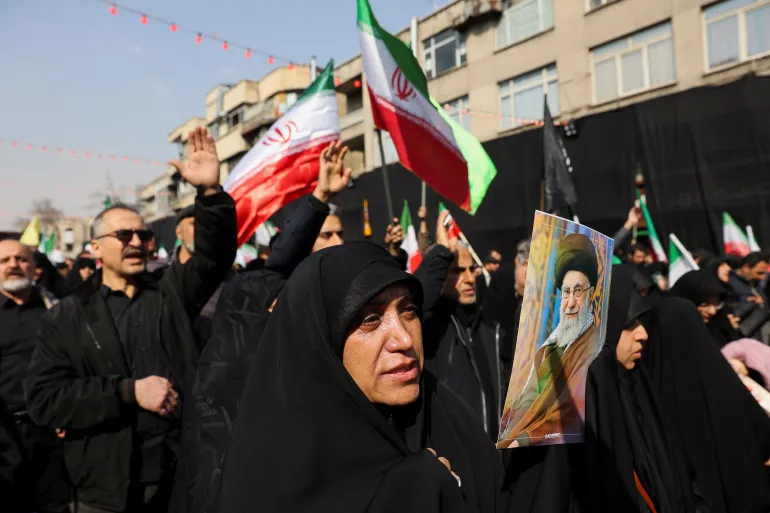



Trump says Iran war could end “soon,” but timeline remains unclear


US President Donald Trump says the war with Iran may end soon, arguing that the United States has already inflicted far more damage than expected and that there is little left for American forces to target.
In an interview with Axios on Wednesday, Trump suggested that the decision to stop the fighting ultimately rests with him.
“Any time I want it to end, it will end,” Trump was quoted as saying.
He also reiterated his view that the military campaign has progressed faster than anticipated.
“The war is going great. We are way ahead of the timetable. We have done more damage than we thought possible, even in the original six-week period,” Trump said.
His remarks came as Israeli officials signaled a different approach to the conflict’s timeline. Israeli Defence Minister Israel Katz indicated that the operation would continue as long as necessary.
“The operation will continue without any time limit, as long as required, until we accomplish all objectives and achieve victory in the campaign,” Katz said, according to The Times of Israel.
Despite repeated statements from Trump suggesting the war could end soon, Washington has not offered a clear timeline for concluding the military campaign. It also remains uncertain whether Iran would observe a ceasefire declared solely by the United States.
When asked by CNBC on Tuesday how the conflict might end, Trump’s envoy Steve Witkoff acknowledged the uncertainty, saying, “I don’t know.”
Earlier this week, Trump also told The Times of Israel that ending the war would likely be a “mutual” decision made together with Israeli Prime Minister Benjamin Netanyahu, suggesting the United States would not withdraw from the operation on its own.
Officials in the Trump administration have consistently framed the war effort as successful, emphasizing that Iran’s military capabilities have been heavily degraded. The United States and Israel have launched thousands of bombs against Iranian targets, killing at least 1,300 people.
Iran, however, has continued to respond with missile and drone attacks against Israel, while also targeting US assets across the Middle East and striking energy and civilian sites in Gulf countries.
At the same time, Tehran has largely managed to keep the Strait of Hormuz closed to commercial shipping, a move that has disrupted global oil flows and triggered sharp price swings in energy markets.
Trump earlier warned Iran of “death, fire and fury” if it continued to block ships moving through the strait. Yet attacks on vessels near the waterway continued, with three ships struck on Wednesday.
Previous comments by Trump about reopening Hormuz or ending the war have briefly calmed markets and lowered oil prices, though those effects have typically been short-lived.
The administration has also sent mixed signals about how shipping in the region might be protected. Trump previously suggested that the US Navy could escort commercial vessels through the strait.
On Tuesday, US Energy Secretary Chris Wright posted on social media platform X that the US Navy had escorted an oil tanker through Hormuz, before quickly deleting the claim. The White House later confirmed that the statement was not accurate.
Iranian Foreign Minister Abbas Araghchi responded by accusing US officials of “posting fake news to manipulate markets”.
Meanwhile, the US military issued a warning to Iranian personnel working near ports connected to the strait.
“Iranian dockworkers, administrative personnel, and commercial vessel crews should avoid Iranian naval vessels and military equipment,” the US military’s Central Command said in a statement.
“Iranian naval forces have positioned military vessels and equipment within civilian ports serving commercial maritime traffic.”


The latest news in your social feeds
Subscribe to our social media platforms to stay tuned