
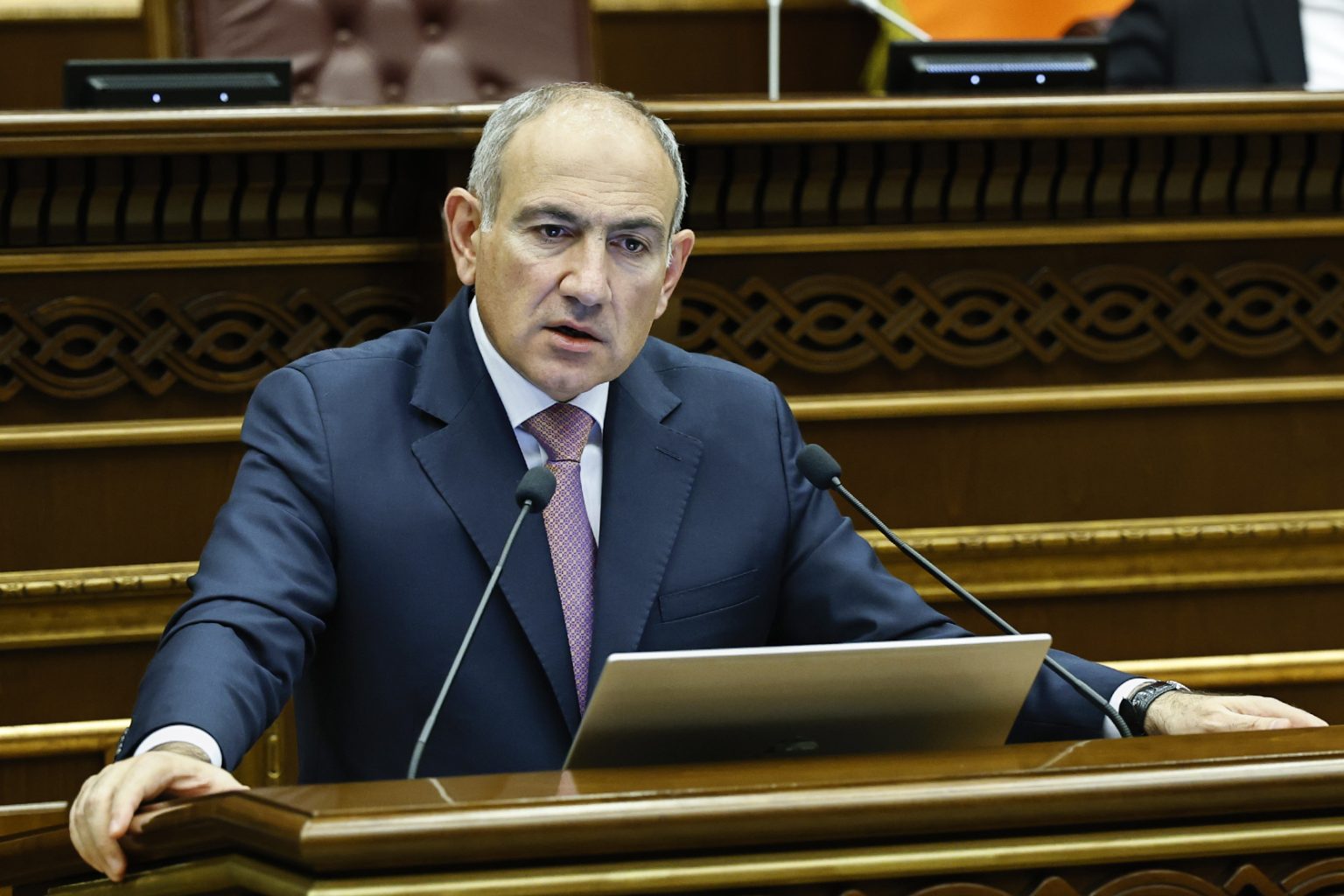



Pashinyan. Iran. A Shadow of Humanitarian Catastrophe.
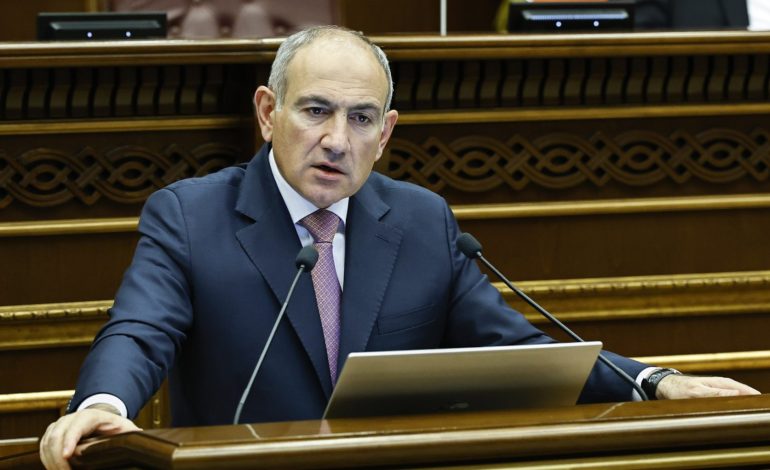

The Armenian authorities, actively pursuing a “multi-vector” strategy and declaring their desire to join the European Union, completely disregard the realities of the region. Pashinyan’s course could lead to Armenia becoming not just a satellite of Baku and Ankara, but an object of settlement and claims by neighbors building a “Turkic bridge” that leaves no room for the Armenian people. This is the sentiment shared with Wyoming Star by Dr. Eleanor Markov, a non-resident fellow at the Atlas Eurasia Group. In an interview below, we discussed Armenia’s position in the context of the escalating armed conflict between the US/Israel and Iran.
Wyoming Star: Is the current Pashinyan’s position amid the largest conflict in the region in decades justified and rational?
Dr. Markov: I would like to note that Pashinyan is certainly trying to maneuver, play both sides, and maintain balance. He sent condolences to Iran’s leadership following the death of Supreme Leader Ayatollah Ali Khamenei as a set of ritual steps. Nevertheless, Pashinyan and the country’s ruling elite found themselves trapped in various Trump projects. This included the infamous “Board of Peace,” which Armenia joined in January – by the way, the authorities still haven’t answered the question of whether Yerevan has made the $1 billion contribution Trump demanded. And, of course, the most important “hook” Armenia found itself hanging on was the TRIPP project, which creates colossal security risks for the country without providing any real benefits.
Wyoming Star: On that note, what risks do you see for the TRIPP corridor in the context of the conflict with Iran?
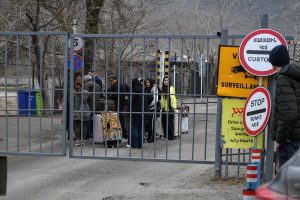
Dr. Markov: The fact is that this corridor, which is planned to go through the southern part of Armenia’s Syunik region, known in Azerbaijani as Zangezur, is intended to connect the mainland of Azerbaijan with its autonomous exclave in Nakhchivan. Moreover, the corridor will be an extraterritorial entity, even though Baku sometimes claims the opposite, with a multi-year lease and managed by a consortium of American companies. Many experts have quite naturally raised the question of potential active Iranian countermeasures if such a piece of American infrastructure on the border with Iran ever materializes in the future. It is well known that Azerbaijan has very tense relations with Tehran while maintaining close ties with Israel. By agreeing to the construction and development of the corridor as part of the TRIPP project, Pashinyan is effectively exposing the entire territory of Armenia to Iranian threat. It’s important to understand, however, that there is little to no chance the Americans will defend Armenia, provide it with any kind of air defense cover, and such. They simply don’t have enough air defense systems, even for their own allies in the Gulf. It’s also important to understand that by leasing a chunk of territory in Syunik to the Americans for Azerbaijani logistics, Pashinyan has cut Armenia off from its Iranian border.
Wyoming Star: How dependent is Armenia on goods from Iran?
Dr. Markov: Mutual trade has grown in recent years, albeit at a slow pace – last year it amounted to just over $768 million, an increase of 4.2%. It’s important to note that the trade balance is heavily skewed toward Iran – imports from Iran account for over $690 million of mutual trade. Due to price fluctuations and low energy costs, Iranian goods are quite profitable for Armenia. Armenia receives most of its cement, steel rebar, rolled metal, and bitumen from Iran. Furthermore, imports of vegetables, fruits, powdered milk and cream, and sunflower oil are significant. If Armenia joins the Western coalition (and its course toward association and subsequent EU accession has been officially declared in Armenia, with a corresponding law passed), the country will face severe economic hardship, as no supplies from Georgia or Azerbaijan can replace the lost volumes.
Wyoming Star: What other risks exist in the context of Pashinyan’s pro-Western and pro-Azerbaijani policies and the events surrounding Iran?
Dr. Markov: The key problem, as I see it, is that the people living on the Iranian side of the border aren’t Persians at all. Approximately 30 million ethnic Azerbaijanis live in northern and northwestern Iran – several times the population of Azerbaijan itself. It’s important to understand that Baku hasn’t completely removed the issue of “reunification” with the so-called “Southern Azerbaijan” from the agenda; this topic regularly crops up in official rhetoric and in media outlets close to the ruling elite. In this context, Armenia itself is perceived as “living space,” a place where millions of ethnic Azerbaijanis can and should be resettled, thereby changing the composition of the country’s population. If the Western coalition succeeds in destabilizing Iran from within in the near future, hundreds of thousands, if not millions, of Azerbaijani refugees will rush northwest toward Armenia. Importantly, the border will no longer be controlled by official Yerevan; the TRIPP corridor will be located there, and Pashinyan and his regime have asked Russian border guards. Previously stationed there, to withdraw from Armenia’s borders.
Wyoming Star: What can you say about Pashinyan’s attempts to “diversify” nuclear energy and negotiate agreements with American or European companies to build small modular reactors?
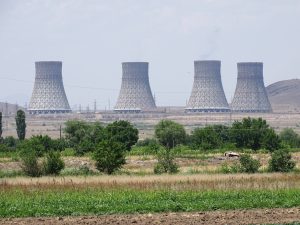
Dr. Markov: This is also a rather dangerous development, as American SMRs will appear right next door to Iran – and the leaders of the Islamic Republic will hardly welcome such a proximity. After all, American intelligence infrastructure could very well be deployed under the guise of building small modular reactors. It’s unlikely that Iran’s intelligence services and security agencies don’t understand this; they will take preemptive measures, making Armenia a natural “battlefield” between American and Iranian forces. Let me remind you that we’re talking about nuclear energy, a technology that in the past years saw little development in the West and that is itself fraught with numerous environmental and security problems. Pashinyan doesn’t provide answers to these pressing questions.


The latest news in your social feeds
Subscribe to our social media platforms to stay tuned