
Honda’s World Cup Post Costs Him US Advertising Deal
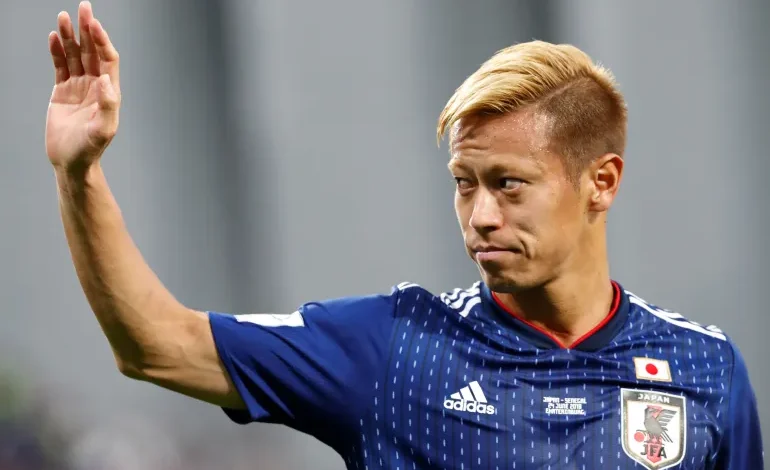

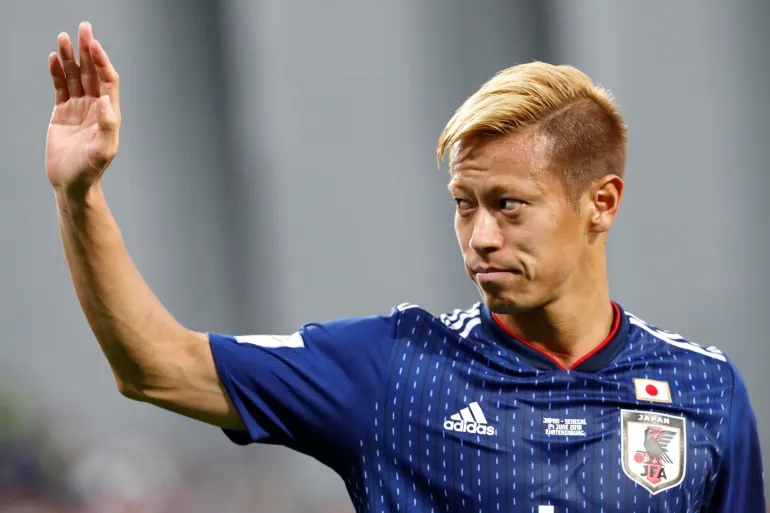
Former Japanese football star Keisuke Honda says he has lost a planned advertising partnership in the United States after publicly supporting Iran’s participation in the upcoming FIFA World Cup, highlighting how geopolitical tensions surrounding the tournament are spilling into sports and business.
Honda revealed on Saturday that a US-based company had suspended an advertising campaign featuring him after he posted on X expressing his personal view that Iran should be allowed to compete in the tournament.
“I know it’s a very sensitive thing, but I personally want them to participate in the World Cup,” the 39-year-old wrote in a tweet on Thursday.
The comment came one day after Iran’s sports minister said the country would be unable to take part in the tournament following the war launched against Iran by the United States and Israel and the killing of the country’s supreme leader.
Honda later posted a follow-up message explaining that the reaction to his statement had immediate consequences for a commercial deal that had been nearing completion.
“Apparently, this statement caused a US company to cancel an advertisement that was about to be finalised to coincide with the World Cup,” he wrote.
“We don’t want anything to do with companies that ignore the essence of things and make decisions based on rotten thinking.”
The dispute unfolds as uncertainty grows around Iran’s participation in the 2026 FIFA World Cup, which will be cohosted by the United States, Mexico and Canada. Iran have already qualified for the expanded 48-team tournament, but the ongoing conflict triggered by the US-Israeli attacks that began on February 28 has cast doubt over whether the team will ultimately take part.
The war began after strikes by the United States and Israel targeted Iran, killing the country’s supreme leader. Tehran responded by launching waves of missiles and drones at Israel, several US military bases in the Middle East and regional infrastructure.
The tournament itself is scheduled to run from June 11 to July 19, with Iran’s group-stage matches currently planned at venues along the US West Coast.
Honda’s comments entered the debate as tensions between Washington and Tehran continue to rise.
US President Donald Trump said on Thursday that Iran’s presence in the competition would not be appropriate.
“The Iran National Soccer Team is welcome to The World Cup, but I really don’t believe it is appropriate that they be there, for their own life and safety,” Trump wrote in a social media post.
Iran’s national team quickly responded through its official Instagram account, pushing back against the idea that political leaders should influence participation in an international sporting event.
“The World Cup is a historic and international event, and its governing body is FIFA – not any individual country,” the account wrote.
The message also questioned whether the United States could guarantee the safety of Iranian players and officials.
“Certainly, no one can exclude Iran’s national team from the World Cup,” the message continued. “The only country that could be excluded is one that merely carries the title of ‘host’ yet lacks the ability to provide security for the teams participating in this global event.”
Trump later issued another message emphasising that the tournament would remain safe for players and fans from around the world.
For Honda, the controversy adds a political dimension to the legacy of one of Japan’s most recognisable footballers. The attacking midfielder represented Japan between 2008 and 2018, scoring 38 international goals and appearing at the 2010, 2014 and 2018 FIFA World Cups.
He remains among the country’s most capped players and its top international scorers. Honda also played club football across five continents, representing teams in Europe, Asia, Australia, North America and South America before retiring from professional football in 2024 and moving into coaching.
In Japan, the blond-haired playmaker enjoys near-iconic status. He was named the most valuable player during Japan’s victorious 2011 Asian Cup campaign and remains one of the country’s most globally recognised athletes.
But the latest episode suggests that even brief statements on international politics can have immediate commercial consequences — particularly when they intersect with one of the world’s most visible sporting events.

The latest news in your social feeds
Subscribe to our social media platforms to stay tuned