

NYC Mayor Caught in Political Storm Over Wife’s Palestine-Related Artwork
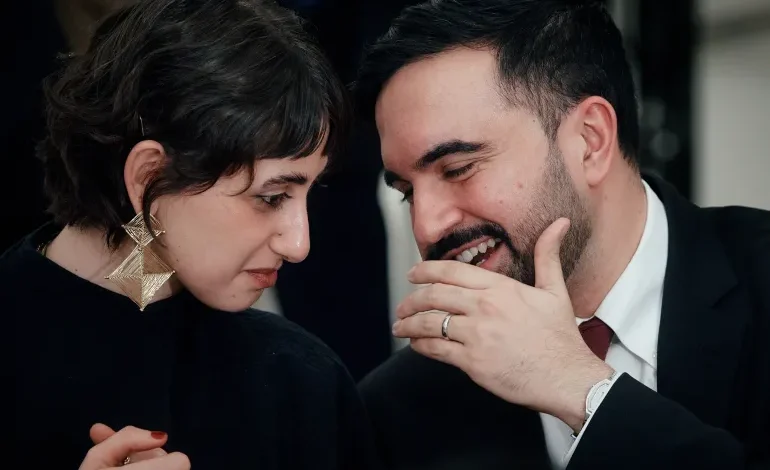

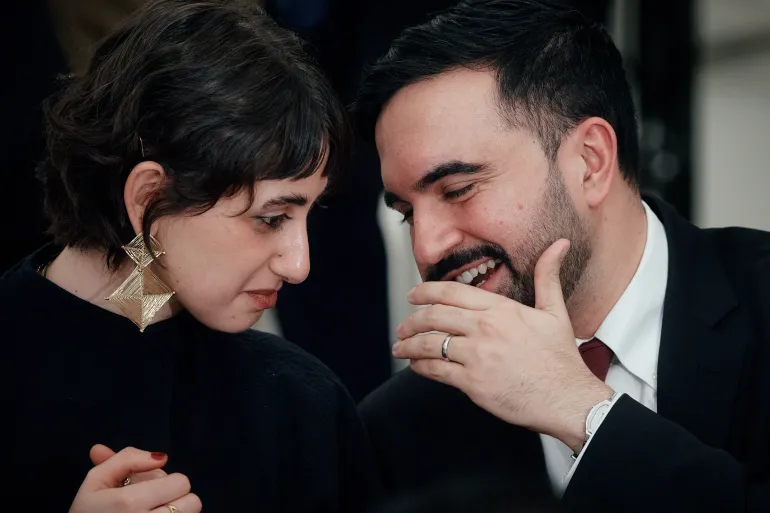
New York City Mayor Zohran Mamdani has found himself at the centre of an escalating political dispute after attention turned to past illustration work by his wife, Rama Duwaji, connected to Palestinian writer Susan Abulhawa. What began as a report in conservative media quickly turned into a broader debate about political scrutiny, public narratives around Palestine, and the pressures facing the first Muslim mayor of the largest city in the United States.
The controversy first surfaced last week when the conservative outlet Washington Free Beacon reported that Duwaji, a 28-year-old freelance illustrator and New York City’s first lady, had contributed artwork to a piece compiled by Abulhawa. The illustration accompanied a text included in a collection titled “Every Moment is a Life”, published online by the platform “Everything is Political”.
The text in question was initially described as an essay by Abulhawa. She later clarified that it was in fact a short story written by a displaced resident of Gaza during Israel’s war in the enclave. The story, titled “A Trail of Soap”, describes the humiliating experience of using a makeshift public restroom amid the destruction and displacement caused by the war.
Mamdani responded quickly after the reports appeared. He said that Duwaji had been commissioned through a third party and had never had direct contact with Abulhawa. According to the mayor, his wife had also never seen the controversial social media posts attributed to the Palestinian author. Abulhawa later confirmed that Duwaji had not met or worked with her directly.
The political pressure, however, did not come from the illustration itself but from Abulhawa’s past statements. Several outlets, including the New York Post and Jewish Insider, highlighted comments she had made in articles and on social media.
Among the remarks cited was a piece published on The Electronic Intifada in which Abulhawa described the October 7, 2023 attacks by Palestinian fighters on southern Israel as a “spectacular moment that shocked the world”.
Other posts criticised Israeli policies in Gaza in stark language. Abulhawa referred to what she described as “Jewish supremacist slaughter” and wrote that “these sons of satan will taste what they meted to us”. In other messages she condemned Israeli foreign influence, referring to “Jewish supremacist ghouls” and “vampires” and once calling a commentator a “Jewish supremacist cockroach”.
Some critics argue that several of these statements appear to reference Jewish people broadly. Abulhawa has rejected that interpretation, saying the language was directed at what she describes as a Zionist power structure and those supporting it.
Facing questions at a news conference last week, Mamdani distanced both his administration and his wife from those statements.
“And we stand in our administration, and I can tell you, our administration – which is separate from the first lady, she doesn’t have a role within it – is against bigotry of all forms … unflinchingly,” he told reporters.
“I think that that rhetoric is patently unacceptable. I think it’s reprehensible,” he added, referring to the posts attributed to Abulhawa.
His remarks, however, triggered criticism from some supporters who believe the mayor’s response risked reinforcing narratives that equate support for Palestinians with hostility toward Jewish people.
The criticism came from activists and commentators who have previously supported Mamdani. Some argued that by responding to the reports, the mayor inadvertently legitimised attacks driven by political motives.
Activist Shaiel Ben-Ephraim wrote that Mamdani was “stupid for apologising and explaining”.
“Nothing will ever be enough for Zionists anyway,” he wrote. “Stand tall.”
Palestinian writer Mohammed El-Kurd pointed to Mamdani’s own political trajectory, noting that the mayor has previously said the issue of Palestinian rights helped motivate him to enter politics. El-Kurd wrote that it was therefore “fair to hold him to his word”.
Craig Mokhiber, a former United Nations human rights official, also urged Mamdani to resist political pressure, writing that he should “forget what your aides are telling you”.
“Fear is not a sound basis for politics at this moment in history,” he said in a post on X.
Abulhawa addressed the controversy directly in a video statement released on Saturday. In the message, she said she wanted to clarify the situation for “Mr Mamdani, for his supporters and detractors alike, for the reporters, for my readers, for my own friends, and for the public in general”.
She rejected accusations that her comments represented antisemitism or hostility toward Jewish people. Instead, she said her words reflected the perspective of a Palestinian responding to Israeli policies and the destruction experienced by her family.
“Israel and by extension, Israelis – since, as we’re constantly told, they’re the only democracy in the region – have destroyed, shattered and robbed my family of everything,” she said.
“They have committed the genocide in full view of the world, the wholeness of its blood and gore, its apocalyptic horror, its generational injury and its moral harm to all of humanity,” she added.
Abulhawa described the emotional context behind her statements as the “feelings [Palestinians] have of pain, rage, contempt or hatred, coupled with the impotence to make the suffering stop”.
She also said she would continue to use the “privilege of having a voice … to speak forcefully for those who are defenceless against hateful colonial state violence”.
At the same time, Abulhawa suggested Mamdani’s response reflected broader political pressure.
“You succumbed to forces that seek to pick away at you, at your talented, beautiful wife, and [are] clawing harder with each apology or concession you make,” she said.
“If you are not careful, they will siphon your soul before you even realise it.”
The episode also highlights a wider political context surrounding Mamdani. During his rapid rise in New York politics last year, he faced repeated accusations of anti-Jewish sentiment from critics who pointed to his strong criticism of Israeli government policy and his description of the war in Gaza as a “genocide”. Mamdani has consistently rejected those accusations and says he governs as a mayor for “all New Yorkers”.
Even so, the scrutiny has remained intense. The mayor has previously faced criticism over his comments about the slogan “globalise the intifada”, which he said he would “discourage” during the campaign, a move some supporters viewed as a concession to political pressure.
More recently, he was questioned over his wife’s social media activity, including her “liking” posts praising Palestinian resistance following the October 7 attacks.
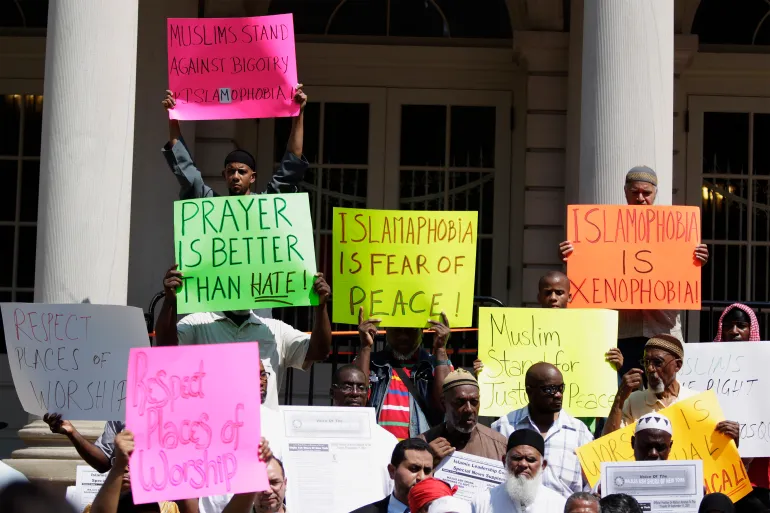
For some observers, the controversy surrounding Duwaji’s artwork and Abulhawa’s statements reflects a broader pattern in American politics. Critics argue that Mamdani’s political positions and family connections have been examined with unusual intensity, particularly given his status as the first Muslim mayor of New York City.
tags: United States, New York City, Zohran Mamdani, Rama Duwaji, Susan Abulhawa, Palestine, Israel-Gaza war, political controversy, Islamophobia

The latest news in your social feeds
Subscribe to our social media platforms to stay tuned