

Trump Administration Warns Broadcasters Over Critical War Coverage


The administration of United States President Donald Trump has warned that news organisations could face the loss of their broadcasting licences if they continue what officials describe as distorted reporting on the war against Iran, prompting concerns about pressure on media outlets covering the conflict.
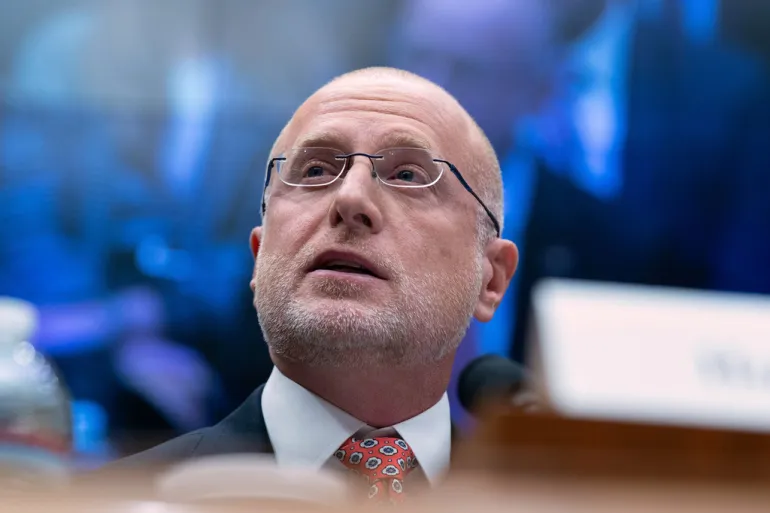
Federal Communications Commission Chairman Brendan Carr issued the warning on Saturday in a social media post, saying broadcasters must meet regulatory obligations to serve the public interest.
“Broadcasters that are running hoaxes and news distortions — also known as the fake news — have a chance now to correct course before their license renewals come up,” Carr wrote.
His remarks are the latest in a series of statements that critics say appear to pressure media organisations to align coverage more closely with the administration’s position. Carr has previously drawn scrutiny for similar interventions involving television programming critical of Trump.
Last year, for example, he urged the network ABC and its distributors to address content by late-night host Jimmy Kimmel, whose show had frequently criticised the president.
“We can do this the easy way or the hard way,” Carr said on a podcast at the time. ABC temporarily suspended Kimmel’s show following the controversy.
Carr’s latest comments quickly sparked criticism from lawmakers and civil liberties groups who warned that such statements could undermine press freedom.
Senator Brian Schatz of Hawaii said the warning suggested broadcasters might face regulatory consequences for reporting that reflects poorly on the government’s conduct of the war.
“This is a clear directive to provide positive war coverage or else licenses may not be renewed,” Schatz wrote.
“This is worse than the comedian stuff, and by a lot. The stakes here are much higher. He’s not talking about late night shows, he’s talking about how a war is covered.”
Free speech advocates echoed those concerns. Aaron Terr, director of public advocacy at the Foundation for Individual Rights and Expression, argued that the government cannot legally restrict critical reporting about military operations.
“The First Amendment doesn’t allow the government to censor information about the war it’s waging,” Terr said.
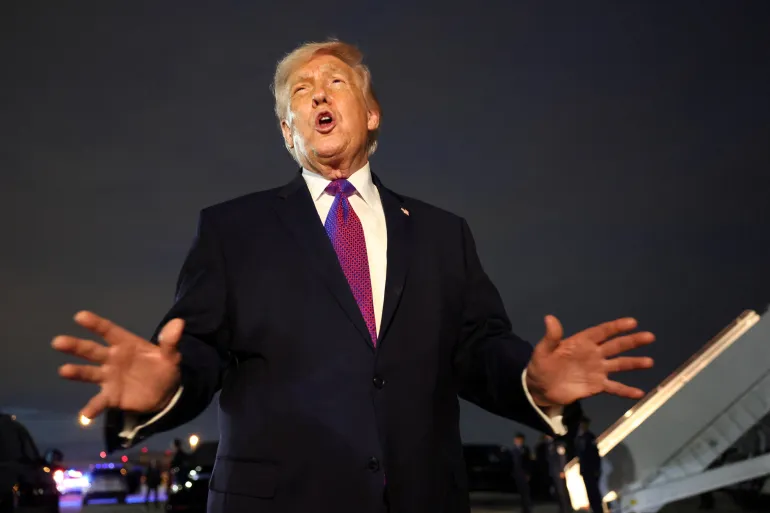
Carr’s warning followed comments from Trump himself accusing major media outlets of misrepresenting developments in the conflict.
The president criticised what he described as inaccurate reports claiming that US refuelling aircraft had been struck during an Iranian attack on a military base in Saudi Arabia.
“The base was hit a few days ago, but the planes were not ‘struck’ or ‘destroyed’,” Trump said in a post on his Truth Social platform. “Four of the five had virtually no damage, and are already back in service.”
He argued that some media organisations had intentionally misrepresented the incident.
“Lowlife ‘Papers’ and Media actually want us to lose the War,” he wrote.
The dispute over media coverage is unfolding as the administration faces mounting criticism over the conflict, which began on February 28 when the United States and Israel launched military strikes against Iran.
Public opinion polls suggest the war remains unpopular with many American voters. A recent Quinnipiac survey found that 53 percent oppose the military campaign, including 89 percent of Democrats and 60 percent of independent voters.
Legal scholars have also criticised the operation, arguing that it violates international law prohibiting unprovoked military attacks.
Trump has offered varying explanations for the decision to strike Iran but has repeatedly maintained that the campaign is succeeding despite continuing Iranian missile and drone attacks on US forces in the region and the disruption of shipping through the Strait of Hormuz.
“We’ve won. Let me tell you, we’ve won,” Trump told supporters at a rally in Kentucky this week. “In the first hour, it was over.”
Administration officials have increasingly blamed the media for shaping negative public perceptions of the conflict.
During a Pentagon briefing on Friday, Secretary of Defense Pete Hegseth criticised news outlets for what he described as pessimistic reporting about developments in the Middle East.
“Yet some in this crew, in the press, just can’t stop,” Hegseth said.
A former Fox News host, Hegseth suggested journalists should frame the war in more favourable terms.
“What should the banner read instead? How about ‘Iran increasingly desperate’? Because they are. They know it, and so do you, if it can be admitted,” he said.
Hegseth also singled out CNN for reporting that the Trump administration may have underestimated the likelihood that Iran would close the Strait of Hormuz, a move that has disrupted global oil shipments.
He added that he hoped a future business deal might place the network under new leadership.
“The sooner David Ellison takes over that network, the better,” he said.
The confrontation between the administration and media organisations comes as the war with Iran continues to reshape political debate in the United States, raising questions not only about the conflict itself but also about the boundaries between government authority and press freedom.


The latest news in your social feeds
Subscribe to our social media platforms to stay tuned