


Trump’s Hormuz Plan Faces Reality Check as War Disrupts Oil Routes
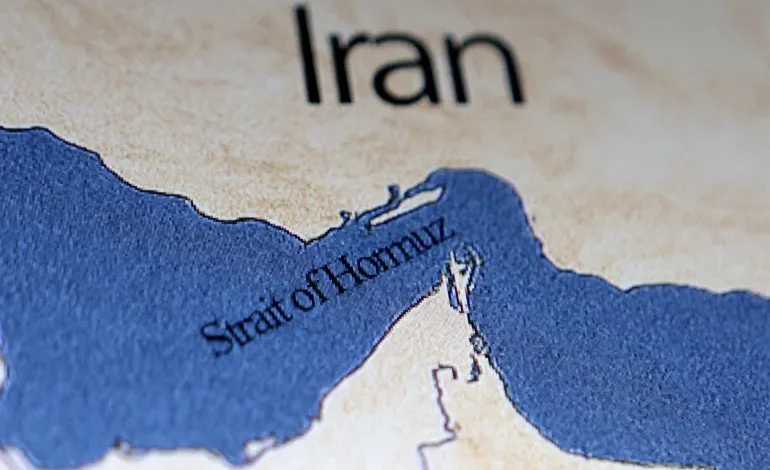

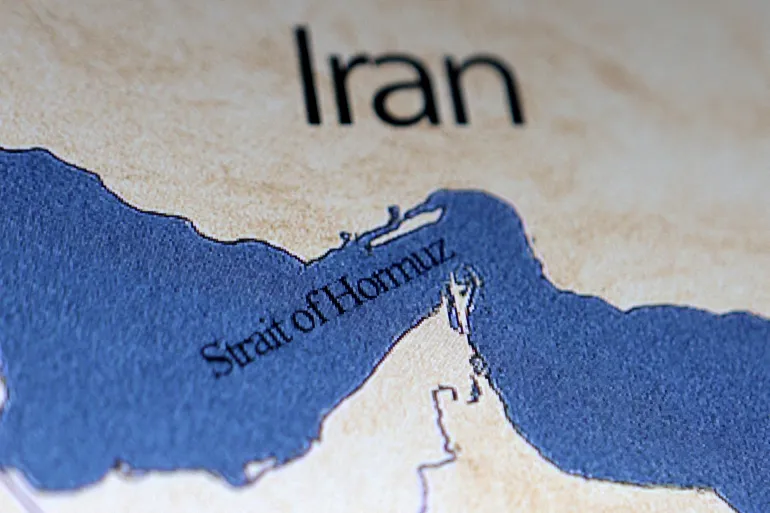
As tensions escalate in the Middle East, United States President Donald Trump has proposed forming a multinational naval coalition to secure the Strait of Hormuz — one of the most strategically important waterways for global energy trade. The move comes as oil markets react sharply to disruptions linked to the ongoing US-Israeli war with Iran.
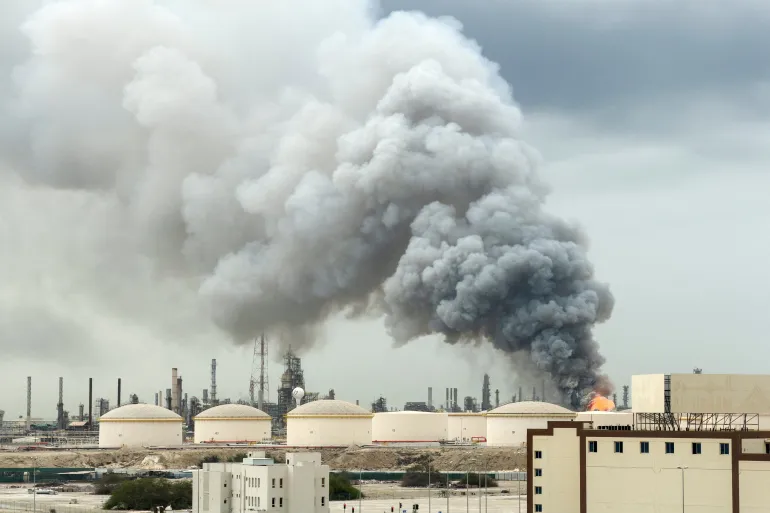
The narrow maritime corridor, which connects the Gulf to the Gulf of Oman and the Arabian Sea, carries roughly one-fifth of the world’s oil shipments. With hostilities intensifying, traffic through the strait has sharply declined and oil prices have surged past $100 per barrel.
Tehran has effectively restricted access to the waterway following the attacks by the United States and Israel. Iran’s new supreme leader, Mojtaba Khamenei, signalled that the route would remain closed as part of Tehran’s wartime strategy, while another Iranian official warned prices could climb beyond $200 per barrel if disruptions continue.
Against that backdrop, Trump has called on several major economies to send naval forces to the region in order to protect commercial shipping and reopen the passage.
Domestic pressure has mounted on the US president as the conflict drags on without a clear exit strategy.
“On the strait of Hormuz, they had NO PLAN,” US Democratic Senator Chris Murphy wrote in a post on X. “I can’t go into more detail about how Iran gums up the Strait, but suffice it [to] say, right now, they don’t know how to get it safely back open.”
Trump responded by urging countries whose economies depend on oil passing through the strait to contribute naval forces. In particular, he called on China, France, Japan, South Korea and the United Kingdom to deploy warships.
At the same time, the president insisted that Iran’s military capability had largely been neutralised but warned that Tehran still had the ability to threaten vessels using drones, mines or short-range missiles.
“Hopefully China, France, Japan, South Korea, the UK, and others, that are affected by this artificial constraint will send ships to the area so that the Hormuz Strait will no longer be a threat by a nation that has been totally decapitated,” Trump wrote in a post on his Truth Social platform.
“In the meantime, the United States will be bombing the hell out of the shoreline, and continually shooting Iranian Boats and Ships out of the water. One way or the other, we will soon get the Hormuz Strait OPEN, SAFE, and FREE!”
Shortly afterward, Trump expanded the invitation, calling on all countries that import oil through the Strait of Hormuz to participate in the proposed coalition, adding that Washington would provide “a lot” of support.
Iranian officials quickly rejected the premise that the United States could secure the waterway through military pressure.
Alireza Tangsiri, commander of the Islamic Revolutionary Guard Corps Navy, said claims that Iran’s naval capabilities had been destroyed were incorrect.
“The Strait of Hormuz has not been militarily blocked and is merely under control,” he said in a statement.
Iranian Foreign Minister Abbas Araghchi echoed that position, arguing that international shipping remains possible — except for vessels linked to countries currently attacking Iran.
“The Strait of Hormuz is open. It is only closed to the tankers and ships belonging to our enemies, to those who are attacking us and their allies. Others are free to pass,” Araghchi said.
The geography of the strait itself complicates any effort to secure it militarily. At its narrowest point the passage measures just 21 nautical miles, with even tighter shipping lanes used by commercial vessels. Iran lies on one side of the corridor, while Oman and the United Arab Emirates sit across the water.
That proximity leaves ships exposed to a wide range of threats — from missiles to naval mines and unmanned systems.
Alexandru Hudisteanu, a maritime security expert and former Romanian navy officer, said the coalition concept faces a fundamental operational challenge.
“interoperability is the biggest hurdle.”
“That’s the ability of cruises to work together or with different units and different doctrine when basic communication would be an issue,” he said.
Even if coordination issues could be resolved, the operational environment would remain extremely dangerous.
“a very unforgiving environment to sail with this type of wartime threats”, Hudisteanu said. “Especially difficult under missile threats and these asymmetric potential mines or unmanned systems that could damage or destroy ships.”
Escorting commercial tankers through the corridor would require sustained naval deployments and would expose participating countries to possible Iranian retaliation — a risk that could draw additional states into an already widening conflict.
For now, the Strait of Hormuz remains a pressure point in both the military confrontation and the global energy market. Whether an international naval coalition could realistically stabilise the passage remains an open question.


The latest news in your social feeds
Subscribe to our social media platforms to stay tuned