

US Reopens Embassy in Caracas as Washington Deepens Ties With Venezuela’s New Government
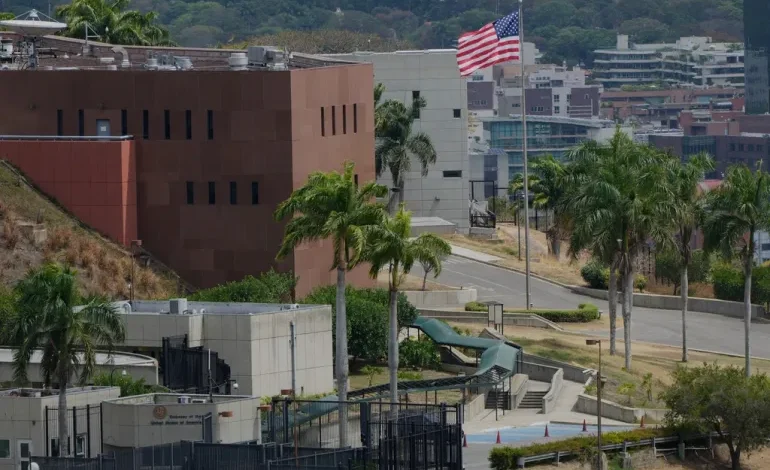

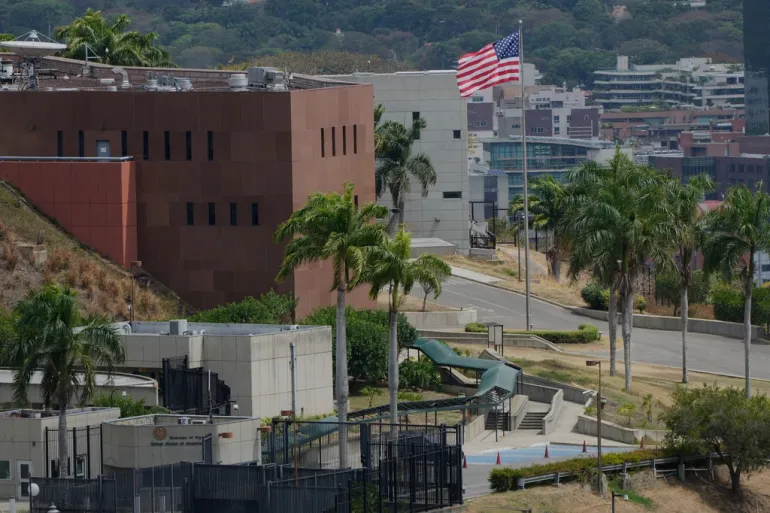
The United States has reopened its embassy in Caracas after seven years, signalling a major shift in relations with Venezuela as President Donald Trump strengthens ties with the country’s new leadership following the removal of former President Nicolas Maduro.
The US embassy announced the move on Saturday in a social media post, marking the ceremonial raising of the American flag over the diplomatic compound in the Venezuelan capital.
“The morning of March 14, 2019, the American flag was lowered for the final time at US Embassy Caracas. This morning, on March 14, 2026, at the same time, my team and I raised the American flag—exactly seven years after it was lowered,” Charge d’Affaires Laura Dogu wrote.
“A new era for US-Venezuela relations has begun. Onward with Venezuela.”
Washington formally restored diplomatic ties earlier this month, and Dogu said the United States is committed to maintaining a presence in the country.
The reopening comes amid a dramatic political transformation in Venezuela that followed a US military operation carried out on January 3 on Venezuelan territory. The operation culminated in the abduction of Maduro and his wife, Cilia Flores.
Following Maduro’s removal, former vice president Delcy Rodriguez assumed power as interim president with the backing of the Trump administration.
Washington has since promoted developments in Venezuela as an example of what it describes as successful regime change, particularly in discussions about other countries currently in conflict with the United States, including Iran.
At the same time, the Trump administration has pressed the new Venezuelan government to make economic concessions, particularly in relation to the country’s vast oil and mineral resources.
Rodriguez has responded by introducing legislation designed to open Venezuela’s nationalised oil and mining sectors to foreign investors.
The new arrangements have already produced significant energy transfers. Venezuela has transferred approximately 80 million barrels of oil to the United States, which the Trump administration has subsequently sold on international markets.
Trump and his allies have portrayed the developments as the beginning of a new phase of cooperation between the two countries after years of hostility between Caracas and Washington.
However, critics say the relationship has unfolded under heavy pressure from the United States.
In comments published shortly after Maduro’s removal, Trump suggested there could be consequences for the new leadership if it failed to align with Washington’s expectations.
“If she doesn’t do what’s right, she is going to pay a very big price, probably bigger than Maduro,” Trump said in an interview with The Atlantic magazine published on January 4.
The administration has also argued that the United States has a historical claim to Venezuela’s oil industry. In the weeks before the operation that removed Maduro, Trump adviser Stephen Miller made that case publicly.
“American sweat, ingenuity and toil created the oil industry in Venezuela,” Miller wrote in a social media post last December. “Its tyrannical expropriation was the largest recorded theft of American wealth and property.”
Legal experts have rejected that interpretation, noting that international law recognises each country’s permanent sovereignty over its natural resources.
Despite those objections, Trump has openly discussed maintaining long-term control over Venezuelan energy production.
“We’re going to run it, essentially,” he said of Venezuela in a speech on January 3.
Since then, the United States has played a major role in managing Venezuela’s oil exports and has continued to restrict certain trade routes, including shipments of Venezuelan fuel to Cuba.
Revenue from oil sales managed under the new arrangements is deposited in a US-controlled bank account before being divided between the two countries.

The latest news in your social feeds
Subscribe to our social media platforms to stay tuned