

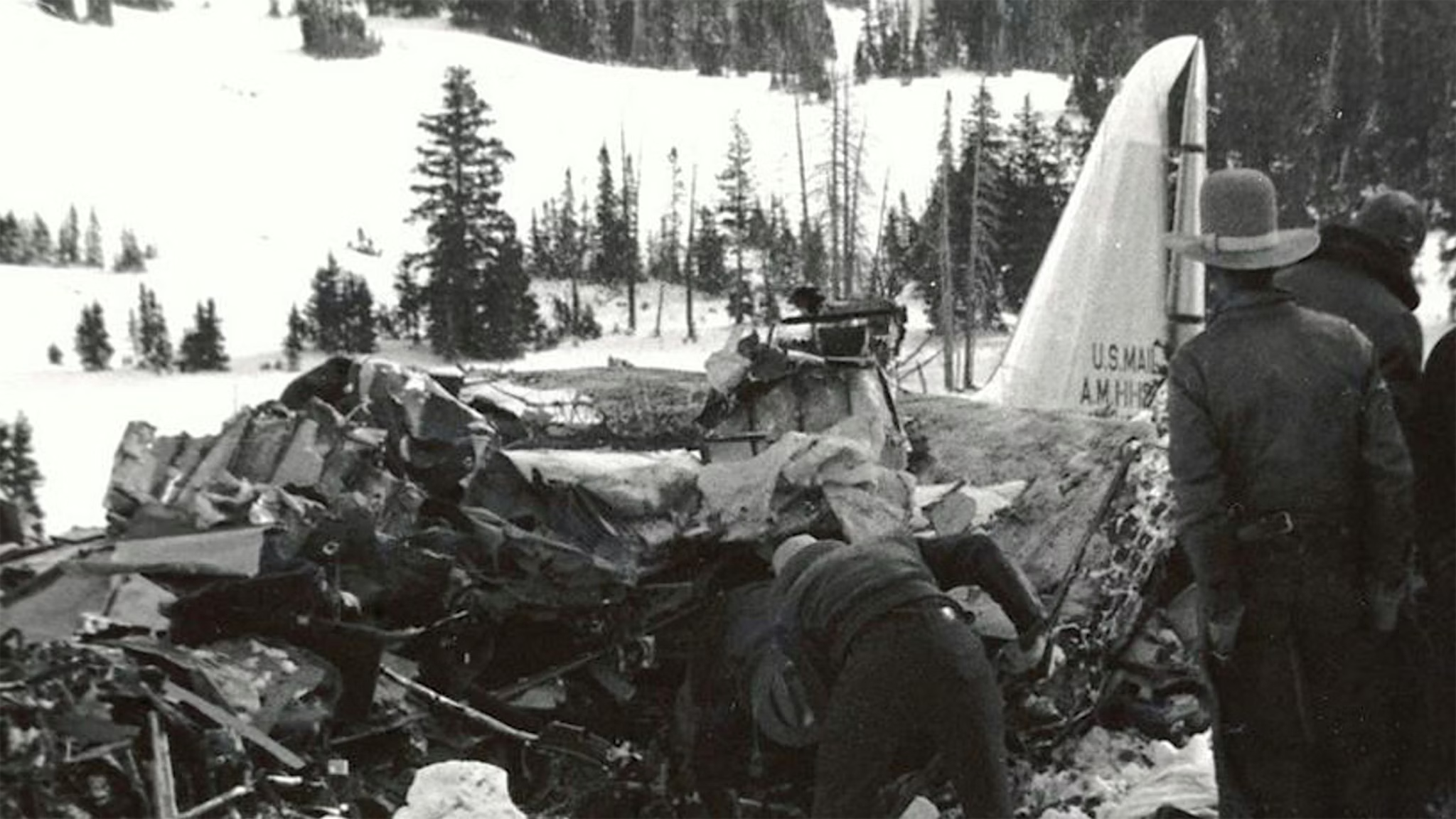



A young Cheyenne couple expecting their first child, newsreel filmmakers, a Washington D.C. socialite, and a prominent heart surgeon were among the 16 passengers who flew out of Cheyenne on Sunday, Oct. 17, 1937.
The couple was headed to San Francisco to have their baby, the filmmakers to Los Angeles to complete an air safety film, the socialite to see Amelia Earhart’s husband, and the surgeon to lecture. The luxurious DC-3A Mainliner, introduced that year, carried a “barograph” device in its tail—the precursor to today’s flight data recorders.
At the controls was pilot Earl Woodgerd, 38, a United Air Lines veteran with 11,000 flight hours. His copilot John Adams had 3,500 hours. Stewardess Leah Derr, 26, was in her second week on the Cheyenne to Salt Lake City route.
The flight took off at 6:26 p.m. Conditions were clear in Cheyenne, with light rain forecast farther west. At 8:16 p.m., Woodgerd radioed he was over Rock Springs, conditions “slightly rough, all OK.” A Salt Lake dispatcher reported heavy rain and a 6,000-foot ceiling, warning of ice at 10,500 feet. Woodgerd acknowledged. That was the last anyone heard from Trip One.
When the plane failed to respond to repeated radio calls after 9 p.m., emergency plans were implemented.
The first search plane went out at 1:30 a.m. Monday. Searchers found the wreckage just across the Wyoming line in Utah’s Uinta Mountains at a spot called Humpy Ridge. The wings were torn off, engines 100 feet upslope, the cabin caved in.
“We could see at a single glance that there was no possibility anyone could have survived,” said pilot Ray Peck, who flew over the site.
All 19 on board died—the worst airplane disaster in U.S. history to that point. The only deadlier air disasters had involved zeppelin airships, including the Hindenburg crash five months earlier.
Recovery crews worked in snow, wind and cold at 10,000 feet. Nearly all bodies were found outside the plane, many in pieces, most with shoes torn off. Pilot Woodgerd was found still strapped to his seat beneath the wreckage.
The investigation revealed that 60 mph winds pushed the plane 15 miles off course while the pilot compensated for only the 35 mph winds forecast. Radio range signals were unintelligible due to static, and the pilot couldn’t see the ground to locate himself.
A Western Air Express pilot testified he encountered severe icing and 70 mph winds that evening and radioed warnings at 7:21 p.m. The storm hit Knight and Rock Springs around 7:26 p.m., garbling radio traffic and interrupting teletype service.
As a result, United Air Lines raised altitude requirements on the route to 13,000-14,000 feet. The barograph recovered from the wreck provided data that helped investigators understand what went wrong, contributing to improved safety measures for future flights.


The latest news in your social feeds
Subscribe to our social media platforms to stay tuned