


Cuba Opens Door to Exiles as Economic Pressure Mounts
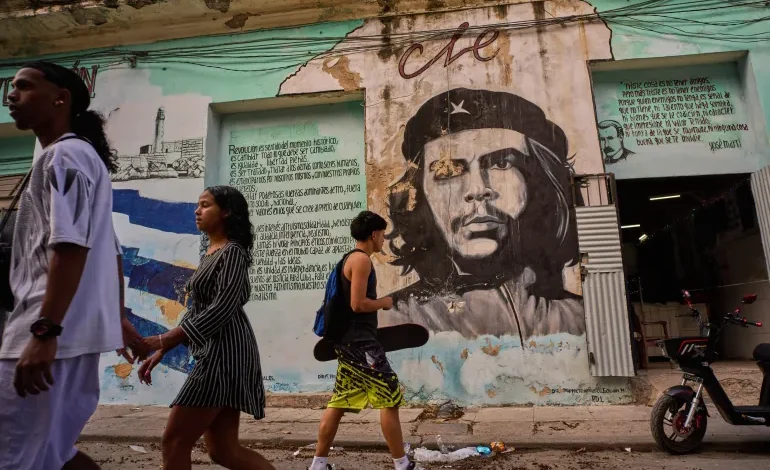

Cuba is making a notable shift in tone toward its diaspora, inviting Cuban Americans and other exiles to invest in businesses on the island — a move that signals both economic urgency and a recalibration of long-standing political lines.
“There are no limitations,” Cuban Deputy Prime Minister Oscar Perez-Oliva Fraga said in an interview on state television, framing the policy as a broad opening rather than a symbolic gesture.
The message is straightforward: capital is welcome, even from communities that Havana has historically viewed with suspicion. For decades, many in the exile population have supported the US economic embargo, making the relationship politically fraught. Now, the government appears willing to separate economic opportunity from political history.
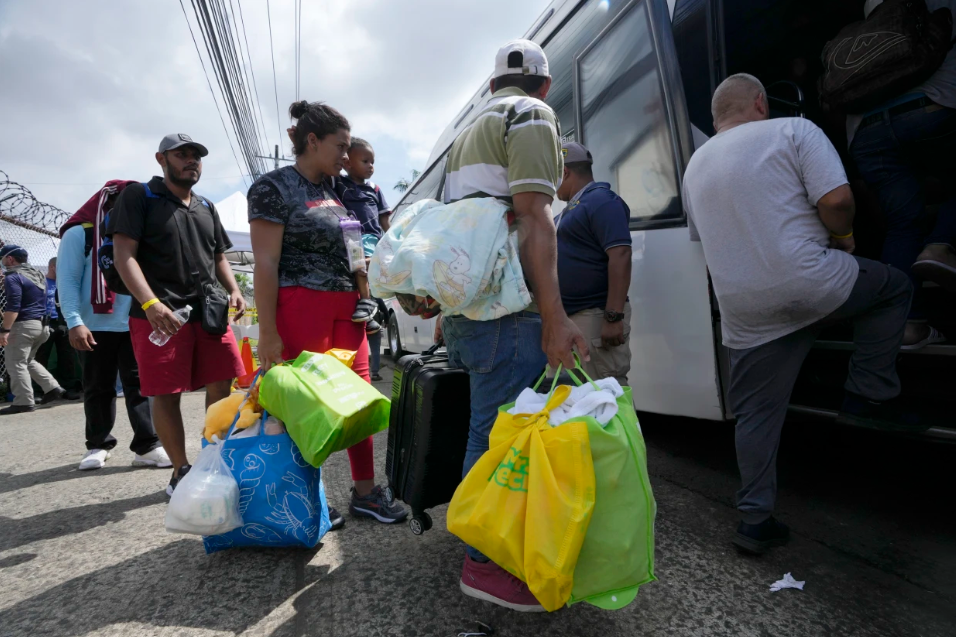
The shift comes at a difficult moment for Cuba’s economy. Years of sanctions, compounded by a US-imposed oil blockade, have pushed the country into a deeper crisis marked by blackouts and shortages of fuel, food and medicine. More than 1 million Cubans have left the island since 2021, creating both a demographic challenge and a potential pool of external investment that, until now, remained largely excluded.
Until recently, only residents on the island could own and operate private businesses, a policy introduced in 2021 as part of limited economic reforms. Nationals living abroad were left out of that framework. The new approach changes that, at least in principle.
Perez-Oliva Fraga suggested the scope could go well beyond small-scale entrepreneurship.
“We have reiterated on several occasions that Cuba’s doors are open to investment from the Cuban community residing abroad. And when we say that, we’re not just referring to small ventures. We’re also referring to the possibility of investing in larger projects,” he said.
He pointed in particular to agriculture as a priority sector, noting that foreign participation could follow models already in place, such as Vietnamese involvement in rice production — though under arrangements where land ownership remains with the state.
At the same time, Havana is signalling openness to broader foreign investment, including from US businesses. But there is a clear limitation: US law still restricts trade and investment under the decades-old embargo, meaning any economic opening will depend as much on Washington as on Havana.
The timing of the announcement is not accidental. It comes shortly after Cuba confirmed it had begun talks with the United States, and as officials in the administration of President Donald Trump have privately indicated that economic engagement could be part of a future agreement.
Those obstacles are not only legal but political. Trump has tightened pressure on Cuba by cutting off Venezuelan oil shipments and threatening tariffs on countries that supply energy to the island. He has also escalated his rhetoric in recent weeks, suggesting that Cuba is close to collapse and hinting at a more assertive US role.
On Monday, he went further, saying he expected to have the “honour” of “taking Cuba in some form“, adding that “I can do anything I want” with the neighbouring country.
The latest news in your social feeds
Subscribe to our social media platforms to stay tuned