



Border Strike Claims and 27 Bodies Deepen Colombia–Ecuador Tensions

A fragile border dispute between Colombia and Ecuador has taken a sharper turn, after Colombian President Gustavo Petro said 27 charred bodies were found near the shared frontier — a discovery that comes alongside accusations of cross-border military action.
Petro suggested that recent bombings near Colombia’s southern border may not have originated from within his country.
“The bombings along the Colombia-Ecuador border do not appear to be the work of armed groups—they don’t have aircraft—nor of the Colombian security forces. I did not give that order,” he said.
The statement follows remarks made a day earlier, when Petro raised concerns about a strike he said involved an aerial bomb dropped close to the border.
“We’re going to thoroughly investigate the circumstances – it happened very close to the border with Ecuador – which somewhat confirms my suspicion, but we need to investigate thoroughly: they’re bombing us from Ecuador, and it’s not the armed groups,” he said.
Ecuador has rejected that version of events. President Daniel Noboa responded directly, insisting that his country’s military operations have not crossed into Colombian territory.
“President Petro, your declarations are false, we are acting in our territory, not yours.”
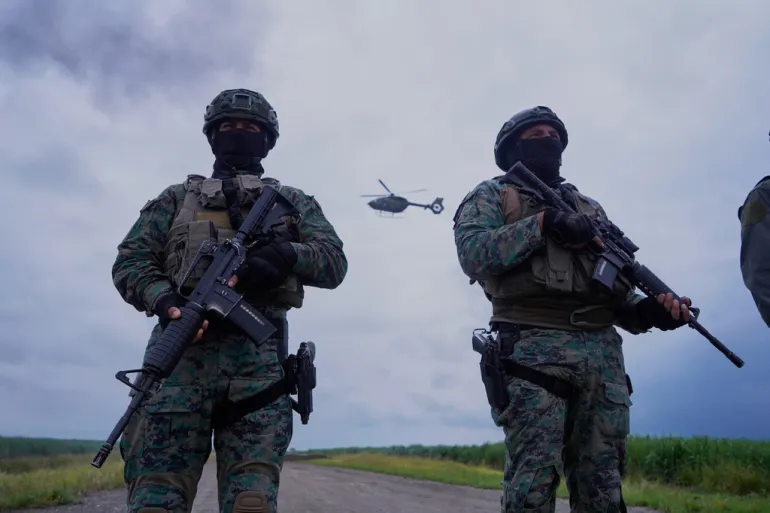
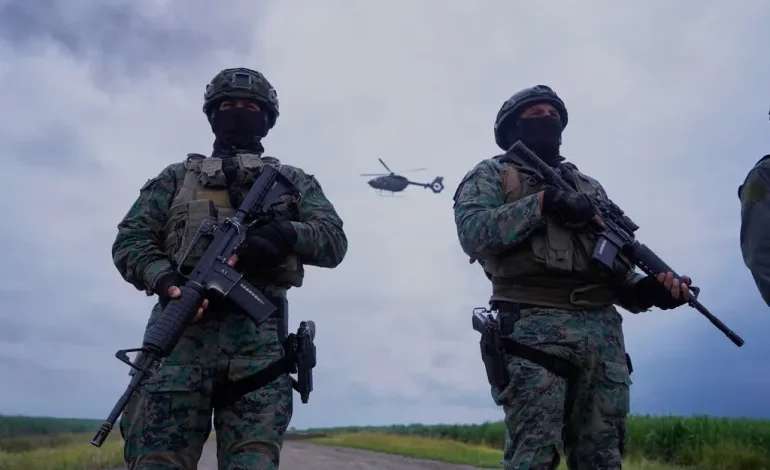
The exchange reflects a rapidly escalating dispute between the two governments, already strained by security concerns and recent economic tensions. Earlier this year, Ecuador launched a military campaign against armed groups, supported by the United States, as part of a broader effort to confront organised crime.
Colombia’s Defence Ministry said it has deployed security forces and technical experts to assess the site of the reported explosion and determine the origin of the device.
For now, key details remain unresolved. Analysts say it is still unclear what exactly happened at the site or who was responsible.
“It’s very unclear if this came from Ecuador, what happened, who exactly was hit,” said Elizabeth Dickinson of the International Crisis Group.
The incident comes against a wider backdrop of cross-border instability. Armed groups such as the Comandos de la Frontera operate on both sides of the border, exploiting a region shaped by illegal mining and drug trafficking routes. Ecuador has intensified its military approach in recent months, including air strikes on such groups within its own territory.
At the same time, relations between Bogotá and Quito have been strained by economic measures. Ecuador recently imposed tariffs on Colombian imports, prompting a reciprocal response and pushing tensions beyond security issues alone.
Behind the dispute lies a shared challenge: transnational crime that does not respect borders. But as accusations and counter-accusations mount, coordination between the two countries appears to be weakening.


The latest news in your social feeds
Subscribe to our social media platforms to stay tuned