



Iran Strikes Gulf States as War Spreads Across Region
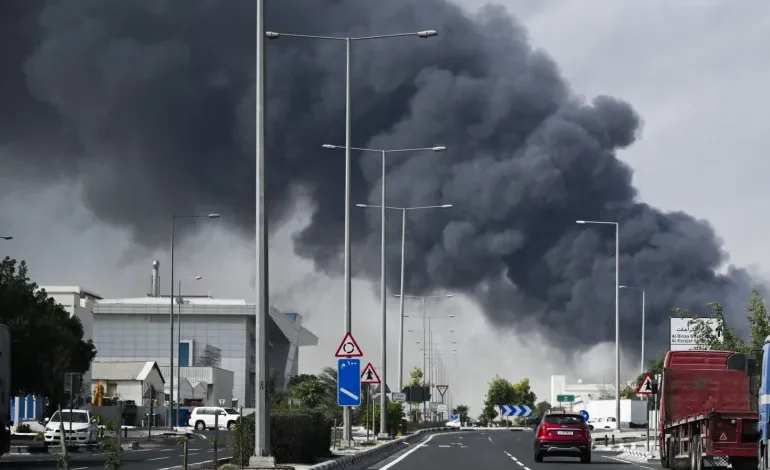


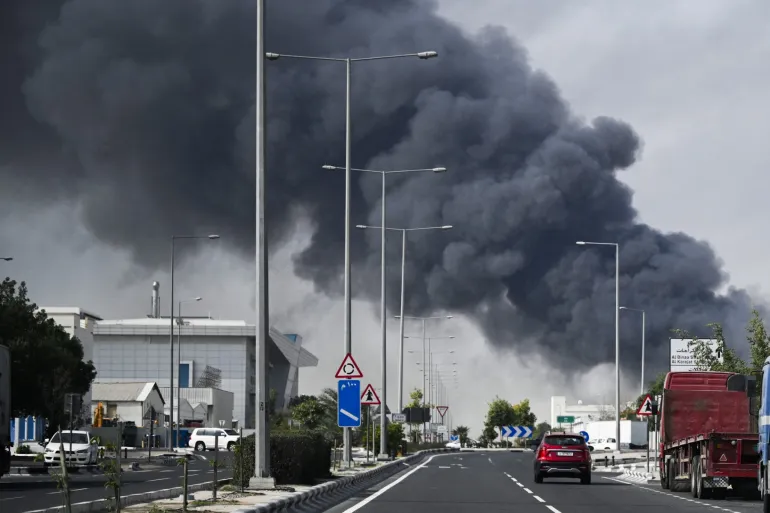
The fallout from the US-Israel war on Iran is no longer contained to the initial front lines. Nearly three weeks into the conflict, missile and drone attacks from Iran have become a daily reality across Gulf Arab nations, pulling the wider region deeper into a cycle of escalation.
Early Tuesday, Qatar confirmed it had intercepted a missile aimed at its territory, with the Ministry of Defence saying its armed forces had successfully neutralised the threat. Around the same time, Kuwait reported shooting down an unmanned aircraft at dawn, following earlier alerts that its military was actively intercepting incoming missiles and drones.
Other Gulf states are facing similar pressure. The United Arab Emirates, Saudi Arabia and Bahrain have all reported intercepting projectiles in recent hours, suggesting a coordinated and sustained pattern of attacks.
Saudi Arabia’s Ministry of Defense said it had destroyed a drone over its Eastern Region, while the UAE reported its air defences were “currently responding to incoming missile and drone threats from Iran”. The statement came just hours after another round of attacks, underlining how little time now separates one wave from the next.
On the ground, the experience is becoming routine — and increasingly normalised.
“The UAE has been the hardest hit by Iran’s retaliation. For instance, there have been 3000 different projectiles – missiles and drones – fired at GCC countries by Iran in terms of its retaliation. More than half, well over half, have targeted places in the UAE. Overnight was no different … Multiple explosions heard throughout the city,” said Al Jazeera correspondent Zein Basravi, reporting from Dubai.
“That glow of defensive weapons and interceptions in the night skies, something that has become all too familiar, not just in Dubai, but in cities across the GCC. Once again seen over the skies here.”
“Dubai’s media office confirming that they were the result of air defence interception operations,” he added.
The scale of the attacks points to a shift in how the conflict is being fought. Iran has framed its strikes as targeting US-linked military infrastructure across the region, arguing that Gulf states are hosting bases used in the war. Those countries have rejected that claim, calling the attacks unjustified and warning of broader regional consequences.
The human toll, while still limited compared to the main theatres of war, is growing. There have been several deaths reported across Gulf countries, alongside mounting disruption to daily life.
The economic impact is already more visible. The Gulf’s energy-driven economies are absorbing some of the earliest and sharpest shocks. Oil production across the region has dropped significantly — from around 21 million barrels per day to 14 million within just over a week — as the closure of the Strait of Hormuz disrupts exports and complicates logistics.
Beyond energy, tourism and travel sectors are also feeling the strain, raising the prospect of a wider regional slowdown not seen since the early 1990s Gulf War.


The latest news in your social feeds
Subscribe to our social media platforms to stay tuned