


CNBC, the New York Times, CNN, NBC News, Reuters, and NPR, and AP contributed to this report.
Economists and fund managers say the Federal Reserve can — and probably will — cut interest rates this year, even as the Iran war-driven jump in oil pushes inflation up and growth down. That’s the headline from the CNBC Fed Survey of 32 market pros (fund managers, analysts and economists): on average they expect 1.8 rate cuts in 2026, and they see oil trading around $88 a barrel six months from now.
Translation: the panel thinks the oil shock is serious but temporary enough for the Fed to loosen policy later — a notably more dovish view than markets, which are pricing in only one cut this year.
Here’s the messy bit. Survey respondents warned the oil squeeze would lift headline inflation by roughly 0.5 percentage point and shave about 0.3 percentage points off GDP, pushing the 12-month recession odds to 31% (up eight points since the last survey). In short: higher pump prices will sting consumers and dent growth, but many economists still expect the slowdown to open the door for rate cuts.
Some names from the survey put it bluntly. Economist Robert Fry said his forecast hinges on whether oil shipments through the Strait of Hormuz resume soon — otherwise “oil prices will go much higher, and I will put a recession in my forecast.” And Steve Blitz argues the Fed will be watching for weakening that argues for easing, not more hikes.
That view helps explain the split with the Fed-futures market. A lot of survey respondents assume the oil squeeze fades and that inflation won’t become permanently higher — meaning higher rates aren’t needed to fight lasting inflation. But if the oil shock proves stickier and pushes core inflation higher (82% of respondents think that’s likely), the Fed’s path toward cuts could get postponed or even wiped out.
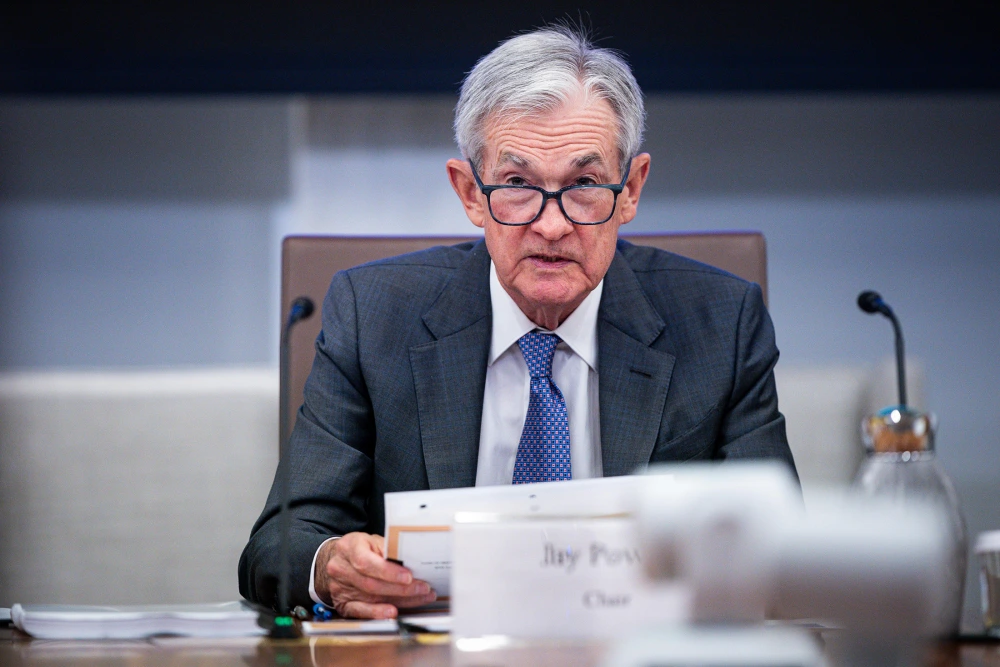
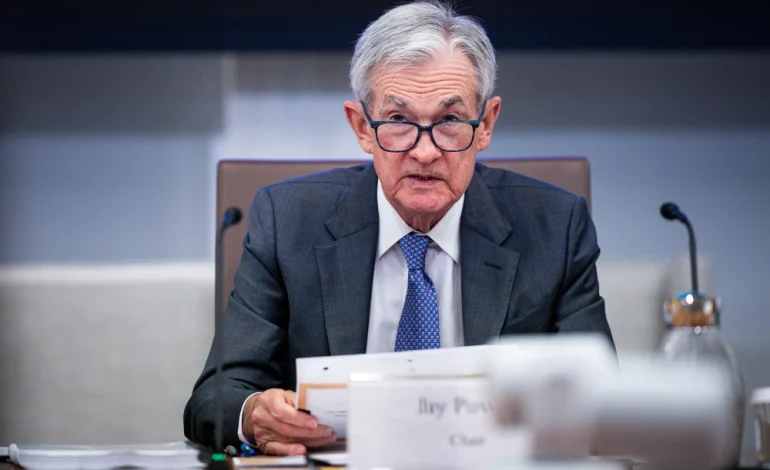
For now, officials are expected to hold rates at this week’s meeting — the Fed’s policy range is widely assumed to stay at 3.5%–3.75% — while the committee debates how much to revise its inflation and growth outlooks. Traders, meanwhile, are watching Powell’s words for clues on timing.
Beyond oil, survey takers flagged a new worry: private credit. Two-thirds of respondents said problems in private credit could drag on growth, 69% said it could trigger systemic risk, and 75% rated overall credit-market systemic risk as “somewhat elevated.” That’s another reason forecasters are cautious: even if inflation cools, credit strains could slow a recovery and complicate the Fed’s calculus.
The consensus tilt is still toward cuts this year — but they won’t be neat or guaranteed. The difference between the survey’s 1.8-cut average and the futures market’s single cut shows the tug-of-war: economists believe the Fed can ease once the oil shock fades and growth weakens, while traders want more proof. If oil stays elevated longer, or if core inflation meaningfully drifts up, the Fed’s “cut year” could easily become “no-cut year.”



The latest news in your social feeds
Subscribe to our social media platforms to stay tuned