




The Financial Times, Forbes, the New York Times contributed to this report.
Gas prices are ripping higher in a way that doesn’t smell like the usual seasonal squeeze. This jump is driven by a geopolitical shock — not just crude cycling higher — and that changes who gets hurt, how fast, and how long it might last. Here’s the quick take and a practical, state-by-state way to think about what it means for your wallet.
Normally, price blips come from demand, refinery maintenance, or hurricanes. This time the shock is supply — the Strait of Hormuz, the maritime rut through which a huge share of seaborne oil moves, has been largely choked off. On a typical day about 20 million barrels of crude and refined product transit that corridor; analysts now say flows are down to a tiny fraction of that, a trickle compared with normal levels. That’s why traders are slapping a big “risk premium” on oil right now.
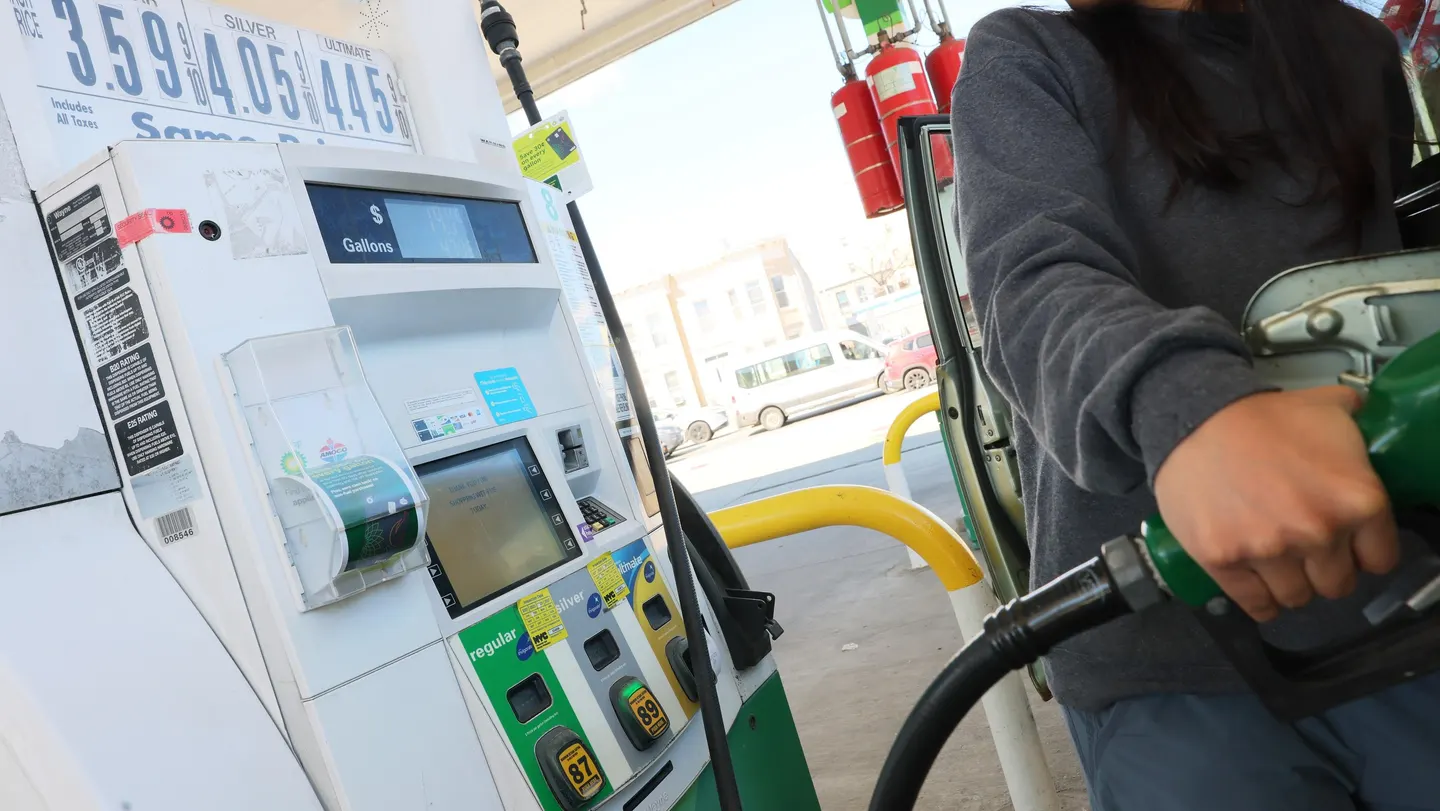
The result: diesel prices are surging (the national average hit roughly $5.04 a gallon recently) and regular gasoline has jumped sharply — roughly a $1.20 increase over just two weeks in many places — meaning Americans are collectively spending hundreds of millions more at the pump every day. One estimate pegs the extra daily US tab at about $330 million compared with a month ago.
Economists warn it’s not trivial: if oil drifts into the $130–$150 a barrel range and stays there, models show a real chance of tipping the US into recession — Mark Zandi’s team puts the odds of recession within 12 months near the 50% mark under a severe shock scenario.
Why this feels different
- It’s physical, not just financial — A refinery offline or a seasonal increase in driving is usually localized and predictable. A disrupted shipping lane means crude literally can’t get to where it’s needed, forcing some exporters and refiners to cut output. That squeezes global inventories, not just local supplies.
- Tanker rates and shipping dynamics are in play — Ship insurance, rerouting, and tanker rates have exploded; some buyers are price-locked, others are stuck paying the spot market premium, which filters quickly into pump prices. Also, savvy players are buying tankers like they’re assets on sale — a move that tightens shipping capacity and can push costs higher.
- The pain is uneven — This is not a flat national tax increase. States and regions feel it differently depending on refinery access, fuel-tax structure, and how much diesel-heavy trucking runs through them. That’s why a state-by-state look matters.
- Policy risk is real — The political theater — leaders publicly pushing for coalitions to reopen shipping lanes, allies hedging about direct involvement — makes the outlook murky and prolongs the premium on oil. Uncertainty = higher prices.
- California — Already high-tax and high-price, CA feels the sting more. Refineries here are fewer and specialized; when crude reroutes or diesel spikes, the state’s pump prices typically move faster and further.
- Gulf Coast (Louisiana, Texas, Mississippi, Alabama) — If refineries on the Gulf can keep receiving crude from domestic and alternative sources, local pain may be muted — but export disruptions that reroute barrels can still lift local wholesale prices. Texas is large and diverse: some metro areas will be hit worse than others.
- Northeast (New York, New Jersey, New England) — Heavily dependent on refined product shipments. A supply hiccup in shipping routes tends to show up quickly in pump prices and diesel for heating/transport.
- Midwest — Home to big trucking churn and pipeline connections; diesel spikes here hammer freight costs, which trickle into grocery and retail price tags.
- Mountain/Plains states — Less immediate refinery exposure but higher transport costs mean price increases can be abrupt once trucking margins rise.
- Southeast (Florida, Georgia, Carolinas) — Florida’s tourist demand plus refinery logistics can make pump pain public-facing fast; tourism season could amplify the sting.
Coastal importers and states with higher state and local fuel taxes tend to see the worst immediate retail spikes; the Midwest and trucking-heavy states feel the economic secondary effects faster via freight and food prices.
What to watch next
- Brent and WTI benchmarks — sustained inching toward $130+/bbl is the headline risk.
- Strait of Hormuz news — any sign of reopening or a credible escort plan could snap the premium down. Political signaling matters.
- Tanker insurance and freight rates — these amplify or dampen the premium on moving oil.
- Fed reaction — sustained higher oil lifts inflation and could push the Fed to stay hawkish longer, which complicates the jobs-and-growth story.
Practical tips for drivers and households
- Use price apps and fill during off-peak days if possible.
- Carpool, telecommute, or shift to public transit where options exist — the one-time behavior saves more than a cent-per-gallon coupon.
- For small businesses dependent on freight, talk to suppliers about hedging or renegotiating terms; pass-through costs often arrive with little warning.
- If you live in a high-tax/high-price state (California, etc.), prepare for higher grocery and services inflation in the weeks ahead.
This spike feels different because it’s not just economics — it’s geopolitics turned into a supply shortage. That means the timeline is political as much as it is market-driven. Until shipments normalize or traders stop pricing for supply catastrophe, expect headline-driven volatility and unequal pain across states. Keep an eye on local pump trackers, and brace for a period where filling up costs more — and what you pay at the pump may be the first sign your state’s grocery bill is about to follow.



The latest news in your social feeds
Subscribe to our social media platforms to stay tuned