


Trump Pushes Back China Trip as Iran War Takes Priority

US President Donald Trump has confirmed he is postponing his planned visit to China, as the ongoing war with Iran continues to dominate Washington’s agenda and reshape his foreign policy priorities.
“We are resetting the meeting,” Trump told reporters at the White House on Tuesday. “We’re working with China. They were fine with it.”
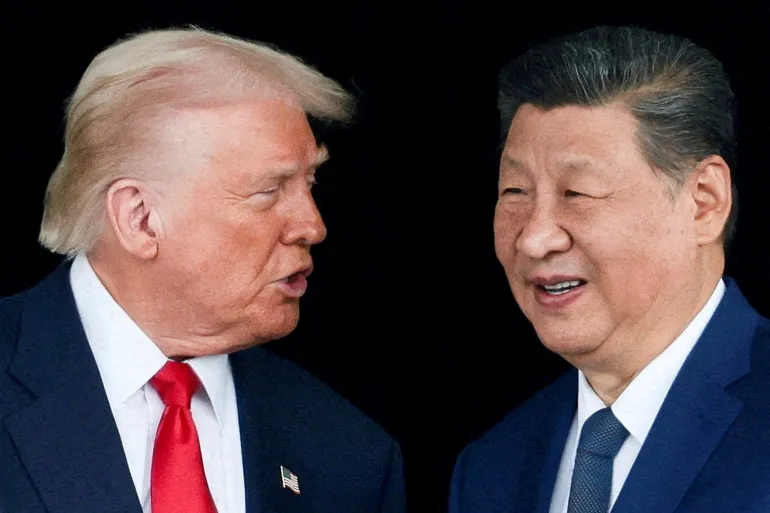
The trip, originally scheduled for March 31 to April 2, was expected to bring Trump face to face with Chinese President Xi Jinping for high-level talks. Instead, the meeting is now likely to take place in late April, with Trump indicating a delay of “about five weeks”.
The reason, he said, is straightforward.
“Because of the war, I want to be here. I have to be here.”
Nearly three weeks into the conflict with Iran, the war has become the central organising force behind US decision-making. The Strait of Hormuz — a key global shipping route — remains largely closed, driving volatility in oil markets and adding urgency to diplomatic efforts.
China’s Ministry of Foreign Affairs said both sides remain in contact regarding the visit, signalling that the delay is procedural rather than a breakdown in relations.
Before the postponement, the meeting was expected to cover a wide range of issues, including tariffs, export controls on rare earth minerals, tensions over Taiwan and concerns about fentanyl flows. Those topics remain unresolved, but are now competing for attention with a rapidly evolving crisis in the Middle East.
Trump’s tone toward China has also shifted in recent months. After a more confrontational start to his second term, he has softened his rhetoric following a meeting with Xi in South Korea last year.
“I look forward to seeing President Xi; he looks forward to seeing me, I think,” Trump said. “We have a very good relationship with China. It’s much different than it was in the past.”
At the same time, the war with Iran has created a new layer of interdependence between Washington and Beijing. Trump has openly called on China to help pressure Tehran to reopen the Strait of Hormuz, a move that reflects how the conflict is spilling into global economic coordination.
China, as Iran’s largest trading partner and one of the world’s biggest oil importers, is directly affected by the disruption. Yet its response so far has been cautious, balancing economic interests with political alignment.
That dynamic has complicated expectations around Trump’s negotiating position. What was initially framed by some supporters as a demonstration of US strength has produced more uncertain outcomes.
Ali Wyne, a senior researcher at the International Crisis Group, said the administration had hoped the military campaign — dubbed Operation Epic Fury — would strengthen Trump’s leverage in talks with Xi.
Instead, he suggested, the situation has shifted in the opposite direction.
“The gambit, however, has quickly boomeranged. Facing the severest oil supply shock in history, Trump is now exhorting Xi to help him reopen the world’s most vital waterway, the Strait of Hormuz,” he said.

The latest news in your social feeds
Subscribe to our social media platforms to stay tuned