


Aid Convoy Reaches Cuba as Blackout Deepens and Political Tensions Rise

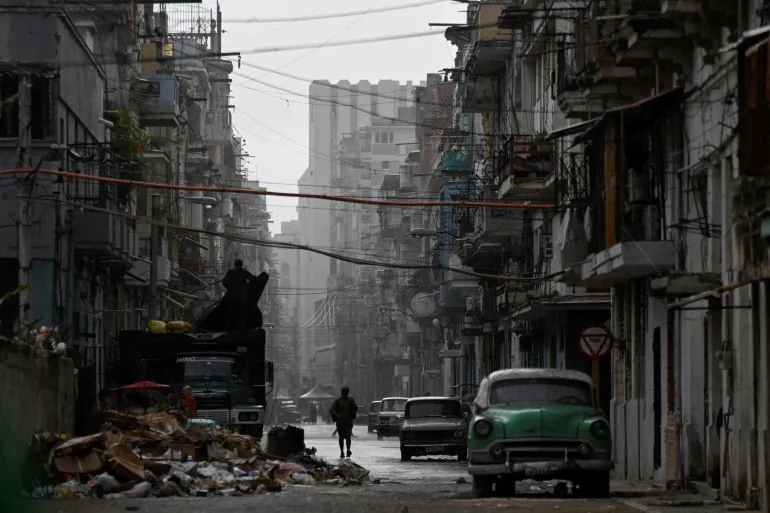
As Cuba grapples with a nationwide blackout and a deepening energy crisis, the first members of an international aid convoy have arrived in Havana, bringing more than 20 tonnes of food, medical supplies and solar equipment. The effort is framed not only as humanitarian support, but also as a political statement against Washington’s tightening pressure on the island.
The Nuestra America Convoy to Cuba (NACC), made up of activists, trade unionists and representatives of European left-wing parties, departed from Milan on Tuesday and reached Havana a day later. Their arrival comes at a moment when Cuba’s energy system is under severe strain, with fuel shortages worsening after a complete halt in foreign oil shipments over the past three months.
That disruption follows a US escalation earlier this year, when Washington intensified its longstanding embargo with a full oil blockade. The move has sharply limited Cuba’s ability to generate electricity, pushing the country closer to a humanitarian breaking point.
For participants in the convoy, the mission is as much about visibility as it is about aid. They argue that the scale of the current crisis has not been matched by a response from European governments.
“The European Union, the Italian government, and the British government alike should oppose and put pressure on President Trump to lift this embargo on Cuba,” said Mauro Trombin, a delegate affiliated with the Italian party Europa Verde.
The criticism reflects a broader frustration among activists, who point out that while European countries routinely oppose sanctions on Cuba in international forums, those positions have not translated into concrete policy shifts.
Iain Wallace, a member of the UK-based PCS trade union and a participant in the convoy, described the situation in more direct terms.
“I would have expected [European] countries to … reify trade relations and cultural exchange with Cuba,” he said. “Cuba needs fuel … We can take as much humanitarian aid as we can, but that is masking symptoms, not treating the cause.”
That distinction — between immediate relief and structural change — runs through much of the debate. Humanitarian shipments can ease shortages, but they do little to resolve the underlying constraints on Cuba’s economy, particularly its access to energy.
International responses have been uneven. Countries including China, Chile, Mexico and Canada have either sent or pledged aid, while Spain has also committed to providing support. At the same time, political divisions in Europe are becoming more visible, particularly as relations with the United States face new strains over broader geopolitical issues.
Within official channels, the tone remains more measured. Jose Luis Darias Suarez, Cuba’s consul general in Milan, pointed to the existing framework governing EU-Cuba relations.
“At present our relationship with the European Union is maintained by the dialogue agreement, which was implemented some years ago and lays a foundation for, above all, a cooperative relationship between good [diplomatic] partners, which we, Cuba and the European Union, are,” he said.
That agreement — the 2016 Political Dialogue and Cooperation Agreement — has structured ties between Havana and Brussels for nearly a decade. But even that framework is now under pressure. The European Parliament has recently backed a proposal to suspend it, citing concerns over Cuba’s human rights record — a move that could also affect the flow of humanitarian funding.

The latest news in your social feeds
Subscribe to our social media platforms to stay tuned