
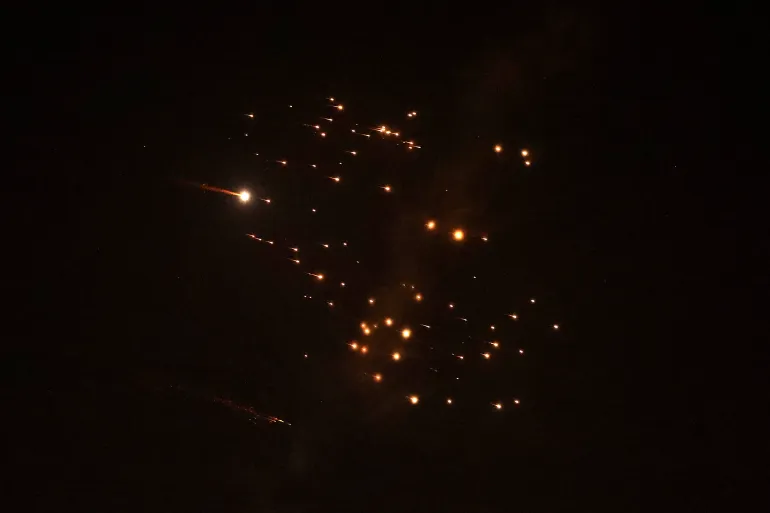
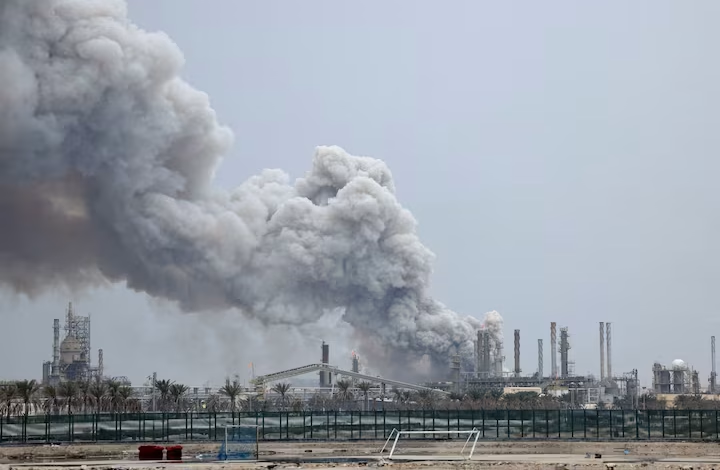


Within days, a quick in-and-out bombing campaign in Iran had become a Gulf war in all but name: airspace closures, missile interceptions, refinery fires, panicked rerouting of tankers, and a Strait of Hormuz that Reuters says has been effectively shut, trapping roughly a fifth of global oil and LNG flows. The region’s economy got hit with a hammer.
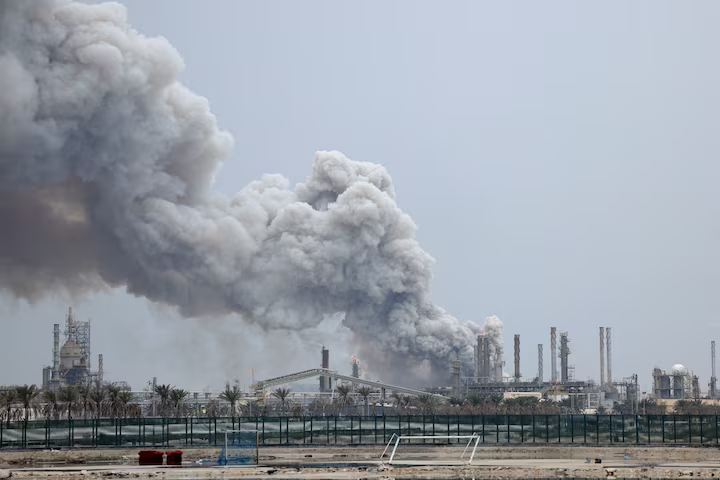
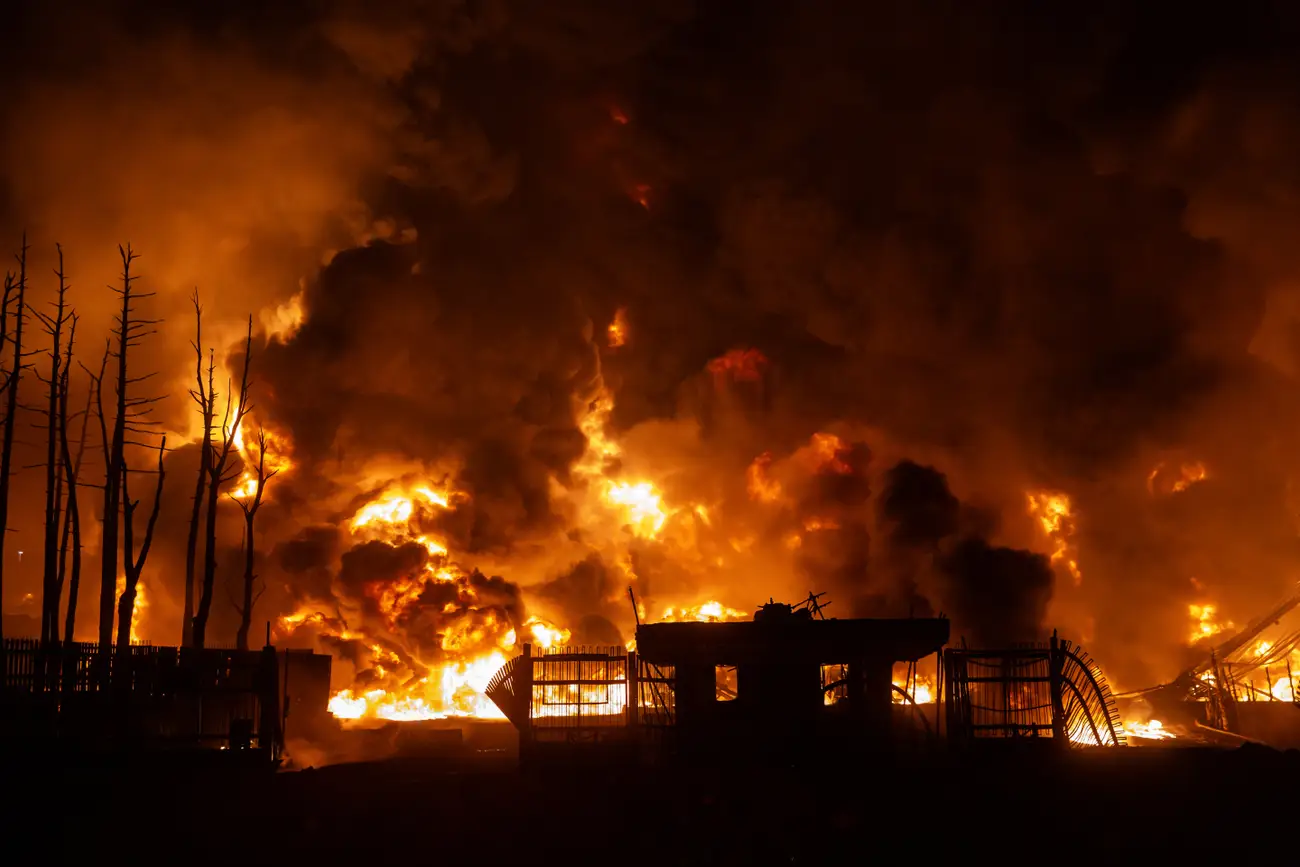
The Gulf states are dealing with all at once: strikes on energy facilities in Qatar, Saudi Arabia, the UAE, and Kuwait; evacuation warnings for petrochemical complexes; fire reports at refineries; shutdowns in LNG production; and maritime traffic that has slowed so sharply that the IMO is now discussing a corridor to get stranded seafarers out.
The Gulf’s business model has always rested on a simple promise: stability, speed, openness, and predictability. Chatham House notes that the war is hitting Gulf producers hard while also exposing the wider region to ripple effects in trade, tourism, and investment. The Reuters energy desk makes the same point in plainer language: once Hormuz is effectively closed, “trade flows, investment decisions and risk calculations” start changing for years, not weeks.
Iran’s strikes are no longer confined to military targets or symbolic retaliation. They are hitting the logistical heart of the Gulf economy, and that includes the places that make the Gulf rich in the first place: LNG plants, petroleum hubs, ports, airports, business districts, and shipping lanes. Reuters reported extensive damage at Qatar’s Ras Laffan LNG complex, shutdowns in the UAE, and fires at Kuwaiti refineries after Iranian attacks in response to the strike on South Pars. AP described the escalation as a broad assault on Gulf energy infrastructure with global price consequences, while Reuters noted that European gas prices jumped 28% in a single day.
The Gulf has seen missile attacks before. It has not seen this density of risk across so many sectors at once. The Dubai financial and logistics ecosystem is under strain. Jebel Ali has been hit. Aviation is disrupted. Tourism and retail are taking a beating. The UAE’s trading and manufacturing hub has been hit hard, and its role as a services outpost for Iran is now in question. That matters because Dubai is a symbol. When a city built on movement starts feeling immobile, the message reaches investors fast.
The same logic applies to the other Gulf economies, though each is exposed in a slightly different way. Qatar is especially vulnerable because LNG cannot simply be rerouted overnight. Saudi Arabia and the UAE have more exit routes, but their buffer is thinner than many outside the region assume. Reuters says Qatar has already fully shut its LNG production because of the war, threatening to keep a fifth of global LNG supply offline, while evacuation orders have also reached Saudi and Emirati energy sites. A real stress test for the world’s industrial supply chain.
This did not begin on February 28. The Gulf states have spent years trying to manage the tension rather than resolve it. The GCC was born in 1981 in the shadow of the Iran-Iraq war and the Iranian revolution, and for a long time the Gulf monarchies treated Iran as the region’s permanent spoiler. Yet the story was never as simple as open hostility. Dubai became a commercial bridge to Iran. Oman played mediator. Saudi Arabia and Iran reached a cautious détente in 2023 after Beijing brokered restored ties.
That détente was always fragile. INSS argued in January 2026 that Gulf states preferred a weakened Iran and had taken real steps toward détente, but only because they believed it served their security interests. The older literature says the same thing in slightly different language: Gulf-Iran relations have long mixed commerce, fear, and tactical restraint, not trust. The current war has shredded the useful fiction that the Gulf can simply hedge forever. Once the missiles started landing near oil, ports, and civilian infrastructure, neutrality became a lot harder to sell.
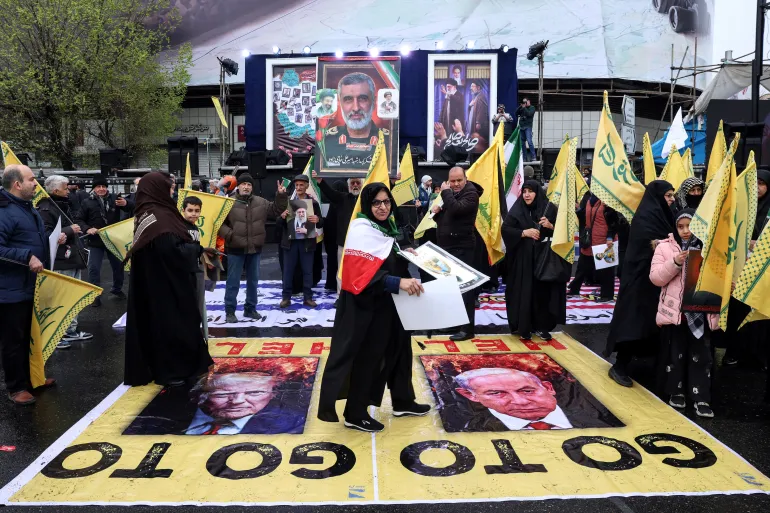
That is why the Gulf’s response has been uneven rather than unified. Some states are furious at Iran. Some are furious at Washington. Some are doing both at the same time. The Atlantic Council warned on March 2 that the Gulf emerging from this war would be “very different,” precisely because Iranian strikes on UAE, Qatar, Oman, Saudi Arabia, and others change the cost-benefit analysis around US bases and regional alignment. And as the war spread, Al Jazeera reported that Arab and Muslim foreign ministers met in Riyadh to hammer out a common response and assert the right of states to defend themselves.
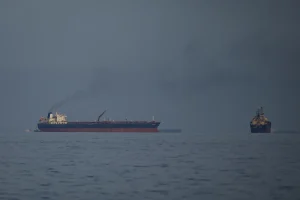
The immediate damage is obvious. Ports reroute cargo, tanker traffic slows, airlines reshuffle routes, and insurers start pricing the region like a hazard zone instead of a premium corridor. Reuters reported Gulf importers scrambling to reroute food, medicine, and industrial goods after Hormuz disruptions; another Reuters report described oil markets absorbing the shock of a closed strait and a shortage of spare capacity. Reuters says the war is already rearranging aluminium supply chains, forcing Gulf smelters to cut production and pushing traders toward alternative exporters. AP added that Gulf energy infrastructure itself was getting hit, which makes the problem more than a shipping story.
Chatham House put the economic case plainly: Gulf oil and gas exporters are already taking a heavy revenue hit, while importers face higher fuel costs, foreign-exchange stress, and rising inflation. Bloomberg’s reporting on the risk to Saudi Arabia, the UAE, and Qatar suggests the region is staring at one of its roughest downturns in decades if the war drags on. The old Gulf pitch – stable, open, rich, safe, invest here – works much less well when investors are watching footage of smoke over terminals and wondering whether the next fire will be in a refinery, a data center, or a hotel district.
The hydrocarbon problem is also exposes route dependence. Hormuz matters because the Gulf cannot simply wave a hand and move all its energy through another channel. Reuters’ shipping coverage showed how hard companies are trying to bypass the strait, but also how limited the alternatives are. Saudi Arabia and the UAE can divert some traffic through Red Sea and Arabian Sea routes, yet Qatar remains far more exposed because of its LNG dependence on the waterway. The situation is so dire that President Trump had to issue a statement promising no further Israeli attacks on Iranian energy infrastructure so not to provoke Iran’s retaliation in the region. That means the war is punishing the Gulf unevenly, which will affect intra-GCC politics later.
Frederic Schneider, Senior Fellow at Middle East Council on Global Affairs, captures the scale of the shock:
“The damage already inflicted to the GCC countries is unprecedented in both breadth and simultaneity. Within the first two weeks, the Gulf has absorbed a combination of shocks that no previous conflict in the region has produced. The Strait of Hormuz effectively closed, all six GCC airspaces shut during Ramadan, the Dubai International Financial Centre struck twice in 24 hours, QatarEnergy and Bapco (Bahrain Petroleum Company) in force majeure, Jebel Ali (largest port in the region) operations suspended, data centres hit, governments running through reserves as operational costs surge and oil revenues are running low. Oxford Economics has already downgraded GCC real GDP growth by 1.8 percentage points for 2026, and that estimate precedes any reckoning with the physical reconstruction bill, the tourism wipeout ($40bn and counting), or the accelerating departure of the expatriate professionals and high-net-worth residents on whom Dubai’s entire economic model depends.
The long-term blow to prestige may ultimately cost more than the “kinetic” damage. The Gulf’s proposition to the world – stable, cosmopolitan, safe, open for business – is the operating premise of the region’s economic diversification “Visions.” While governments try to expunge the footage of explosions and interceptions, the shift in perception affects both consumption decisions (e.g., tourists deciding to vacation somewhere else, HNWIs deciding to move somewhere else) and investment decisions (e.g., whether to keep or open branch offices, build data centres, or invest in Vision projects like NEOM). A quick end to the war may contain this image shift but will also depend on whether there is a durable solution to the conflict or whether it will flare up regularly now. Fitch’s warning of a 15% real estate correction in Dubai, Chinese banks cutting Middle Eastern debt exposure, and three of the four largest GCC economies reviewing $5 trillion in SWF deployments are early signals of a structural repricing that will outlast any ceasefire by years.
If the war drags on another two to three weeks, several escalation pathways become a probable risk as many targets have so far been spared. The most dangerous is the simultaneous closure of both Hormuz and the Bab el-Mandeb through the Houthis, which would seal off the Saudi Red Sea bypass not only for oil but also for cargo. Bahrain is extremely vulnerable to an attack on its only land connection, the King Fahd Causeway. If the US continue to target desalination plants, or start striking nuclear facilities, this could be answered by Iranian strikes on equivalent targets in the Gulf. But even absent these escalations, a sustained blockade pushes global oil towards the $140/bbl threshold that many experts have identified as a recession trigger – at which point the Gulf’s fiscal crisis merges with a global demand collapse, threatening even the post-conflict hydrocarbon windfall that currently gives Gulf bond markets a floor. The worst-case scenario, still extremely unlikely but not completely impossible if this war escalates and further conflicts are probable, is a long-term diversification away from the Gulf that encompasses rerouting of hydrocarbon supply chains, logistics routes, investment flows, and a reduction in global talent and wealth presence.”
Ali AlAhmed, a Saudi scholar and expert on Saudi political affairs, sees the money problem a little differently, but he lands in a similar place: war destroys growth, and growth destroys political room:
“The economic damage from Iranian strikes is secondary to the war itself. Iran targeted mostly military and intelligence assets used by the US and Israel. This included military bases, oil facilities supplying jet fuel, bases housing missiles and CIA and military housing. Targeting hotels in UAE for example was to kill CIA and senior officers staying there away from the bases.
Having said that, the economic damage comes mostly from two matters. Iran closing the Strait of Hormuz deprived Kuwait, Qatar and Bahrain from moving any oil, gas and any product to the world. UAE and Saudi Arabia are still able to ship part of their oil and other goods because they have ports on the Red Sea for Saudi Arabia and UAE ports on the Arabia Sea. This reduced capacity is damaging their economy for sure.
The greater impact is the American use of their space and territories to attack Iran. At the end of this war, they will have spent billions to fuel American jets, and ships involved in the war. This has happened before where Gulf countries paid the US over a half trillion dollars after the 1991 war on Iraq.
Talking about the multi trillion-dollar deals between Trump and GCC countries, it seems they are not going to materialize because of this war. These countries will end up poorer and unable to come up with the money due to damage and to fears of outsiders.
The Gulf has been the ground for 4 major wars in the past 40 years that killed millions. People are now looking somewhere else to live and invest. Even the US will likely downgrade that religion’s importance. The first victim of war is the economy.”
Politically, the Gulf states are being squeezed from both directions. They do not want Iran winning. They also do not want to be dragged into a war that keeps getting wider and less controllable. Fox News summed up the basic Gulf instinct: don’t join a direct war against Iran if you can avoid it, and don’t let your own territory become the launchpad. Oman has said flatly that it will not support the war, calling it illegitimate, while Saudi Arabia has left the door open to military action if needed after missile attacks on its soil.
Stephen Zunes, Professor of Politics and International Studies at the University of San Francisco and longtime analyst of US policy and nonviolent movements, captures the strategic bind:
“The Gulf Arab states have enormous militaries. They have shown an impressive level of defensive capabilities in the face of Iranian attacks. Saudi Arabia and even the UAE have higher military budgets than does Iran and they consist primarily of high-quality US equipment and the other Gulf states have disproportionately large militaries as well.
However, they are not likely to get involved with attacking Iran directly despite prodding by the Trump administration.
Despite their long standing rivalry, the Arab Gulf states had been engaging in rapprochement with Iran in recent years and tensions had eased considerably. They opposed the US going to war because they did not consider Iran a major threat and they knew it would lead to Iranian retaliatory attacks on their soil and a disruption of oil exports. They have refused to support US offensive operations against Iran.
They are clearly upset that Iran has gone beyond simply attacking US bases and to include attacks on their military and civilian infrastructure, however. If Iran thought it would get them to pressure the United States to stop bombing, it was a serious miscalculation since it has only increased their military cooperation with the United States. So far, though, such joint operations still seem to be almost exclusively for defensive purposes.”
Dr. Zunes argues that the Gulf states are capable of defending themselves but are still unlikely to join offensive strikes on Iran, despite US pressure. He also notes that Iran’s attacks on Gulf infrastructure have, paradoxically, pushed some Gulf states closer to the United States for defensive coordination even as they resist being pulled into an attack campaign. The key point is that defensive alignment is not the same thing as enthusiasm.
Kristin Diwan, a Senior Resident Scholar at the Arab Gulf States Institute, leans more into the strategic afterlife of the war:
“There is an assumption that the Iranian attacks are bringing the Gulf states closer to the US. The reality is more complicated. While US protection and coordination remain critical, Gulf states are turning to new security partners to meet gaps in their air defense. The economic demands they will face in recovery and headwinds to attracting foreign investment will see them shift more of their expenditure at home, reducing their commitments in US equities and treasuries. I expect the calculations of the UAE, Saudi Arabia, and Qatar may differ in how they approach a post-war environment, which remains very dependent on the war’s outcome.”
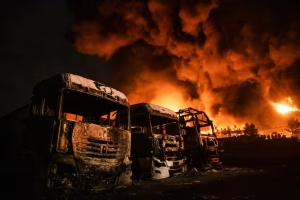
Her point is that Iranian strikes are pushing Gulf governments to hedge harder, diversify security partners, and keep more money at home rather than recycle it into US assets. That matters because it suggests the war may produce a more suspicious, more fragmented Gulf that still needs Washington, but trusts it less.
If this war keeps dragging on, the region may not snap back to the old order even after a ceasefire. The Atlantic Council, the New Arab, and Foreign Affairs all point in the same direction: the Gulf is likely to emerge more insular, more militarized, and less confident in the old bargain of US protection plus economic openness. One version of the future looks like more air defense cooperation and more diplomatic backchannels. Another looks like more attacks on critical infrastructure, more pressure on desalination plants, more maritime disruption, and a bigger political role for states outside the Gulf that can still keep the sea lanes open.
The hard truth is that the Gulf’s old posture of balancing, buying time, and hoping others absorb the damage is running out of road. Reuters says the current conflict is the most significant regional energy disruption in decades, with trade flows and risk calculations changing for years. Chatham House says the Gulf’s image as a stable business haven is taking a direct hit. And Al Jazeera’s latest reporting suggests that Arab capitals are now openly discussing defensive self-help and a collective response.
Right now, the conflict looks too big to stay bounded. The Gulf is being forced to defend itself, fund itself, and explain itself at the same time.


The latest news in your social feeds
Subscribe to our social media platforms to stay tuned