



Armenia’s New Constitution and the Price of Peace

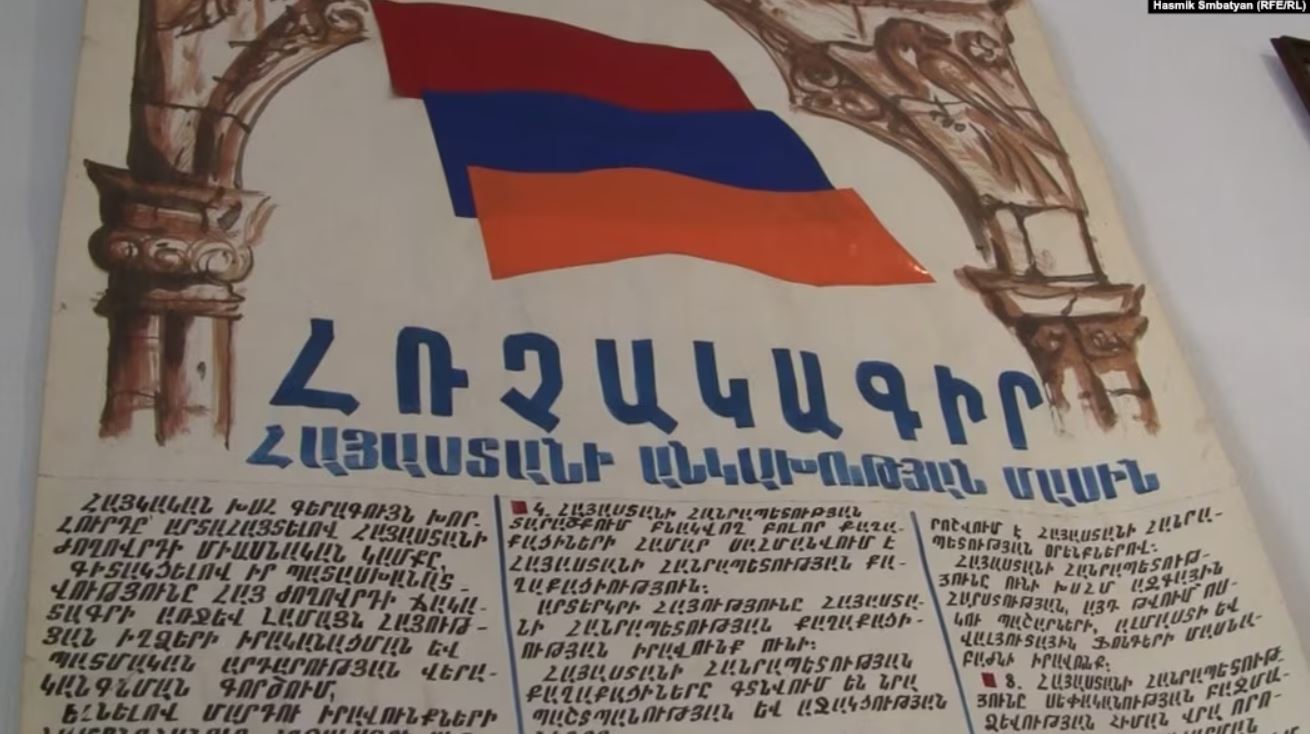
What is happening in Armenia right now looks, on paper, like a legal cleanup. In reality, it reads more like a political trade: Yerevan is being pushed to rewrite the country’s founding text in a way that removes one of Azerbaijan’s biggest objections to a peace deal. Prime Minister Nikol Pashinyan has openly argued that the new constitution should carry no reference to the 1990 Declaration of Independence, which appears in the preamble of the current constitution and which Baku treats as a hidden claim to Nagorno-Karabakh. Azerbaijan has said it will not sign a peace treaty unless that reference is removed, and Pashinyan has made clear that his side is willing to move in that direction.
That is why the draft is hitting such a nerve at home. According to the copy of the amended constitution described by Ishkhanutyun News Agency, the changes do not stop at the preamble. They also cut language on family rights, parental duties, simplified citizenship for ethnic Armenians, parliamentary oversight, and the public’s ability to veto strategic decisions. Critics see a pattern: a document that used to define the Armenian state is being recast into something narrower, more obedient, and easier to sell as “modernization.”
The preamble is the sharpest break. Armenia’s current constitutional order is tied to the Declaration of Independence, and that tie matters because the declaration anchors historical memory, the Karabakh question, and the language of national continuity. In the draft being discussed, that anchor is gone. Armenia’s justice minister, Srbuhi Galyan, said the current draft does not yet include a preamble, while the government argues the new text should point forward, not backward. Pashinyan has gone further, calling the declaration a “declaration of conflict” and insisting the issue is internal, not something to be negotiated with outside actors.
That argument may play well in a diplomatic briefing room. It lands very differently in a country where constitutional text is also a record of survival. The opposition’s warning is simple: remove the declaration and you are changing the state’s memory of why it exists. The Armenian Mirror-Spectator reported that Pashinyan pledged to pursue the kind of constitutional change Azerbaijan demands and that the only legal way to do it is through a referendum. The same report noted that the referendum is being pushed to after the June 7 parliamentary elections, which means the whole project is now fused to the government’s political survival.
The most explosive details, though, are buried deeper in the draft copy. The text reportedly strips out the clause that gave men and women equal rights in marriage, during marriage, and in divorce. It also removes the provision that required minors with legal capacity to care for elderly or needy parents. Then there is citizenship: ethnic Armenians abroad would lose the simplified route to Armenian citizenship if the draft is adopted in this form. Add to that the deletion of the National Assembly’s right to send written questions to ministers and the prime minister, and the pattern gets harder to ignore.
The government says the rewrite strengthens institutions. The draft, as summarized by Modern.az, would decentralize power, rebalance branches of government, and strengthen parliament’s control over the prime minister. It would also introduce a two-instance appeal principle, written examinations in some court cases, and a mechanism for appealing Supreme Judicial Council decisions. On that reading, the new text is a governance reform. On another reading, it is a more centralized political order dressed up as administrative efficiency. Those two readings are not mutually exclusive.
This is where the “European values” packaging starts to look thin. The language of reform is doing a lot of work here. Pashinyan and his allies present the constitutional rewrite as a future-facing choice, a way to lower tensions, stabilize the border, and close the door on another war. US intelligence, as summarized by Horizon Weekly, says the peace process has advanced but key obstacles remain, especially the constitutional issue; it also says approval of a referendum is not guaranteed. The same report notes that Washington-backed diplomacy has produced a significant thaw, including the TRIPP transit project and a drop in ceasefire violations, which is exactly why the constitutional issue is so politically loaded.
Pashinyan is betting that the public will eventually accept that trade. That is a risky bet. The more the constitutional rewrite looks like a concession demanded by Baku, the easier it becomes for opponents to frame the whole process as capitulation rather than peacebuilding. Asbarez reported that the US says hurdles remain in the peace deal because of Aliyev’s demand for constitutional change, which underlines the central problem: Armenia is not rewriting its constitution in a vacuum. It is doing it under external pressure, in the shadow of a defeated war and a still-fragile regional settlement.
And yet the government is pressing ahead. Armenpress reported that the draft still mentions the Armenian Apostolic Church and that it has already been finalized for review by the ruling Civil Contract party’s board and parliamentary faction. The rewrite is being managed as a controlled political process with a limited gatekeeper list. The public may eventually get a referendum, but first the party, the faction, and the state machine get their say.
That is the real tension in this story. Armenia’s leaders say they are building peace. Critics hear something else: a constitutional retreat that softens national memory, narrows public oversight, and gives Baku exactly the kind of symbolic victory it has demanded since the war. Maybe the draft does improve governance. Maybe it does help unlock a peace treaty. But a constitution is about the bargain a state makes with its own people. Right now, that bargain looks shakier than the government wants to admit.



The latest news in your social feeds
Subscribe to our social media platforms to stay tuned