



EXCLUSIVE: Operation Epstein Fury Part 5. The Iran War Comes Home.

The Iran war is dragging itself across the ocean and landing in the United States as a casualty list, a fuel shock, a budget fight, a media war, and a political headache for Donald Trump that keeps getting harder to spin away. The Strait of Hormuz is choked, oil is expensive, American troops are getting hit, and Washington is starting to look less like the author of a clean military campaign and more like the captive audience for one.

The easiest lie to tell about a foreign war is that it stays foreign. This one never had much chance of doing so. The US military has already counted at least 13 killed and about 200 wounded, with injuries spread across Kuwait, Saudi Arabia, the UAE, Jordan, Bahrain, Iraq, and Israel. Reuters says most of the wounded have returned to duty, but that is not the point. The war has reached the American force posture in the region and has started to chew on it.
Even the noncombat deaths matter. Reuters reported that six airmen were killed when a KC-135 crashed over Iraq while supporting operations against Iran. That is the kind of detail that reminds voters the war is not an abstract air campaign on a map. It is also the kind of fact that can get flattened in official language about “stability” and “deterrence.”
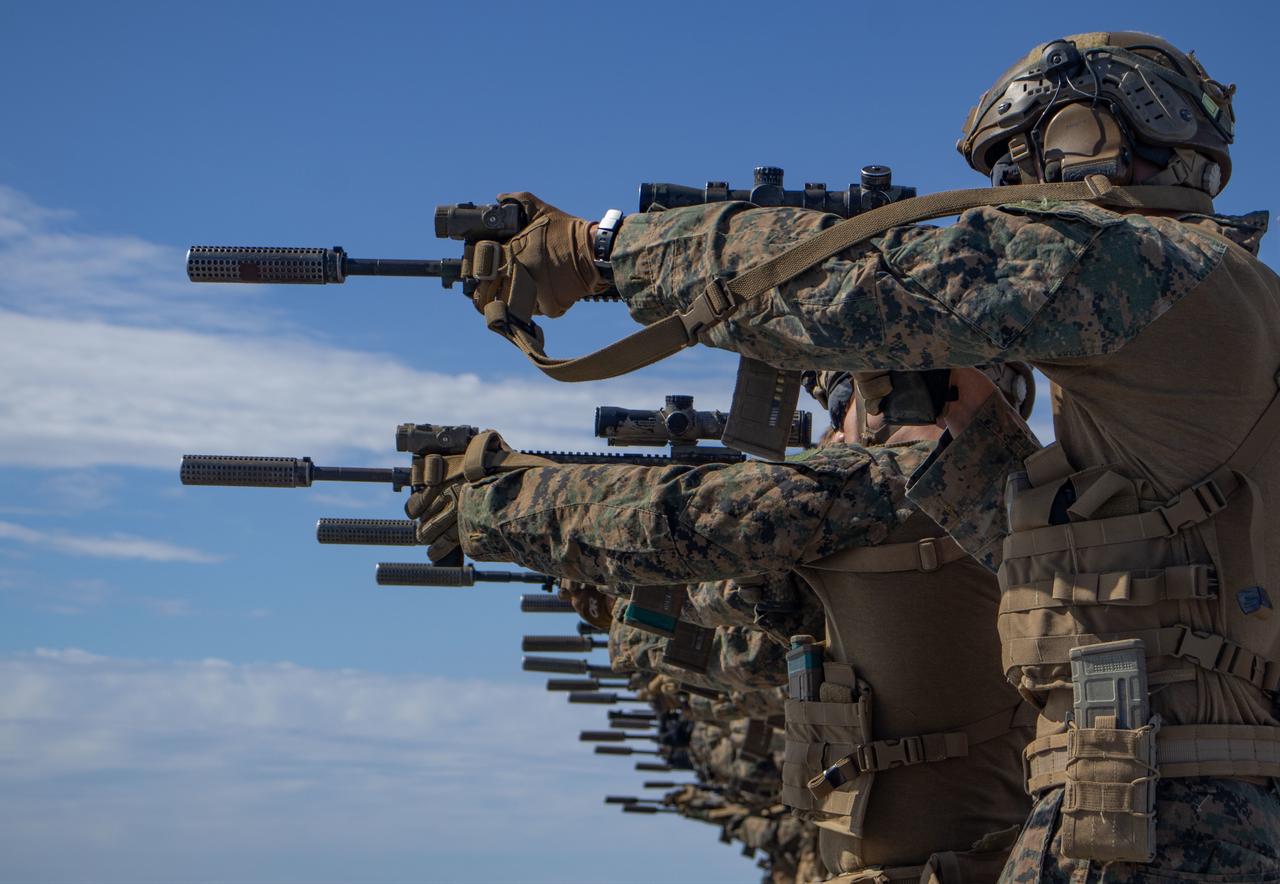
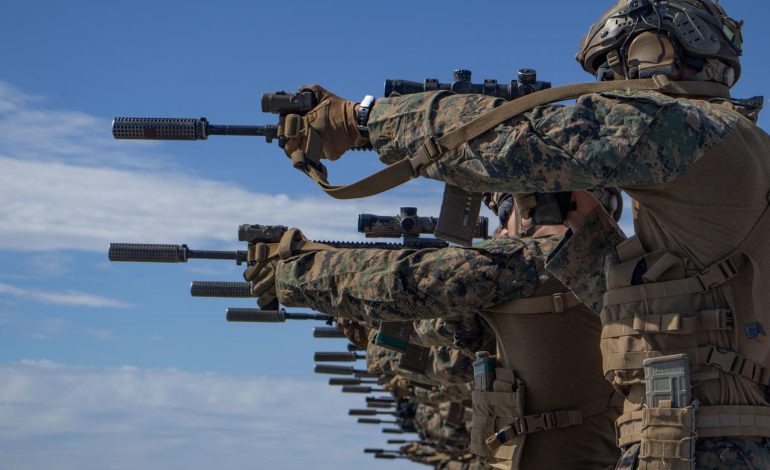
Trump says he is not putting troops anywhere, while also saying the US will do whatever is necessary. This gives him room to sound restrained at home while keeping the door open to a bigger military commitment if the Strait of Hormuz fight worsens. The Pentagon has already ordered Marines and amphibious warships toward the region, and reports keep surfacing about A-10s, Apache helicopters, mine-clearing missions, and planning around Kharg Island and other strategic targets. The war is taking on the shape of a slow force buildup, whether the White House wants to call it that or not.
The Middle East US base network makes that escalation easier and riskier at the same time. Reuters’ map of US military facilities in the region shows how many American assets sit in reach of Iranian missiles and drones, from Kuwait and Qatar to Bahrain, the UAE, and Iraq. The conflict has spread to the very places where the US has stationed itself for decades and then acted surprised when those bases became targets.
The danger now goes beyond missiles. The Council on Foreign Relations warns that the longer the war continues, the greater the incentive for Iran to use asymmetric warfare that could reach the US homeland. AP says Iran-linked hackers are already probing American targets and stretching into US cyberspace.
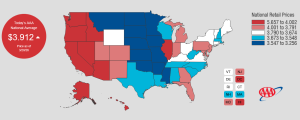
The economic shock is not waiting for a peace deal either. US gas prices have surged to around $4 per gallon since February 28, when the US and Israel attacked Iran and Iran retaliated by blocking the Strait of Hormuz, through which roughly one-fifth of the world’s oil moves. Reuters/Ipsos found that 87% of Americans expect gas prices to keep rising, and 55% say the increase is already hitting their finances.
Mortgage costs are rising too. Freddie Mac’s benchmark 30-year fixed mortgage rate climbed to 6.22%, a three-month high, after sitting at 5.98% on the eve of the war. That is the war bleeding into Treasury yields, Treasury yields bleeding into housing, and housing bleeding into family budgets. The spring home-buying season is supposed to be the market’s pressure valve. Right now, it looks more like another choke point.
Washington is trying to buy time. The Pentagon is asking Congress for more than $200 billion in additional funding, and lawmakers from both parties are pushing back. The numbers are almost obscene: more money after a large defense budget, more money while Americans are already feeling inflation, and more money for a war the public does not seem to want.
The hardest-hit sector may be the one that gets the least attention on cable news: small business. Ben Johnston, COO at Kapitus, a small business financing company, put the problem in plain language:
“The war with Iran has effectively closed the Strait of Hormuz and forced producers in the Gulf region to begin shutting down oil and gas production, actions that cannot be quickly reversed. Given that approximately 20% of the world’s oil production must travel through the Strait of Hormuz in order to reach consumers, it is likely that this disruption will be significant and last for weeks or months, depending on the duration of hostilities and the time it takes to reestablish production and a working supply chain once the war is over.
Rising oil prices are yet another shock to operating margins that small businesses need to contend with. Almost a year ago, small businesses were contemplating the impact of “Liberation Day” tariffs imposed on nearly all of our trading partners. Over the course of the year, small businesses learned how to navigate these tariffs, altering supply chains and onshoring as much production as possible in an effort to avoid the tariff’s most painful effects. At the same time, businesses grappled with improving, yet stubbornly high, inflation and interest rates, which combined to further reduce small business margins. Today, with oil climbing above $100 per barrel, small businesses are once again grappling with the impact of an unforeseen expense and agonizing over whether to pass these increased costs on to an already stretched customer base. We expect that small businesses will likely delay raising prices as long as possible – similarly to when tariffs were first introduced – but that businesses will ultimately need to pass these expenses on to customers should prices remain elevated for several months. The uncertainty caused by a sudden spike in oil prices and the lack of clarity as to the severity and duration of the spike will likely cause many small businesses to retrench, holding off on starting new projects, taking on new hires, and investing in the growth of the business until the picture becomes clearer. Given the importance of small businesses to the US economy, this could have a significantly negative impact on the unemployment rate and overall GDP growth.
One of the industries with the highest dependency on oil and gas prices is the transportation industry, which includes long-haul trucking as well as short-haul and local delivery services. Fuel oil is one of the transportation industry’s primary operating expenses, and operators will feel the impact of this disruption immediately. The agriculture industry is also highly exposed given the diesel-powered heavy machinery used in production, the distribution costs required for products to reach consumers, and the fertilizer required to maintain crop yields. Many small manufacturers also have significant exposure, as oil and gas are often used directly in the manufacturing process or to generate electricity to power plants and equipment or in the production of raw materials such as plastic, aluminum, and steel. In addition, the construction industry has significant exposure to the petroleum markets given the heavy machinery used during the construction process and the building materials required in modern construction. On the positive side, the US has a robust oil and gas industry that employs many small businesses involved in both upstream and downstream production. These businesses will benefit from higher prices, which, if sustained for a long enough period of time, make additional oil and gas projects economically viable. It is also important to note that as the largest oil and gas producer in the world, the United States is less exposed to economic disruption than many other developed economies, especially those in Europe and Asia. As a result, it is likely that fuel costs will rise higher and faster in parts of the world where we are currently levying tariffs with the goal of driving production back to the United States. If US oil prices become a relative advantage to US businesses, it may serve to speed the repatriation of manufacturing back to the US during this period of instability.
Over the past several years, small businesses have become all too adept at managing through crises. Many have learned the hard way the importance of keeping a close eye on margins, managing supply chains and cost of goods sold, and developing products that appeal to cost conscious consumers. Successful businesses today maintain options in their supply chain, their headcount, and in their access to capital. Many businesses today are investing in automation as a way to control more of their supply chain and reduce dependency on human capital. With recent advances in AI, many businesses are now adopting AI tools that help them connect with and manage customers, handle accounting and business analytics, and even develop software. Successful businesses also maintain multiple financial relationships capable of providing working capital to fund growth. Many also finance equipment purchases and maintain revolving lines of credit to manage the volatility of cashflows month to month. It is important for small businesses to maintain both bank and non-bank relationships to ensure access to a full suite of financial products.”
That is not alarmism. When fuel rises, trucking firms pay more. When trucking firms pay more, groceries, lumber, and everything that moves on a trailer get more expensive. When uncertainty stays high, hiring slows. That is the war’s domestic footprint in one long chain of cause and effect.
Maurice Obstfeld, C. Fred Bergsten Senior Fellow at the Peterson Institute for International Economics and Department of Economics Professor of the Graduate School at the University of California, goes to the same place:
“While the US is a net energy exporter and producers will benefit from higher energy prices, consumers will suffer, not only at the pump but from higher costs in many areas, such as all through the food chain from farm to grocery shelf.
The announced sums that Gulf countries supposedly pledged to invest here were never close to credible. Now, the short- and long-term harms to their economies from the Iran war will reduce even more realistic investment levels. Depending on how long hostilities last, the dynamism and luster of the region could take a big hit.”
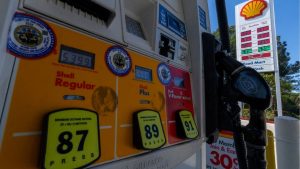
That’s the price of being a net exporter in a globally integrated market: yes, some producers win, but most households still eat the shock at the pump and then again in the supermarket. Reuters says the energy and fertilizer crunch is already pushing world food prices up, with the Strait of Hormuz carrying about 30% of global fertilizer trade and prices for key inputs jumping 30% to 40%. AP says American farmers are scrambling for fertilizer, with some facing price increases of up to 40% and others worried they will not get enough at all.
Ben Cahill, Energy Markets and Policy Director at the Center for Energy and Environmental Systems Analysis of the University of Texas at Austin, summed up the market logic very cleanly:
“US gasoline and diesel prices reflect global market conditions, so when events abroad produce a price shock, there’s a pass-through effect. This is still the case, even though the US is now the world’s largest oil producer. Releases of strategic petroleum reserves and inventory drawdowns help, but essentially they just buy time. Oil prices and petroleum product prices will stay elevated until shipping resumes through the Strait of Hormuz. I think the market is now realizing that disruptions could persist for months to come, especially as Iran continues to attack critical energy infrastructure across the Gulf.”
A quick war might produce a brief price spike. A lingering war produces a new normal. Reuters says the Middle East energy shock has already forced producers to reroute, raised risk premiums that may last for years, and made the global economy look much more fragile than anyone wants to admit.

The polling is bad. Not catastrophic, but bad enough to matter. Reuters/Ipsos found that 65% of Americans think Trump will launch a large-scale ground war in Iran, while only 7% support that idea. On the conflict itself, support is only 37%, with 59% opposed to it. On cost of living, Trump’s approval has sunk to 29%.
The administration knows it. That is why the messaging has turned fierce and defensive. FCC Chairman Brendan Carr has warned broadcasters that “fake news” about the war could cost them license renewals. AP says Carr was reposting Trump’s complaints about the media while threatening broadcasters to “correct course.” Pete Hegseth has joined in, blasting CNN’s war coverage and pushing for friendlier ownership changes in the media market.
The whole posture looks like the public story is slipping away. Reuters says Trump is struggling to shape the war’s story, while allies abroad are refusing to go along automatically with Washington’s line.
Then there is Joe Kent, whose resignation as director of the National Counterterrorism Center turned into a very public internal rupture. Kent said Iran posed no imminent threat and argued the war was driven by Israeli pressure and American media influence. The Washington Post reported that his departure exposed the split inside Trump’s coalition between anti-interventionists and the hardliners who think force solves everything.
James M. Lindsay, Mary and David Boies Distinguished Senior Fellow in US Foreign Policy at the Council on Foreign Relations, the host of a weekly podcast The President’s Inbox, a CFR project lead of the Best and Worst Decisions in the History of US Foreign Policy, sees the geopolitical cost in a very specific way:
“How long Operate Epic Fury lasts and how the war ends will determine its geopolitical consequences. Current trends suggest that the likely outcome is a weakened Iran led by a hostile, hardline government. Arab Gulf states will seek to buy more arms from the United States, but will shop elsewhere if Washington cannot, or will not, meet their needs. Russia will be emboldened as higher oil revenues ease pressure on its strained finances. China’s influence will grow as more countries accept its argument that Washington threatens global stability. Divisions between Washington and longtime partners will deepen as allied capitals feel the costs of a war they did not want. The US ability to deter adversaries will be tested as depleted stocks of hi-tech weapons raise the prospect of an overstretched US military.”
That is the part the White House cannot spin away. A war that leaves America’s allies hedging, rivals emboldened, and US weapons stocks thinner is not a demonstration of strength.
Evelyn Farkas, the executive director of the McCain Institute at Arizona State University, is even more direct about the diplomatic fallout:
“We are witnessing some of the negative results of unilateral military and economic actions directed at our allies and partners, as well as the backfiring of adversarial or hostile diplomacy directed at our closest allies. The Gulf countries and our European allies are certainly thinking about how they can hedge against US withdrawal from security arrangements or alliances. In the case of the war in Iran, our allies are putting their interests before those of the United States and Israel because they were not part of the decision-making to go to war, and for the Europeans, they don’t regard the war as falling under the NATO collective security requirements.
The European stance, however, has been largely influenced by their anger at President Trump for the harsh unilateral tariffs, the withdrawal of direct military and economic support to Ukraine, and the threat to invade and seize the sovereign territory of one ally (Denmark) and to seize another ally entirely (Canada). They resent the fact that their values have been challenged by the language and diplomacy of the current US government, and so they are expressing their resentment in a refusal to go along 100 percent with White House demands.
Having said that, the Europeans and Gulf allies are not doing nothing. The Middle Eastern countries are defending themselves and cooperating on helping US forces defend themselves and their installations. The Europeans are backfilling in the Mediterranean in areas where the US cannot have a presence, because US forces are in the Gulf. And at the end of the day, while the European and Gulf allies don’t want the war in Iran, they oppose the current Iranian regime and want to restore free trade to the Hormuz Strait and the region.”
That is the kind of alliance behavior Washington hates most: cooperation without enthusiasm, support without trust, and hedging without apology. Reuters and the Guardian have both reported allies helping with maritime safety while refusing to sign up for open-ended participation. That is a signal to US voters that the world is not lining up behind Trump’s version of events.
American elections analyst and Managing Editor of Sabato’s Crystal Ball at the University of Virginia Center for Politics, Kyle Kondik’s political read is the simplest and maybe the most dangerous:
“The political environment is a lot like it was in 2017 and 2018, leading up to Trump’s first midterm. Trump’s approval rating is just a little over 40%, and Democrats have been performing well in elections held so far in 2025 and 2026. If anything, there may even be more downside risk for Republicans this cycle because economic perceptions are worse and Trump’s credibility on the economy is shakier than it was eight years ago. As for Iran, I think there are only downsides politically – it may be that the situation is resolved by the time of the election, but if it isn’t, that is probably a drag for the president and his party as well. The House is very likely to flip to Democrats, much like it did in 2018. But remember that the Senate did not flip in 2018, and the map – then and now – is still favorable to Republicans. But if Republicans were to lose the Senate, it’s possible that Iran would have contributed to it, either through persistent high gas prices or potentially something worse.”
The information war around Epstein only makes the domestic politics messier. A Drop Site/Zeteo/Data for Progress survey found many likely voters believe Trump launched the Iran war to cover up the Epstein scandal. Meanwhile, the Washington Post tried to spin the rising public dissatisfaction with pro-Iran propaganda networks, conspiracy content, and anti-US/anti-Israel narratives. Iranian officials do however use such terms as ‘Epstein class’ to evoke moral superiority with the ricing death toll among civilians, especially children.

The longer the war drags on, the less it looks like a finite campaign and the more it resembles a national stress test. CFR says that continued conflict raises the incentive for Iranian retaliation that could hit the US homeland. The Atlantic argues the war’s “off-ramp” is disappearing, while Foreign Policy and CFR both suggest the conflict is pushing the US into a longer, riskier, and less controllable phase. That is the uncomfortable part: once a war starts feeding on its own momentum, the homefront starts paying for every extra week.
The terrorism and cyber angles are not science fiction. The Institute for Economics & Peace says the conflict is already creating a command vacuum and making proxy networks more autonomous. AP has reported Iran-linked hackers stretching into US targets. That does not mean a spectacular homeland attack is inevitable. It does mean the war raises the baseline risk of a lot of ugly, smaller things: cyber disruptions, harassment, intimidation, and politically motivated violence. In a climate like that, the line between national security and domestic policing gets thinner fast.
And there is still no credible final answer from the White House. Trump says one thing in public, his advisers say another, and the US and Israeli war aims still do not perfectly match. That split has real consequences. If the administration can’t define victory, it can’t define exit. If it can’t define exit, it can’t define cost. And if it can’t define cost, Congress, voters, and allies will do it for him.



The latest news in your social feeds
Subscribe to our social media platforms to stay tuned