
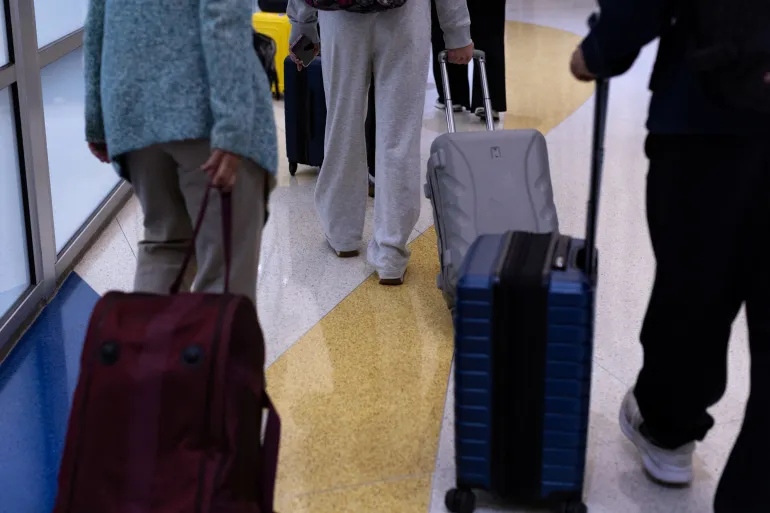




The US State Department has expanded a visa bond programme to include a dozen more countries, pushing the total number of affected nations to 50 and deepening a policy shift that increasingly targets travellers from non-Western regions.
Under the programme, applicants for short-term US visas may be required to pay a refundable bond of up to $15,000. The stated aim is to reduce the number of people who overstay their visas — a long-standing concern in US immigration policy.
“The visa bond program has already proven effective at drastically reducing the number of visa recipients who overstay their visas and illegally remain in the United States,” the State Department wrote in a news release on Wednesday.
According to the department, around 1,000 visas have so far been issued under the scheme, with 97 percent of recipients leaving the country within the permitted timeframe. The bonds apply to B-1 and B-2 visas, used by business travellers and tourists, and are set at three levels: $5,000, $10,000 or $15,000. “The amount is determined at the time of the visa interview,” the State Department says on its website.
Importantly, paying the bond does not guarantee entry. The money is returned if a visa is denied, if the applicant does not travel, or if they comply fully with visa conditions.
The latest expansion adds Cambodia, Ethiopia, Georgia, Grenada, Lesotho, Mauritius, Mongolia, Mozambique, Nicaragua, Papua New Guinea, Seychelles and Tunisia. The new requirements will take effect on April 2, with officials signalling that further expansion remains on the table.
“The Department may continue to place Visa Bonds on countries based on a range of immigration risk factor,” it said.
The policy sits within a broader tightening of immigration under President Donald Trump’s second term. Since returning to office in January 2025, the administration has rolled out a series of measures affecting both legal and irregular migration, including suspending immigrant visa processing from dozens of countries and scaling back humanitarian pathways.
The bond system itself is not entirely new. It was first introduced last August, framed as a way to increase compliance and generate revenue. A similar proposal during Trump’s first term never took effect due to the COVID-19 pandemic.
Critics argue the financial threshold effectively filters applicants by income, raising concerns about access for travellers from lower-income countries. The administration, however, continues to frame the programme as a targeted enforcement tool rather than a broad restriction.


The latest news in your social feeds
Subscribe to our social media platforms to stay tuned