






Keeping flights on schedule has never been simple, but in today’s aviation landscape, it’s become a constant balancing act. With nearly 39 million flights expected globally in 2025 and airspace increasingly shaped by geopolitical tensions, delays are no longer occasional disruptions — they’re part of the system.
That’s the backdrop for Cirium’s latest On-Time Performance Review, which highlights a shift in how reliability is measured. It’s no longer just about punctual departures, but about how well airports and airlines manage complexity, recover from disruption, and keep networks functioning under pressure.
At the top of that system sits Istanbul Airport, named the global “Platinum Winner.” Handling more than 84 million passengers annually and connecting 330 destinations, it operates at a scale where even minor delays can ripple across continents. Yet the airport has managed to maintain stability, helped in part by infrastructure upgrades like triple independent runway operations, boosting capacity significantly.
Its on-time performance — 80.72% of flights within 15 minutes of schedule — isn’t the highest globally. But Cirium’s broader metric, which factors in operational control and recovery, places Istanbul ahead. The takeaway is clear: in modern aviation, resilience matters as much as punctuality.
If punctuality alone is the benchmark, Latin America stands out. Santiago’s main airport led large hubs with 87.04% on-time performance, supported by expanded infrastructure that has eased congestion. Panama City and Guayaquil also topped their respective categories, pointing to a region that is quietly improving operational efficiency while scaling up.
Airlines show a similar pattern. Qatar Airways took the top overall award, not just for staying on schedule, but for how it handled disruption — rerouting flights, protecting connections, and adapting in real time to volatile conditions. Its 84.42% punctuality reflects that balance between planning and flexibility.
By contrast, Aeroméxico topped the pure punctuality ranking with 90.02%, showing that consistency is still achievable, though often in less complex operational environments.
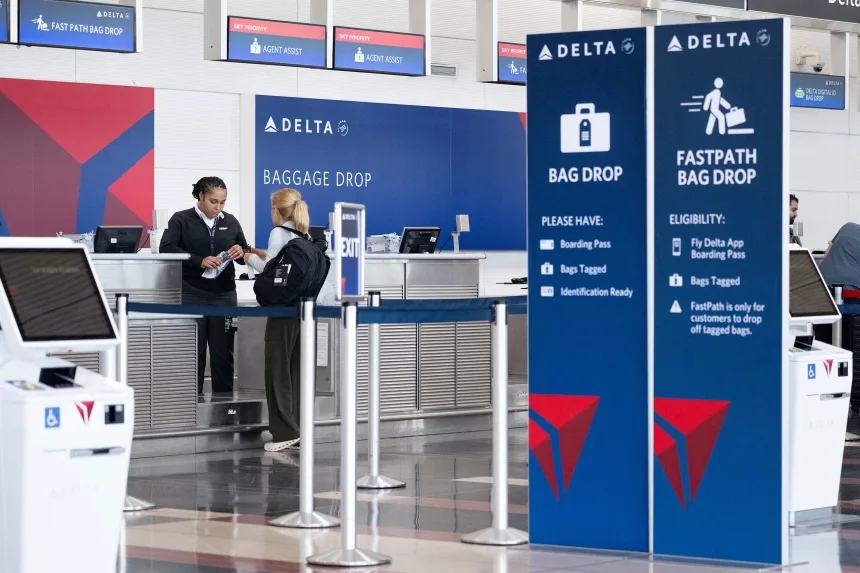
In North America, Delta Air Lines stood out in a difficult year marked by air traffic control issues and even a government shutdown. Its performance — just over 80% punctuality across a massive flight volume — earned recognition for resilience rather than perfection.
Elsewhere, Iberia Express maintained its lead in Europe despite power outages and technical disruptions, while FlySafair achieved the highest punctuality in the Middle East and Africa. Virgin Atlantic, meanwhile, emerged as the most improved carrier, signaling how quickly performance can shift when operations are recalibrated.
What ties these examples together is a broader industry trend. Reliability is no longer about avoiding disruption — it’s about managing it better than others. Airlines and airports that can adapt quickly, reroute efficiently, and maintain network stability are the ones pulling ahead.
In a world where delays are increasingly baked into the system, being “on time” now means something more nuanced: not just sticking to the clock, but staying in control when the clock inevitably slips.



The latest news in your social feeds
Subscribe to our social media platforms to stay tuned