

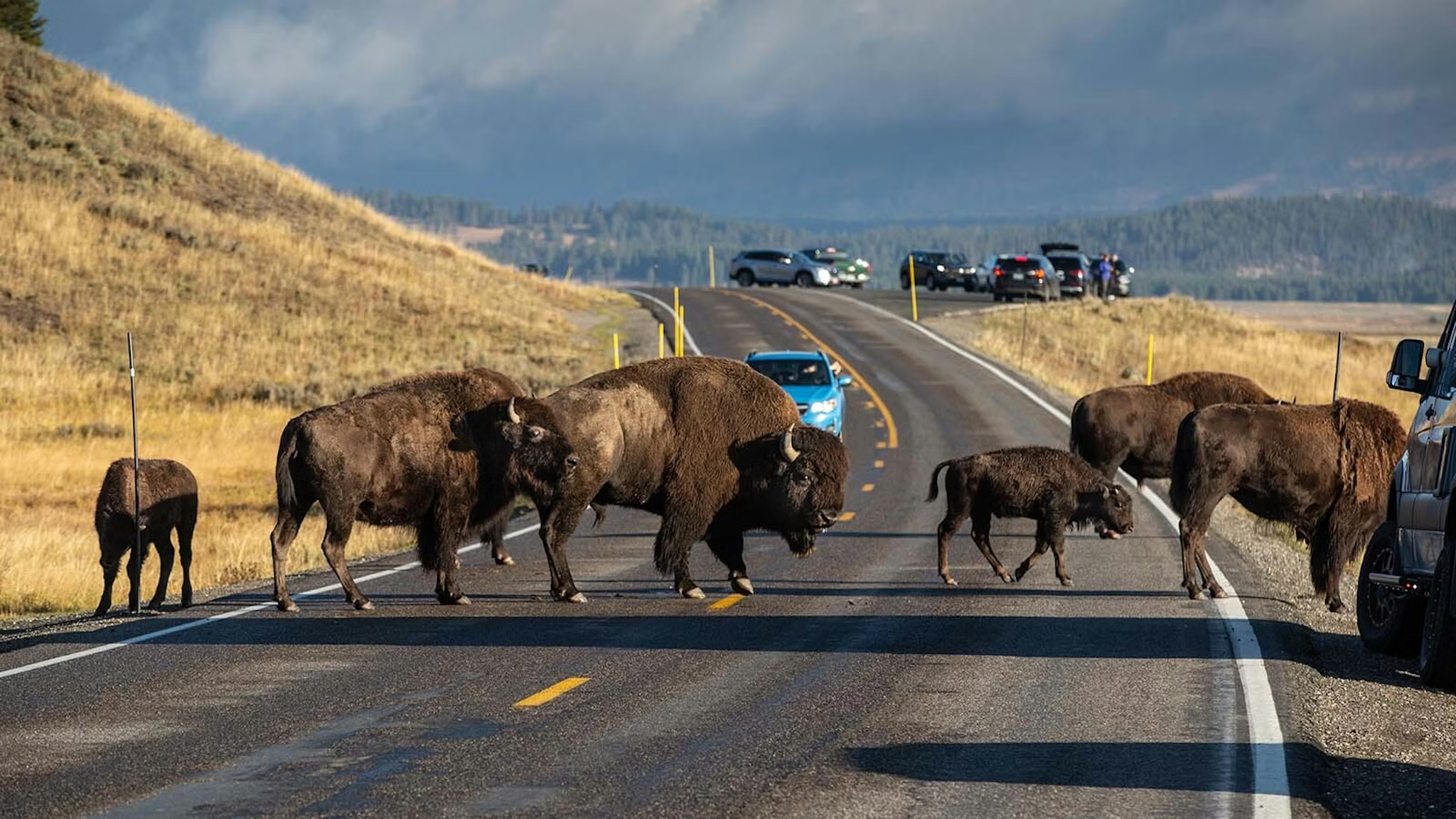



Are Wyoming’s iconic shaggy, hump-backed behemoths buffalo or bison? For Western historian and best-selling author Paul Hutton, it’s buffalo, not bison. “It’s such a national icon that I think it’s important to use the language of the time, especially as a writer,” he said. “It’s a tough sell to me for the government to make us all conform to what they think is the correct term. But we’re not changing Buffalo Wild Wings to Bison Wild Wings, right? We’re not going to change the name of the Buffalo Bills to Bison Bills.”
The story of how bison were first named buffalo has been largely cast as a case of mistaken identity. A Frenchman named Samuel de Champlain, exploring America in 1619, saw huge creatures that reminded him of the French “buffle,” a term for African water buffalo. “Buffalo” won out in everyday speech for a century and a half. “Bison,” however, became the favored word of educated naturalists, who adopted it from the Latin word for “wild ox.”
There are times when precision matters, said Ken Klemm, past president of the National Bison Association. “There are only two true buffalo in the world, and that’s the Cape buffalo of Africa and the water buffalo of Southeast Asia,” he said. “So we do like to use the word bison, just so there’s no confusion.” But even Klemm admits that in common everyday speech, he’s just as apt to use the word “buffalo.” When you order a “bison” burger, you’re speaking the language of scientists and regulators. Perhaps you too will then choose to be like Hutton and insist on the buffalo burger instead—the language of history and cowboys.


The latest news in your social feeds
Subscribe to our social media platforms to stay tuned