


Iran signals “victory” as strikes intensify across the country


Even as air strikes expand across Iran, the message from Tehran is consistent: the war is entering a new phase — and the outcome, officials suggest, is turning in their favour.
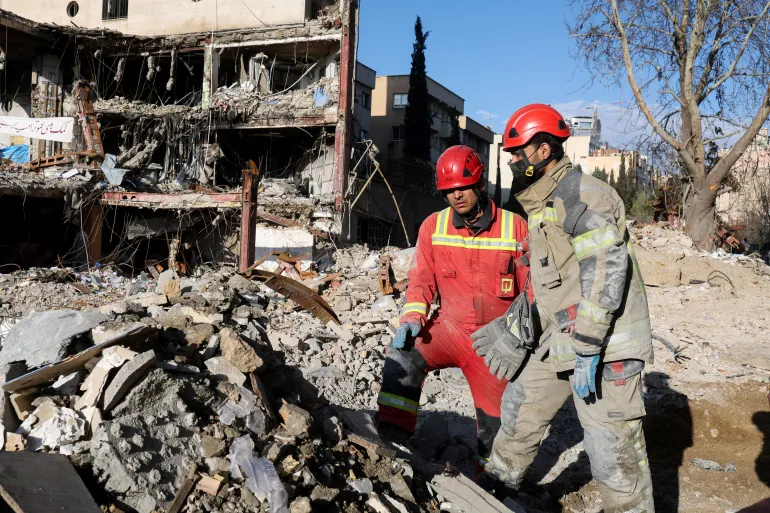
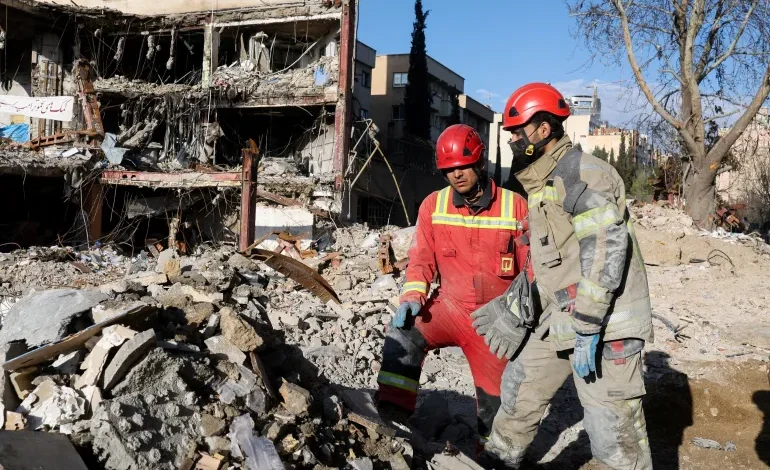
Overnight into Sunday, large-scale joint US-Israeli air raids hit multiple areas of Tehran, alongside strikes in Isfahan and previously targeted regions including Khuzestan. The pattern is widening geographically, with reports also emerging of precision attacks in northern provinces such as Gilan and Mazandaran.
Some of those strikes appeared to target specific individuals. Residential buildings in smaller towns were hit in what were described as assassination attempts. Local authorities confirmed fatalities but did not provide details, while Israeli and US media suggested a senior drone commander may have been among those killed.
Despite the expanding scope of attacks, Iranian officials are projecting confidence. Parliament speaker Mohammad Bagher Ghalibaf pointed to recent missile strikes on Israel as evidence of a shift in momentum, saying they marked a “new stage of battle” where “Israel’s skies are defenceless”.
That message has been echoed across military leadership. Majid Mousavi, aerospace commander of the Islamic Revolutionary Guard Corps, reinforced similar claims about operational reach, as state media amplified public support for continued strikes.
On the ground, the conflict is no longer confined to military infrastructure. Iranian authorities report damage to residential buildings, hospitals and schools, alongside the loss of senior security figures in recent days. The cumulative effect is visible both in the scale of destruction and in the tightening control of public space, where pro-government mobilisation has become more prominent.
At the same time, retaliatory attacks on Israel are continuing. Iranian missile strikes overnight hit areas including Dimona, where key nuclear facilities are located, leaving more than 180 people injured according to Israeli reports.
The rhetoric surrounding the conflict is hardening. Defence Ministry spokesman Reza Talaei-Nik said operations would continue “until the complete halt and surrender of the enemy”, framing the war not as a limited campaign but as an open-ended confrontation.
This tone is reinforced at the highest levels. A statement attributed to Iran’s new supreme leader, Mojtaba Khamenei, described the country’s enemies as being “defeated” and emphasised internal unity, even as the war continues to escalate.
The contrast is striking: increasing strikes, widening targets and mounting casualties on one side, and a narrative of control and progress on the other.

The latest news in your social feeds
Subscribe to our social media platforms to stay tuned