




NBC News, CNN, AP, BBC, and New York Post contributed to this report.
Nearly a week after the violent collision at New York’s LaGuardia Airport, the aftermath is still unfolding – in hospital rooms, inside a battered aircraft, and now in a widening investigation.
Four people injured in Sunday night’s crash remain hospitalized, Air Canada confirmed, days after the airline’s regional flight slammed into a fire truck on the runway. Most of the more than 40 passengers and crew taken to hospitals were treated and released quickly, but some suffered serious injuries that continue to require care.
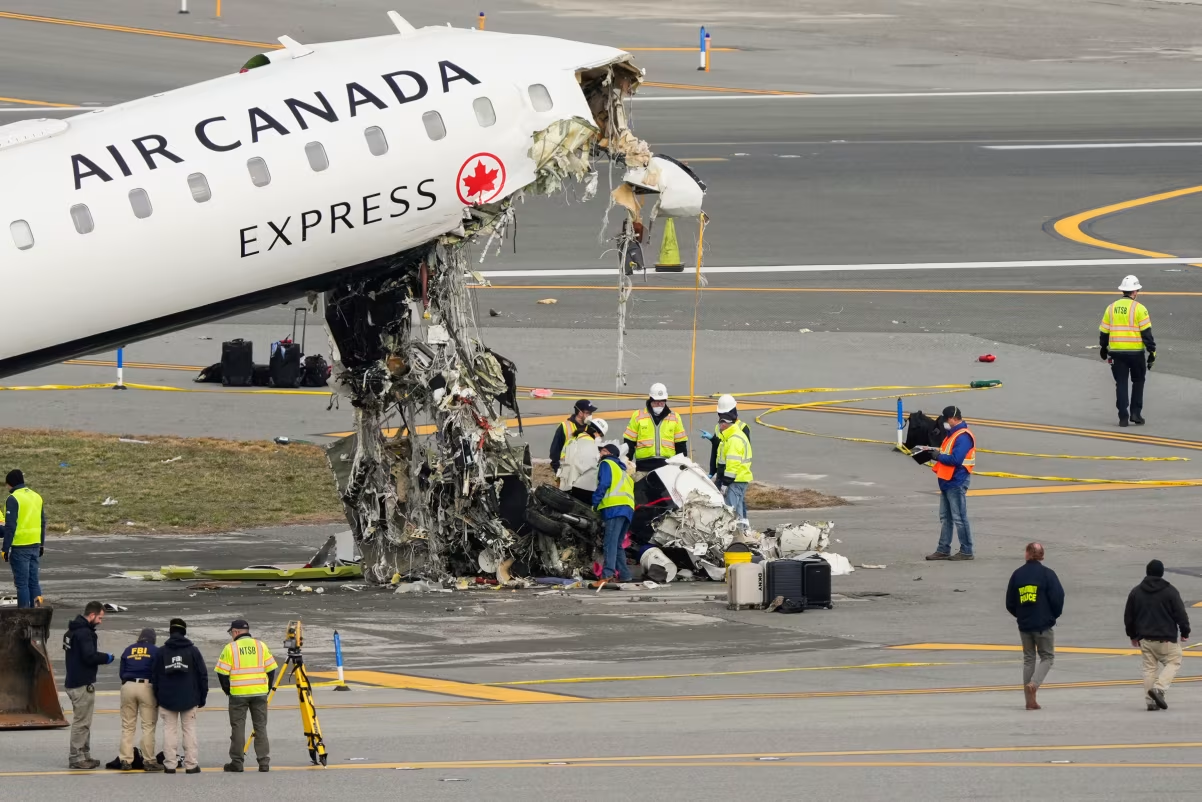
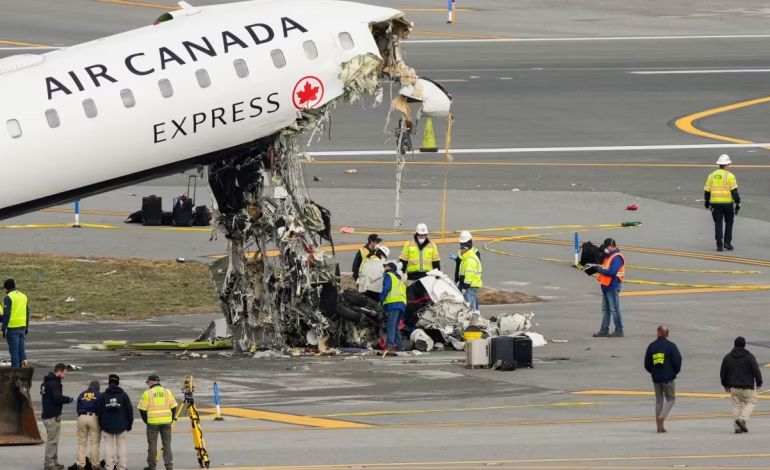
The crash claimed the lives of pilot Antoine Forest and co-pilot Mackenzie Gunther, both Canadians. They were in the cockpit when the front of the aircraft was effectively torn apart on impact – a level of destruction laid bare in newly released images showing the nose and cockpit completely ripped off.
The aircraft, Air Canada Express Flight 8646, had just landed after a short trip from Montreal when it collided with a Port Authority emergency vehicle responding to another incident. On board were 72 passengers and four crew members. Dozens were hurt, but many survivors say the pilots’ actions in the final moments likely prevented a far worse disaster.
“I think everybody feels lucky to be alive,” one passenger said, echoing a sentiment heard repeatedly in the days since.
Now, attention is shifting to what went wrong.
Investigators from the National Transportation Safety Board are digging into a chain of failures – human, technical, and systemic. Early findings suggest a complex and chaotic situation in the control tower. Two air traffic controllers were on duty late that night, handling multiple responsibilities at once, a common practice during quieter overnight hours.
But this wasn’t a quiet night.
Flight delays earlier in the day had pushed more traffic into the late hours, increasing pressure on a system already stretched thin. At the same time, controllers were dealing with a separate emergency involving another aircraft, prompting the dispatch of the fire truck that would later cross paths with the landing jet.
Just seconds before impact, a controller cleared that truck to cross the runway. Moments later, frantic radio calls: “Stop, stop, stop.” It was too late.
Adding to the confusion, a key safety system designed to warn of potential runway collisions failed to trigger an alert. Investigators say it may have struggled to track multiple vehicles clustered near the runway. The fire truck also lacked a transponder, which could have provided more precise data to the system.
Even the runway’s embedded warning lights – meant to signal danger regardless of controller instructions – are now under scrutiny. They appear to have been functioning, but whether they were seen or acted upon is another question.
Behind all of this sits a broader issue aviation officials have warned about for years: staffing shortages and fatigue in air traffic control. Combining roles can work during slow periods, but experts say it leaves little margin for error when conditions suddenly change.
“This is a system with layers of protection,” NTSB Chair Jennifer Homendy said. “When something like this happens, it means multiple layers failed.”
Meanwhile, the wreckage itself is being moved off the runway and into a hangar, where investigators will continue their work. Air Canada says it will also begin the slow process of sorting through debris to return passengers’ belongings – a task that could take time given the extent of the damage.
The political fallout has also begun. Air Canada’s CEO faced criticism from Canadian officials after initially addressing the tragedy only in English, sparking backlash in a country where bilingual communication is standard.
Back in New York, though, the focus remains on recovery – and on answers.
Why did the safeguards fail?
Was the tower adequately staffed?
And could this have been prevented?
For now, those questions hang in the air, much like the shock that followed those final, chaotic seconds on the runway.



The latest news in your social feeds
Subscribe to our social media platforms to stay tuned