





AP, US News & World Report contributed to this report.
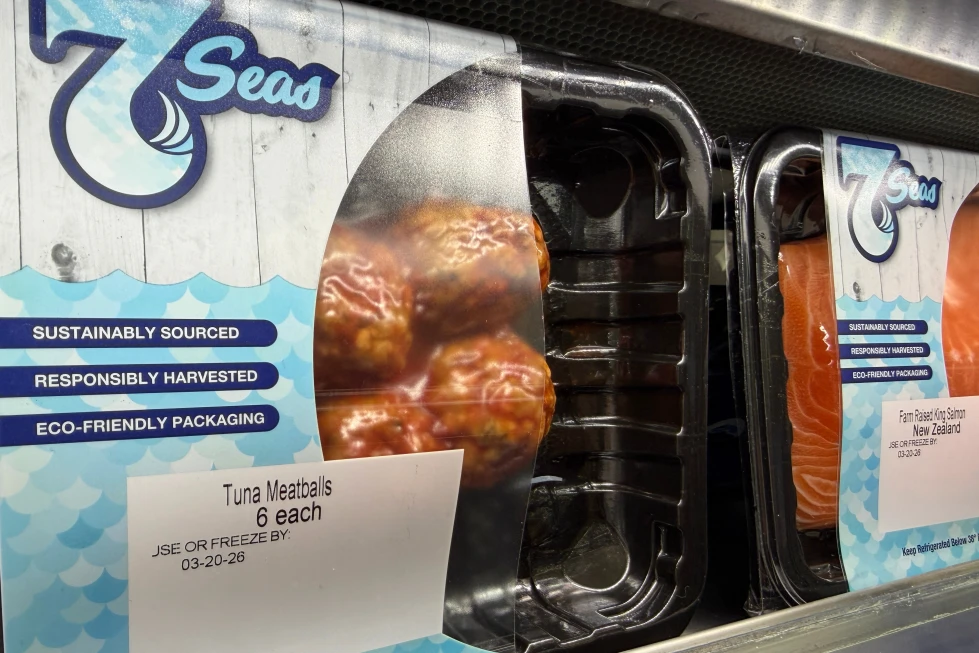
The seafood industry has a new idea for winning over Americans: stop looking like seafood.
At a recent industry gathering in Boston, fish showed up in all kinds of unfamiliar forms – salami slices, snack sticks, burgers, nuggets, even something resembling fried chicken. Walk the floor and you could almost forget you were surrounded by seafood.
That’s the point.
Companies are leaning into what some insiders jokingly call “stealth seafood,” betting that the fastest way onto American plates is to make fish taste, feel, and look like the foods people already crave. Think tuna nuggets instead of tuna fillets. Shrimp sliders instead of shrimp cocktail.
One exhibitor put it bluntly: fried sells. His company is pushing breaded tuna strips designed to mimic chicken tenders, built specifically for US tastes. It’s less about reinventing seafood than reshaping it into something familiar enough to slip past hesitation.
And hesitation is the real hurdle.
Americans eat surprisingly little seafood – about 19 pounds a year on average. That figure hasn’t moved much in decades. Globally, people eat more than twice that. In some countries, it’s not even close.
So the industry is experimenting. A lot.
There were salmon snack sticks engineered to resemble gas-station meat snacks. No fishy smell, no obvious seafood flavor. Just chew and go. Elsewhere, shrimp patties were stacked like mini burgers, sized for sliders or something closer to a fast-food staple.
For companies, the logic is simple: lower the barrier to entry. If it looks like a burger, maybe someone who wouldn’t touch grilled fish gives it a shot.
Still, not everyone is on board with the makeover.
Critics argue that turning fish into something unrecognizable strips away more than just the “fishy” factor. It risks disconnecting consumers from where their food comes from – and how it’s produced. There’s also a suspicion that heavily processed formats lean toward large-scale industrial supply chains, not small fisheries.
And then there’s the question of whether this strategy actually works.
The seafood market in the US has been largely flat for years. Growth has come mostly from sushi – thanks, in part, to younger consumers – and from higher prices, not higher volume. A relatively small group of dedicated buyers drives a big chunk of sales, and they tend to like seafood as seafood.
That leaves a tricky middle ground. Roughly 40% of Americans aren’t interested in seafood at all. Turning fish into something else might catch their attention – or it might not move the needle.
Some analysts see a different target: kids.
If fish shows up in the same formats as hot dogs, chicken tenders, or snack foods, it could shape tastes earlier. Change the packaging, change the perception. Over time, maybe that sticks.
Others are trying a softer approach – familiar formats, but still clearly fish. One company slicing into a salmon-based “salami” insisted it wasn’t hiding anything. It just wanted to meet consumers halfway. The result looked more deli counter than fish market, though the flavor still carried a hint of the sea.
And then there are the more ambitious plays.
One standout: rib cuts made from a large Amazonian fish, trimmed and presented like pork spareribs. Meaty, dense, surprisingly convincing. The pitch? Easy, handheld food – something you could imagine eating at a game.
That might be a stretch. But the broader idea isn’t.
Snack culture is creeping in, too. Seafood chips, crispy calamari sticks, fish-based crackers. Crunchy, salty, designed to compete with the usual suspects in the snack aisle. One promoter compared a fried squid snack to a cheesy puff. Close enough, apparently.
Whether any of this sticks is still an open question. Americans have been slow to warm up to seafood for generations, and reshaping it into familiar forms won’t automatically change that.
But the industry is clearly done waiting for tastes to evolve on their own.
If people won’t come to fish, fish is coming to them – disguised, rebranded, and sitting somewhere between a burger and a bag of chips.



The latest news in your social feeds
Subscribe to our social media platforms to stay tuned