

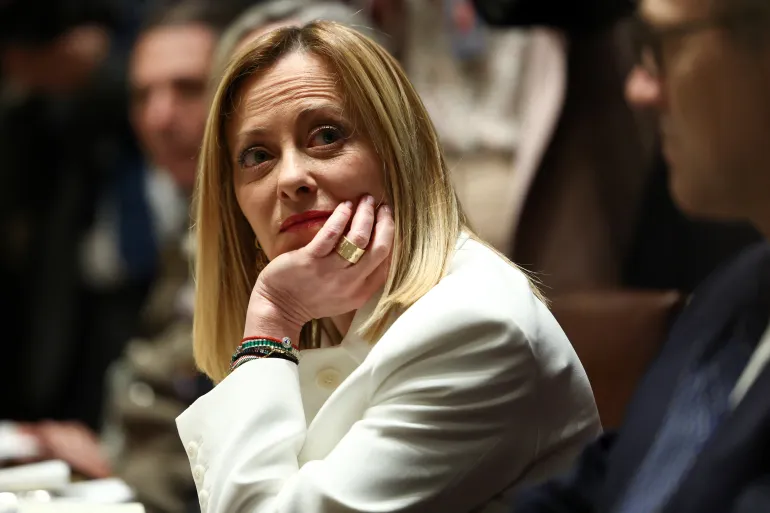




Italy’s Prime Minister Giorgia Meloni has acknowledged defeat in a national referendum on her proposed justice reforms, accepting the outcome while making clear her government is not going anywhere.
With nearly all votes counted, about 53.5 percent of voters rejected the changes, while 46.5 percent backed them. Turnout exceeded expectations, reaching more than 58 percent — a signal that the issue mobilised a broader slice of the electorate than anticipated.
“The Italians have decided. And we respect this decision,” Meloni said, calling the result “a lost opportunity to modernise Italy”.
At the same time, she moved quickly to stabilise the political narrative, stressing continuity: “this does not change our commitment to continue, with seriousness and determination, to work for the good of the nation and to honour the mandate entrusted to us”.
The rejected reform package was a central piece of her government’s agenda. It aimed to redraw the structure of Italy’s judiciary by separating judges and prosecutors and reshaping the body that oversees them. Meloni argued this would improve efficiency and guarantee impartiality in a system long criticised for slow trials and structural backlog.
Opponents saw something else. Critics, including opposition leader Elly Schlein, framed the proposal as an attempt to weaken judicial independence rather than fix systemic problems.
That tension had been building for months. Relations between the government and the judiciary were already strained, with ministers openly criticising court decisions — especially on immigration — and judicial bodies pushing back. At one point, more than 80 percent of members of Italy’s National Magistrates Association took part in a strike.
The campaign itself turned increasingly confrontational. Justice Minister Carlo Nordio dismissed criticism from judges as “petulant litanies” and described flaws in the system as a “para-mafia mechanism”. His chief of staff, Giusi Bartolozzi, drew backlash after saying the reform would “get rid of” magistrates behaving like “execution squads”.
At the core of the dispute was control. The proposed overhaul of the Superior Council of the Judiciary would have split oversight between judges and prosecutors and introduced a new disciplinary system, with members partly selected by lot rather than elected by peers — a shift critics argued would dilute professional autonomy.
A second pillar of the reform aimed to stop judges and prosecutors from switching roles, addressing concerns about overly close relationships within the system.


The latest news in your social feeds
Subscribe to our social media platforms to stay tuned