




With input from CBC News, Bloomberg, and Reuters.
The energy crisis isn’t peaking. It’s just getting started.
For weeks, markets have been reacting to the war in the Middle East – higher oil, pricier gas, rising costs across everything from flights to plastics. But the real shock hasn’t fully hit yet. It’s still on the way, drifting across oceans on the last tankers that slipped out before the conflict shut things down.
Once those ships dock, the system hits a wall.
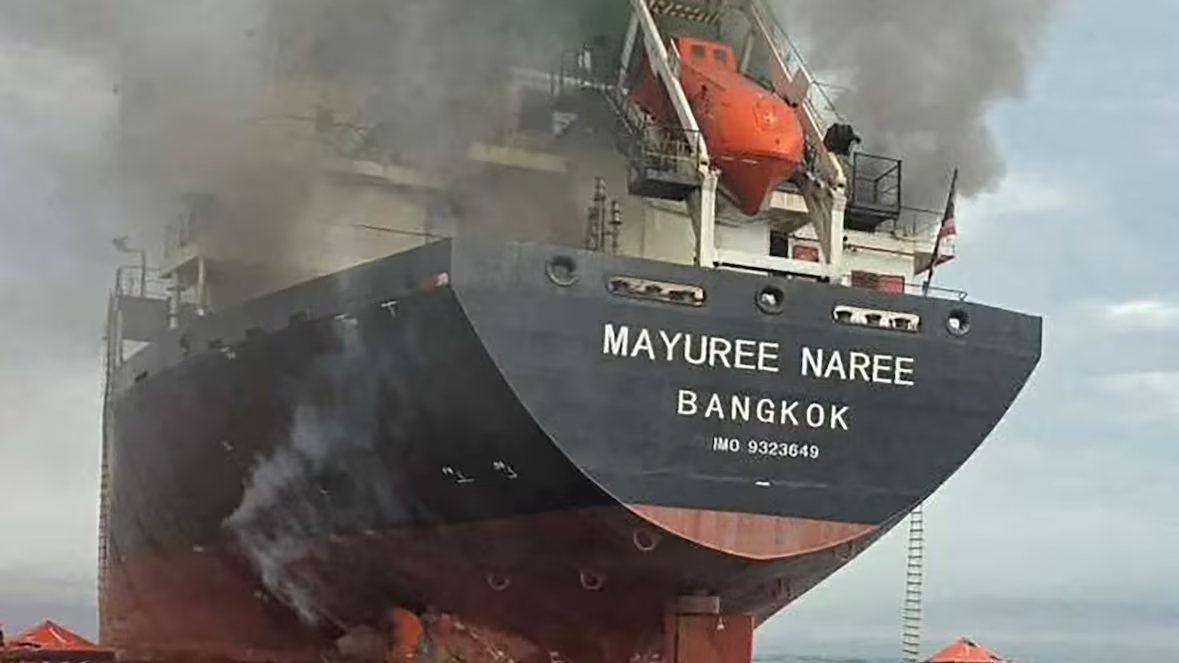
Energy flows through the Strait of Hormuz effectively stopped when the war began on February 28. Still, a wave of tankers had already left the region. They’re now arriving in places like Japan and South Korea, buying the global economy a short window of breathing room.
Roughly a week or so.
After that, there’s a gap – a big one. Analysts estimate around half a billion barrels of oil that would normally be moving through the strait simply aren’t there. Think of it as a supply “air pocket” working its way through the system.
Right now, much of the stress is showing up in what traders call “paper oil” – futures contracts and expectations. Prices are reacting before the shortage becomes physical. But that shift is coming. Soon, it won’t just be numbers on a screen. It’ll be real barrels missing from real supply chains.
That’s when things tighten.
Governments are trying to get ahead of it. Around 400 million barrels are being released from strategic reserves worldwide. The US has eased some sanctions to keep refineries running. Even so, officials say it won’t fully plug the gap.
Japan, for example, has about three weeks of gas in storage. Others are in worse shape.
Natural gas markets are already flashing warning signs. Prices in Asia have surged nearly 90% since the war began. The volumes stuck behind the Strait of Hormuz are massive – even larger than the supply shock triggered by Russia’s invasion of Ukraine in 2022.
And unlike oil, gas shortages tend to hit fast and hard.
Some countries are already feeling it. Pakistan has begun rationing energy, cutting the workweek for government employees and shutting schools temporarily to conserve power. It’s an early glimpse of what prolonged disruption could look like elsewhere.
There’s another problem: no clear timeline.
Even if the strait reopens tomorrow, recovery won’t be immediate. Oil moves slowly – tanker by tanker, port by port. It takes weeks just to restart the flow, and longer to rebuild inventories.
Forecasts aren’t optimistic. Some analysts expect major disruptions through May, with knock-on effects stretching into the fall. That means the current supply gap could grow, not shrink.
Inside the energy industry, there’s a strange mix of alarm and denial. Executives acknowledge how serious the situation is, but many are betting it won’t last – partly because the alternative is too grim to fully accept.
That optimism is starting to look shaky.
The disruption has already lasted longer than many expected. Shipping routes remain blocked. Tensions aren’t easing. And the clock is ticking toward the moment when the last pre-war shipments are unloaded and the real shortage begins.
When that happens, the crisis won’t just be looming in the background.
It’ll be everywhere.


The latest news in your social feeds
Subscribe to our social media platforms to stay tuned