

Aid flotilla reaches Cuba as energy blockade deepens crisis
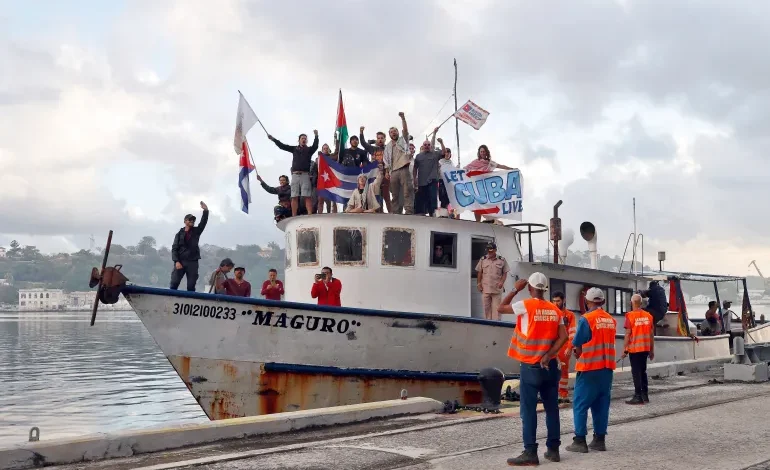

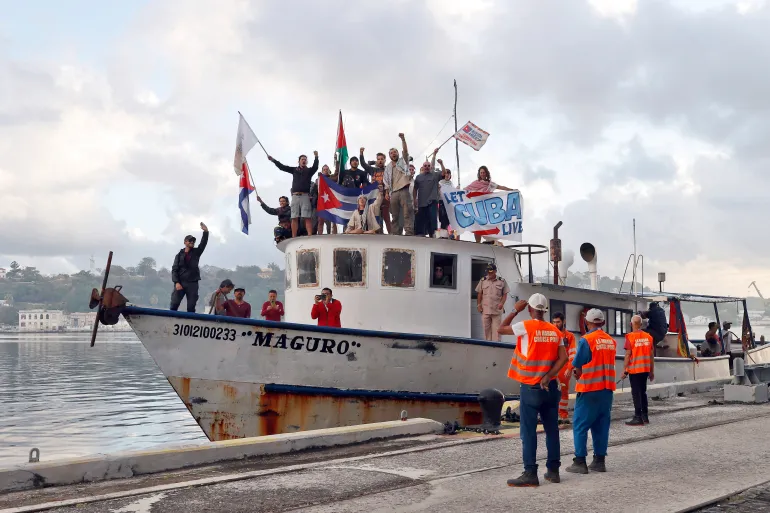
A small humanitarian flotilla has arrived in Cuba, offering limited relief as the island faces mounting pressure from a tightening US energy blockade.
The first boat, carrying around 30 people along with food, medicine, solar panels and bicycles, docked in Havana on Tuesday. It is part of the “Nuestra America” convoy that departed from Mexico last week, with two more vessels still on their way.
The scale of the shipment is modest, and even organisers acknowledge that.
“These ships are a drop in an ocean of need,” activist Thiago Avila said. “At the same time, it’s a gesture of solidarity.”
“This type of economic warfare shouldn’t exist, this attitude of a pirate state that doesn’t respect international law,” he added.
The convoy arrives at a moment when Cuba’s energy situation has become particularly acute. Officials say the country has effectively been cut off from petroleum imports for the past three months, worsening an already fragile economy and contributing to repeated nationwide blackouts.
Deputy Minister of Energy and Mines Argelio Abad Vigo said last week that Cuba, which produces only about 40 percent of its fuel needs domestically, has been unable to access key supplies including diesel, fuel oil, petrol, jet fuel and liquefied petroleum gas.
The current pressure builds on a decades-old US embargo, but the recent tightening around energy has hit a critical vulnerability. Fuel shortages ripple quickly through the system, affecting electricity generation, transport and basic services.
The flotilla itself carries symbolic weight as well as practical aid. The lead vessel has been named “Granma 2.0”, a reference to the historic boat that brought Fidel Castro and his fighters to Cuba in 1956. This time, the framing is humanitarian rather than revolutionary, but the messaging is clear.
More than 650 participants from 33 countries had already arrived in Cuba over the weekend as part of the broader initiative, where they were received by President Miguel Díaz-Canel.
Meanwhile, tensions between Washington and Havana remain high. US President Donald Trump and his allies have continued to signal support for political change in Cuba, alongside policies aimed at increasing economic pressure. Trump has said he could “take” Cuba and install a government aligned with US interests.
Inside the United States, public opinion appears divided. A February YouGov poll found that 46 percent disapprove of the energy blockade, while 28 percent support it. A slightly larger share — 29 percent — said US policy towards Cuba is too harsh, compared with 26 percent who see it as appropriate.

The latest news in your social feeds
Subscribe to our social media platforms to stay tuned