
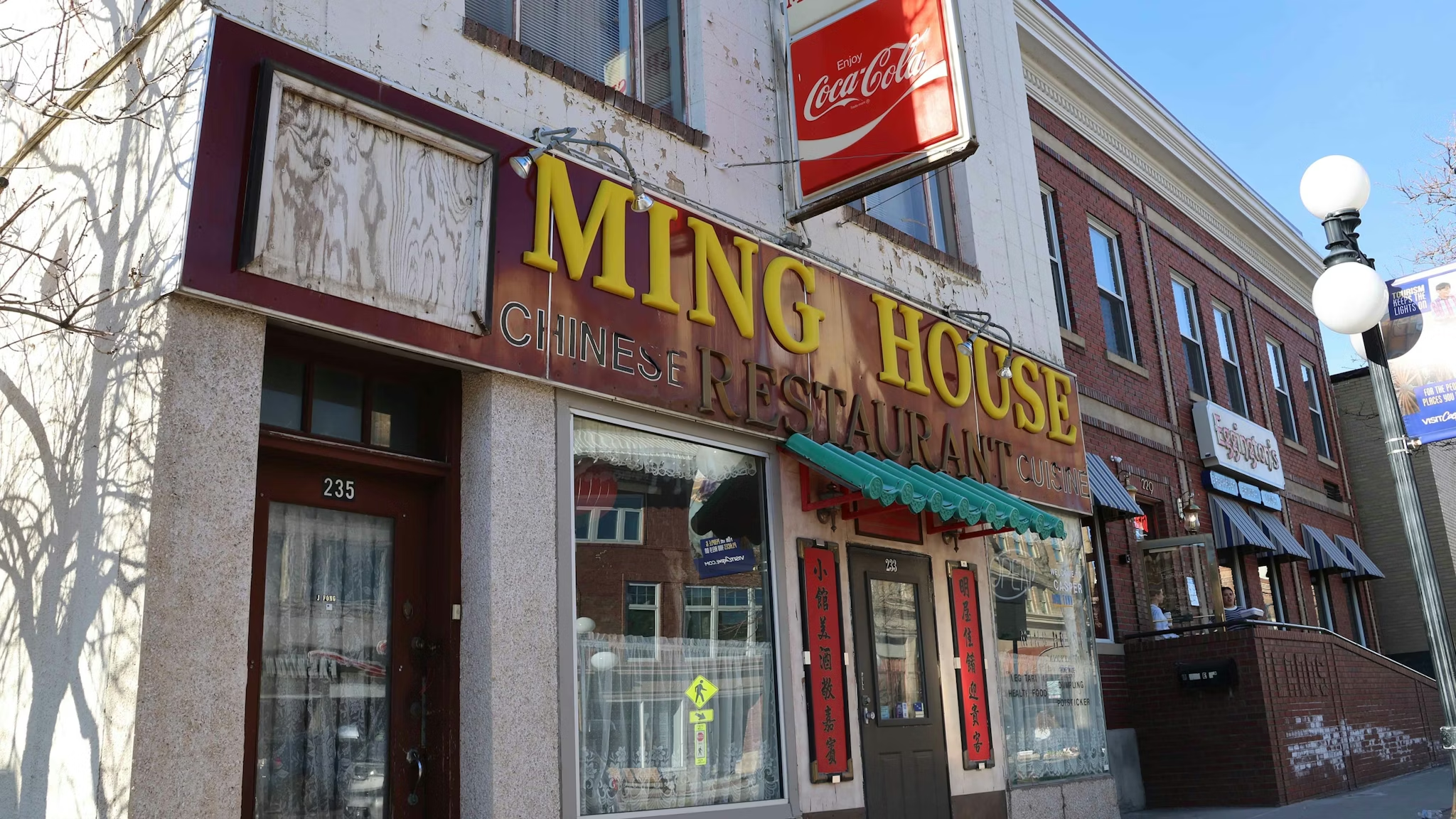


The Casper City Council on Tuesday gave a study that designated all seven areas of the city with “blight” a thumbs up as a first step toward renovating rundown areas, generating potential revenue and sparking urban renewal. The study highlighted downtown, North Casper, the CY Avenue corridor, Eastridge Mall, the Paradise Valley corridor, events center area and Platte River commons as areas for potential renewal.
“Urban renewal areas open up opportunities for increased sales tax, property tax, building permit revenue and allow us to look at different revenue streams such as industrial revenue bonds and perhaps again, federal grants,” said Casper Community Development Director Liz Becher. Consultant Mark Christensen of AVI told the council that statutes associated with the state’s Urban Renewal Code give municipalities power to declare areas as “blighted” and then allow tools such as tax increment financing to reinvest in those areas.
Christensen’s investigation found “blight” in all seven areas using 13 characteristics taken from state statute. He noted that while his study documented blight in these areas, those designations did not mean that urban renewal had to be limited to those locations. “These areas are illustrative examples demonstrating that statutory conditions of blight exist with the City of Casper,” he wrote. “Under Wyoming law, the identification of one or more blighted areas is sufficient to authorize the city to exercise urban renewal powers.”
If the council passes a resolution declaring that “blight” exists in the city, it can then create a five-member “urban renewal agency” which can develop renewal plans and projects. Christensen said a blight designation does not attach to individual properties and does not reduce property values. “Potentially, if a property is within an urban renewal area, to the development community, it might signify that this is a big opportunity,” he said.
Council members gave a “thumbs up” to send the study to the city’s planning commission for review. Planners will review it and then provide a written recommendation. If the council then adopts the study, it could move to create the urban renewal agency. Council member Amber Pollock noted that having to do the blight study before accessing tax increment financing seems like “odd little bit of red tape.” “I understand that we have to do it to make available this tool,” she said.



The latest news in your social feeds
Subscribe to our social media platforms to stay tuned