


Oil Prices Are All Over the Place – Blame the War No One Can Predict

NPR and the Independent contributed to this report.
Oil traders are flying blind right now.
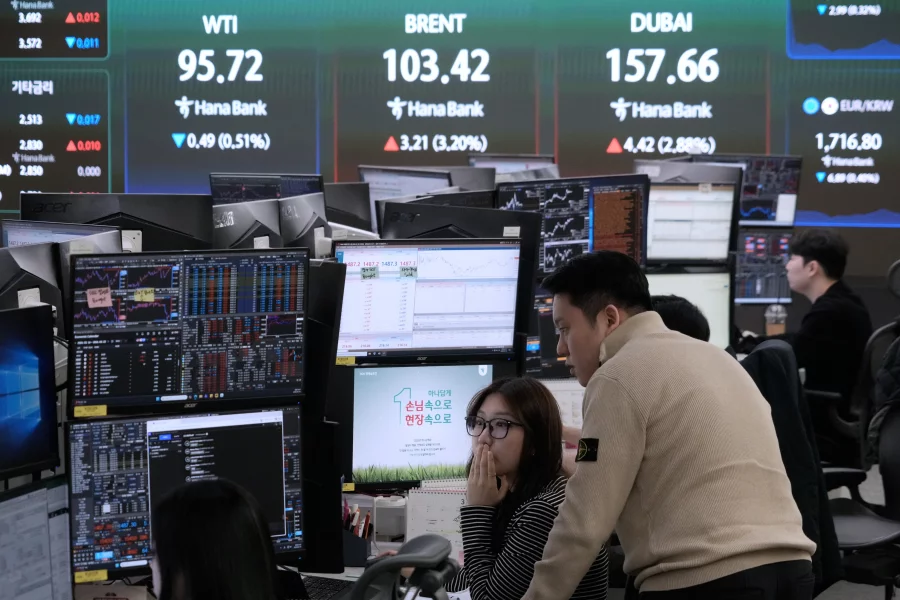
Prices have been swinging wildly – sometimes by as much as $35 in a single day – while hovering around $110 a barrel. That’s high. But not as high as you’d expect, given what’s happening in one of the most critical chokepoints on the planet.
The Strait of Hormuz – a narrow waterway that carries roughly a fifth of the world’s oil – has been effectively shut down for weeks. Tankers aren’t moving like they should. Some have been attacked. Others are staying away altogether.
Under normal circumstances, that kind of disruption would send oil prices surging and keep them there. Instead, the market has turned into a roller coaster.
The reason comes down to one thing: nobody knows how this ends.
Right now, traders are stuck between two completely different futures. In one version, the war drags on, the strait stays blocked, and global supply takes a massive, prolonged hit. That’s the nightmare scenario – something that could rival or even surpass the oil shocks of the 1970s.
In the other version, the conflict wraps up quickly. Shipping resumes. Oil flows again. Prices fall back to earth.
Both outcomes still feel possible. And that’s what’s freezing the market in this strange in-between state.
Some analysts compare it to a kind of economic “Schrödinger’s cat.” The crisis is either catastrophic or manageable – but until there’s clarity, markets are behaving as if it’s both at once.
There are reasons traders haven’t fully panicked. Recent history has trained them to be cautious about overreacting. Attacks on oil infrastructure, regional flare-ups, even major wars haven’t always disrupted supply as badly as first feared. Betting on runaway prices too early has burned people before.
So every time oil starts to spike, something pulls it back. A hint of negotiations. A political statement. A social media post suggesting talks are going well. Prices jump, then drop, then jump again.
Meanwhile, the real-world situation tells a harsher story.
Fuel prices in parts of the Middle East are surging. Jet fuel has doubled in some places. Countries like Pakistan and Bangladesh are rationing energy and even shutting schools to cope. On the ground, the strain is already obvious.
That disconnect – between physical shortages and financial markets – is starting to close. Prices climbed another $10 this week and, notably, stayed there despite optimistic signals about diplomacy.
Some analysts see that as a shift. The hope for a quick resolution is fading.
There’s also a feedback loop at play. Markets react to political signals – but political leaders also react to markets. Rising oil prices can create pressure to de-escalate. Stable prices can buy time.
That dynamic matters, especially with decisions coming out of Washington. Comments from Donald Trump have repeatedly moved oil markets in real time. At the same time, he’s shown a tendency to adjust course when markets start flashing warning signs.
Here’s the twist: if prices don’t spike hard enough, that pressure never fully builds.
Some analysts think the market may actually be delaying the kind of price shock that would force a clearer decision – either ending the conflict or escalating it decisively. Instead, everything drags on in this uncertain middle ground.
That delay comes with risks.
High prices usually act as a correction mechanism. They push consumers to use less fuel and encourage producers to pump more. Over time, that helps rebalance supply and demand.
But if prices stay artificially contained while supply is quietly constrained, the adjustment gets postponed. And if the worst-case scenario does arrive – a long war, sustained shortages – the eventual spike could be sharper and more painful.
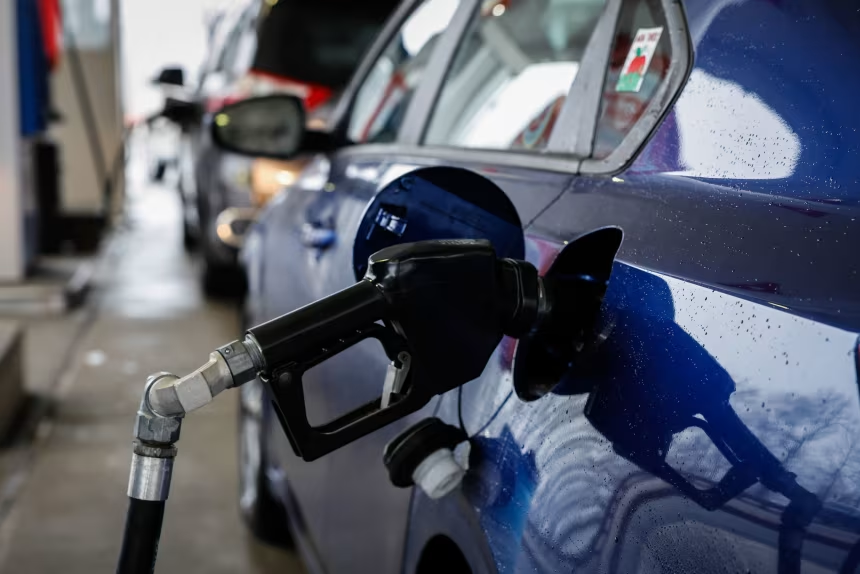
For now, consumers haven’t fully felt it. Gas prices have risen, but not dramatically enough to change behavior on a large scale. People are still driving. Demand is holding steady.
That could change quickly.
The current supply disruption is estimated at around 10 million barrels a day – roughly the same scale as the demand collapse during the height of the COVID-19 lockdowns. Back then, travel didn’t just slow – it stopped.
So the question hanging over everything is simple, and a little unsettling: how high would prices have to go before people cut back that much again?
If the war ends soon, the market resets and this becomes a short-lived shock.
If it doesn’t, the calm – such as it is – won’t last.


The latest news in your social feeds
Subscribe to our social media platforms to stay tuned