


CNBC, AP, Market Watch, Bloomberg, and the Wall Street Journal contributed to this report.
The mood on Wall Street has turned brittle. By late Friday morning, stocks were slipping again – nothing dramatic on its own, but enough to underline a deeper problem. This wasn’t just another bad day. It was shaping up to cap a fifth straight losing week, something the market hasn’t endured in nearly four years.
The S&P 500 dropped about 0.7%, adding to the damage from Thursday’s selloff – its worst since the war with Iran began. The Dow Jones Industrial Average fell roughly 319 points, while the Nasdaq Composite slid 1.1%. Losses were broad, steady, and hard to shake.
All week, traders had been riding a strange rhythm. Up one day. Down the next. Hopes for diplomacy would surface, markets would bounce, then reality would intrude again. Friday broke that pattern. There was no rebound – just a quiet drift lower.
The trigger, at least initially, seemed like it could have been positive. Late Thursday, after markets closed, Donald Trump extended his deadline for escalating strikes on Iran’s energy infrastructure. Instead of immediate action, he pushed it to April 6, tying it to demands that Tehran allow oil tankers safe passage through the Strait of Hormuz.
For a brief moment, it worked. Oil prices dipped. Futures steadied. The idea – however thin – was that maybe the worst could be avoided.
That optimism didn’t last the night.
By the time trading rolled from Asia into Europe and then opened in New York, oil was climbing again. Fighting hadn’t slowed. Iran wasn’t signaling concessions. Israel was talking about expanding operations. The gap between political messaging and battlefield reality widened – and markets noticed.
“The diplomatic dissonance this week between the US and Iran dismayed investors,” said Doug Beath of Wells Fargo Investment Institute. “By the end of the week, risk appetite could not withstand the fog of war.”
Investors are getting used to this pattern. Statements from Washington move markets briefly, but only in one direction: less and less each time. Jim Bianco, president of Bianco Research, put it bluntly: talk from the White House is fading into background noise. Traders are waiting for signals from Tehran instead.
Oil is where the tension shows up most clearly. Brent crude climbed back above $103 a barrel. US crude pushed toward $98. Before the war, prices hovered closer to $70. That gap isn’t just a number – it’s a warning.
The fear is no longer about short-term spikes. It’s about disruption that drags on. The Persian Gulf isn’t just another supply route; it’s a critical artery for global energy. If tankers can’t move freely through the Strait of Hormuz, the ripple effects hit fast and hit everywhere.
Gasoline prices rise first. Then shipping costs. Then everything else.
Businesses that rely on transport – basically all of them – start adjusting prices. Airlines feel it. Manufacturers feel it. Utilities feel it. Inflation doesn’t creep up in that environment; it jumps.
Some forecasts are already edging into worst-case territory. Strategists at Macquarie say oil could hit $200 a barrel if the war stretches into summer. That would break past the 2008 record, when crude topped out just above $147 during a mix of geopolitical tension and surging demand.
Back then, it was a shock. This time, markets are watching it build in slow motion.
Consumers are starting to react. A new survey from the University of Michigan shows sentiment slipping more than expected in March. Inflation expectations jumped too – up to 3.8% for the year ahead, the biggest one-month increase in nearly a year. People are bracing for higher costs before they even fully arrive.
That shift matters. Consumer spending drives most of the US economy. When confidence weakens, the effects spread quickly – fewer purchases, delayed plans, tighter budgets.
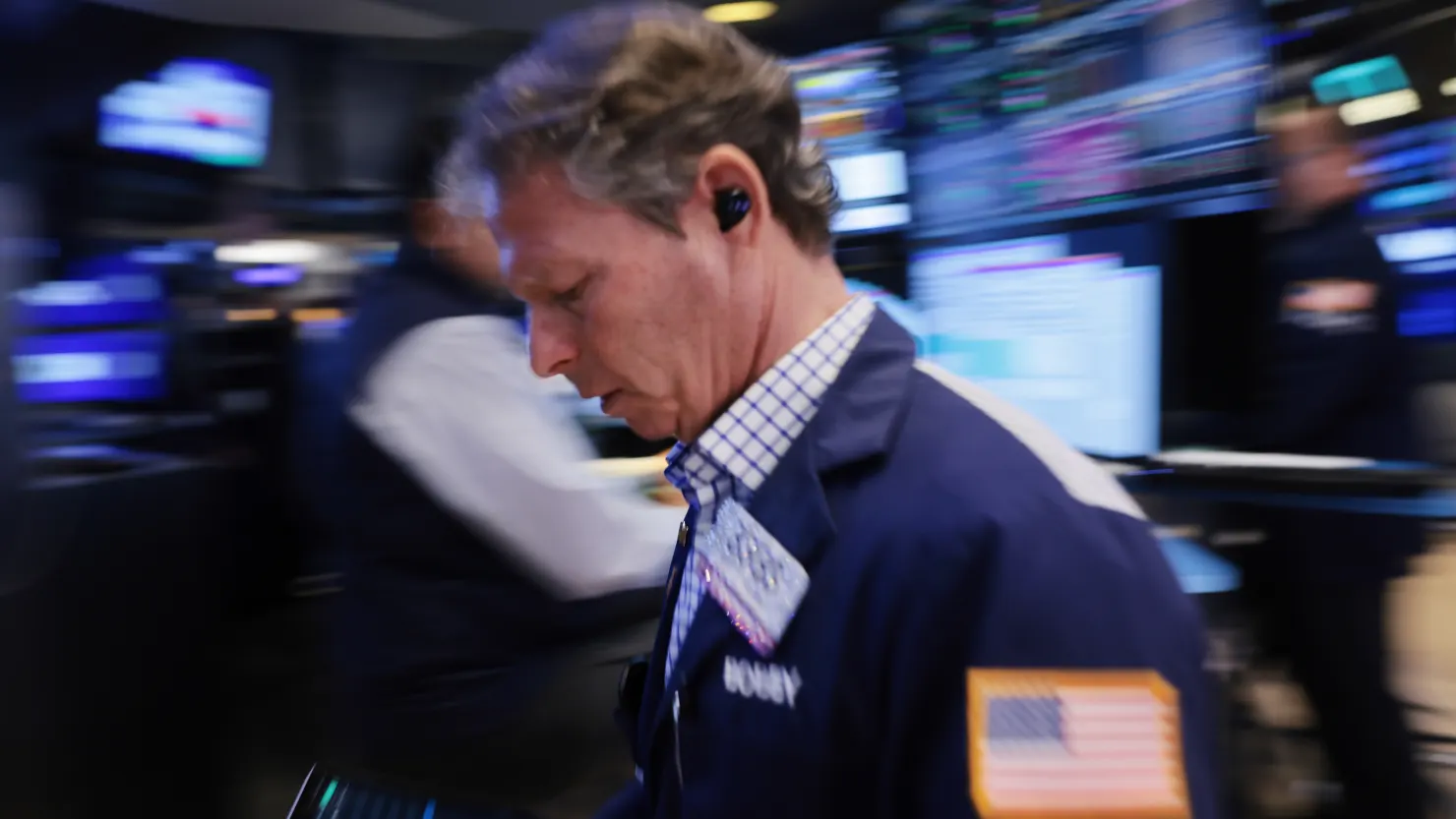
On the trading floor, the pressure showed up across sectors. Roughly three out of five stocks in the S&P 500 were down. The index itself now sits nearly 8% below its record high from earlier this year, edging closer to correction territory.
Big Tech, which often carries the market, didn’t offer much support. Amazon fell more than 3%, and Meta Platforms dropped even further. These are the kinds of names that usually cushion declines. Instead, they amplified them.
Companies tied to discretionary spending – travel, retail, lifestyle – took sharper hits. Norwegian Cruise Line Holdings lost over 4%. Airbnb slid nearly 5%. Lululemon Athletica dropped around 3.5%. When fuel costs rise, consumers rethink vacations and nonessential purchases. Markets are already pricing that in.
There were a few exceptions. Netflix edged higher after announcing price increases in the US, showing that some companies still have room to push costs onto customers – at least for now.
Elsewhere, markets were mixed. European and Asian indexes didn’t move in lockstep, reflecting different exposures and expectations. But the underlying tension was the same.
The bond market added another layer of complexity. Yields on the 10-year US Treasury briefly climbed as high as 4.48% before settling near 4.41%. That’s still well above pre-war levels, when yields sat below 4%.
Higher yields translate directly into higher borrowing costs. Mortgages get more expensive. Business loans tighten. Economic activity slows – not all at once, but steadily.
There’s a political angle here too. Trump has pointed to bond market volatility in the past as a reason to step back from aggressive economic moves. It happened during earlier tariff threats. Critics coined a nickname for the pattern – “TACO,” short for “Trump Always Chickens Out” – arguing that financial market stress often forces a pivot.
This time, the pressure is coming from multiple directions at once: oil, equities, bonds, and geopolitics all feeding into each other.
And the usual escape hatch – hope for a quick diplomatic resolution – is losing credibility.
Markets aren’t reacting to headlines anymore. They’re reacting to what’s actually happening on the ground.


The latest news in your social feeds
Subscribe to our social media platforms to stay tuned