

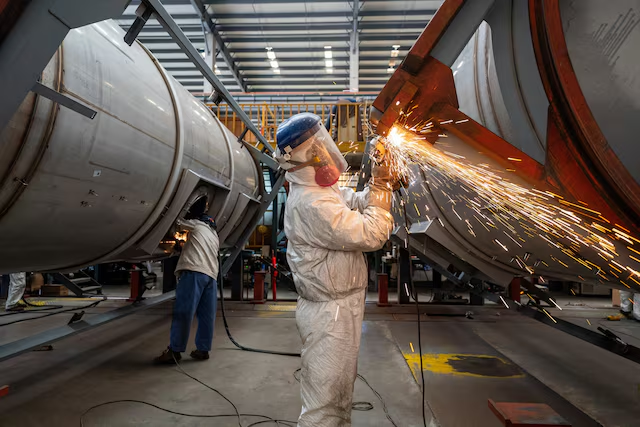




The original story by Reuters.
China’s factory sector might finally be edging back into growth. Just barely.
A Reuters poll of economists points to the country’s official manufacturing PMI ticking up to 50.1 in March, from 49.0 the month before. It’s a small move, but an important one – the 50 mark is the line between expansion and contraction.
Cross it, and technically, factories are growing again.
That said, no one’s calling it a strong rebound.
Manufacturing has been stuck in a slump for much of the past year, dragged down by weak demand at home and fierce price competition that’s eaten into profits. At the same time, tensions with major trading partners have kept confidence shaky.
Exports have been the bright spot. Shipments held up through 2025 despite tariffs and picked up pace early this year, giving the economy a bit of momentum when it needed it most.
But now there’s a new problem on the horizon.
The war in the Middle East is starting to ripple through global supply chains, and China won’t be immune. Disruptions around the Strait of Hormuz – a key route for oil and gas – are pushing up energy and transport costs.
For manufacturers, that hits straight at the bottom line.
Industries like refining and petrochemicals are expected to feel it first, but the pressure won’t stay contained. Higher logistics costs and pricier raw materials tend to spread quickly across the sector.
There are early signs the recovery could lose steam because of it. A separate, private-sector gauge is forecast to dip slightly in March, suggesting momentum isn’t exactly building.
Policymakers are watching closely.
Beijing has already set a more modest growth target for the year – around 4.5% to 5% – giving itself room to manage deeper issues in the economy, particularly the imbalance between supply and demand.
Support measures are in the works. More infrastructure spending, incentives to boost consumption, and targeted help for businesses – especially smaller ones – are all part of the plan. There’s also talk of easing costs through cheaper credit and lighter regulatory pressure.
For now, the expected return to expansion is a step in the right direction.
But it’s a cautious one. The recovery is thin, the headwinds are building, and the margin for error isn’t very wide.



The latest news in your social feeds
Subscribe to our social media platforms to stay tuned