
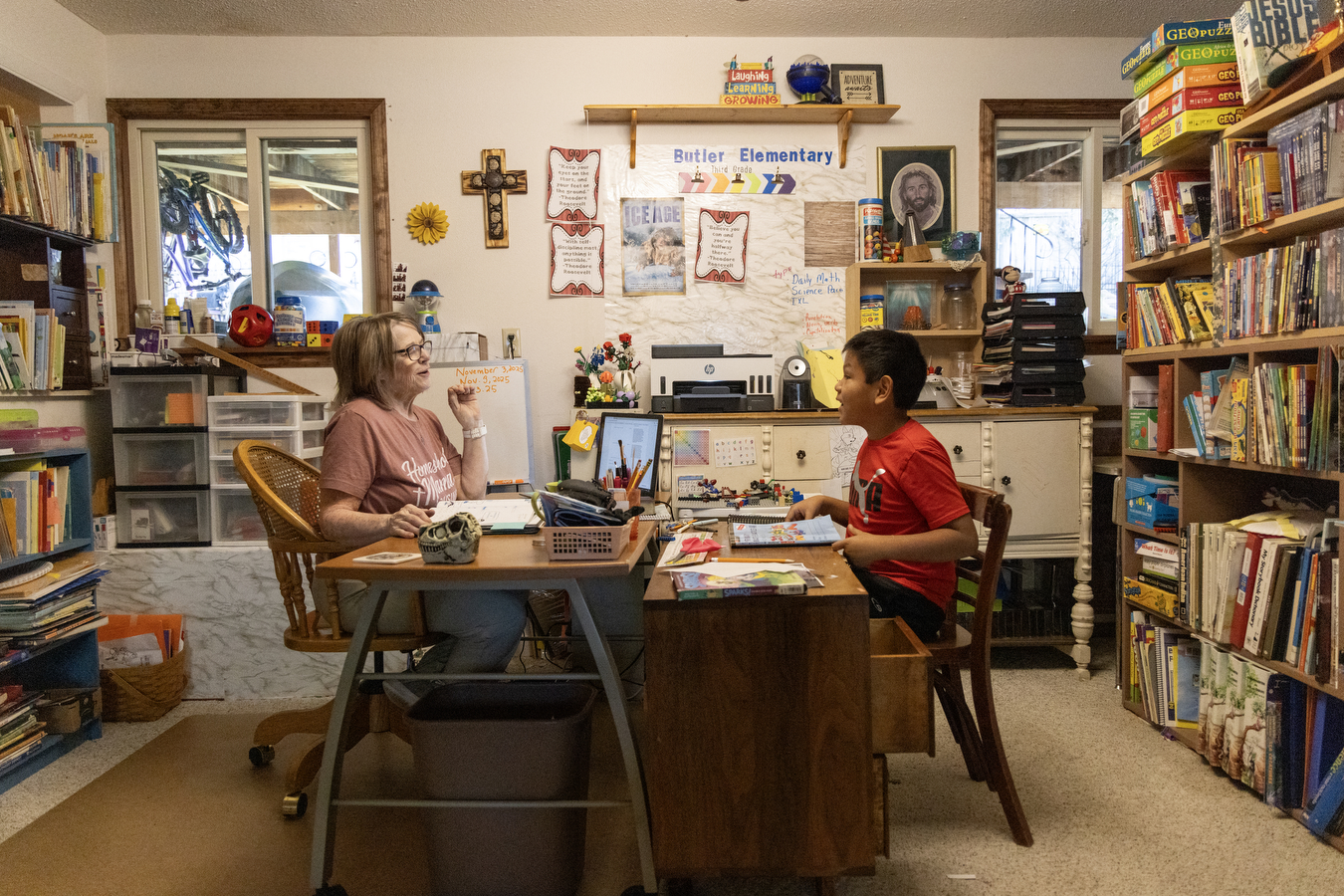
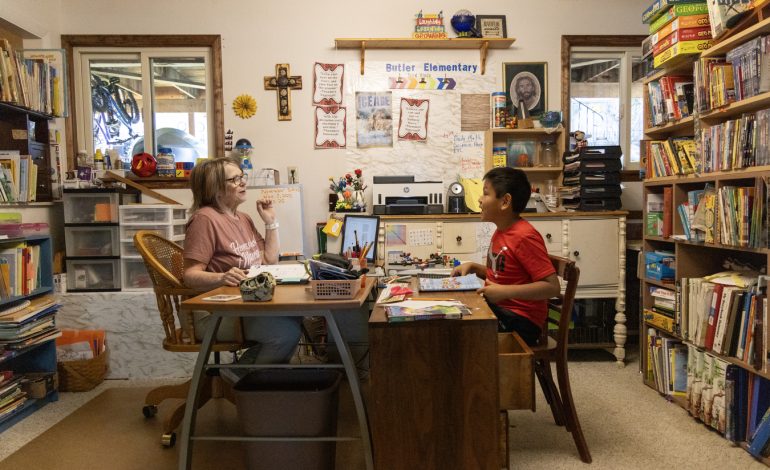

CASPER — It’s the Friday before Thanksgiving, and Bree Uresk is trying to wrangle her students to sit quietly. She knows the last day before a holiday break is particularly hard for 6- and 7-year-olds to be still. “You guys are being extra silly today,” she tells her eight students. It’s a typical school scene, but with fewer kids than your average public school classroom.
Powder River Prep, where Uresk teaches, serves only 10 families. Tiffany Gamble, along with her friend and fellow mom Kayleigh Clark, started the microschool after a search for a satisfactory kindergarten program for her child led to dead ends. Touring established schools in Casper, Gamble was troubled when teachers told her they didn’t take their kindergarten classes out in the community because there’s “nothing to do in Casper.” “There’s plenty to do in Casper,” she said. “But I have no idea how you would take [a class of] 24 kindergarteners to do it.”
So Gamble and Clark set out to start their own school, and Powder River Prep emerged in August. The microschool combines parent involvement with class time led by licensed teachers. It’s one of a growing number of alternatives to traditional public education in Wyoming. A new addition to the state’s education funding plans might grow that number: the Steamboat Legacy Scholarship Program, created last year, would offer $7,000 to Wyoming families for K-12 non-traditional schooling costs.
More than 4,000 families have signed up for the program, but a June lawsuit by the Wyoming Education Association blocked the state from giving out the funds. The outcome will have big implications for nontraditional schooling in Wyoming. It could slow the momentum of the alternative education movement, or allow Wyoming’s schooling experiment to welcome many more students at a time when traditional public schools are experiencing declining enrollment.



The latest news in your social feeds
Subscribe to our social media platforms to stay tuned