



Oil Spikes, Stocks Slip as Iran War Hits One-Month Mark

NBC News, the Guardian, CNN, Reuters, BBC, the Financial Times, the Wall Street Journal, Bloomberg, and Business Insider contributed to this report.
Markets opened the week on edge.
Oil jumped. Stocks slid. And the longer the war drags on, the harder it’s getting for investors to stay calm.
Ahead of Monday’s US market open, futures for the major indexes were already in the red, slipping as much as 0.5%. At the same time, crude prices surged again. Global benchmark oil pushed past $116 a barrel – its highest level since the conflict began – while US crude climbed above $100.
The latest jolt came after a tense weekend. Iran-backed Houthi fighters fired ballistic missiles at Israel, and another 3,500 US troops arrived in the region. One month in, the war isn’t cooling off – it’s widening.
That’s starting to show up clearly in the markets.
Investors had been hoping for signs that Washington could steady things. Instead, confidence is getting shaky. Even as Donald Trump insists a deal with Iran is within reach, traders aren’t fully buying it.
Speaking aboard Air Force One, Trump said he’s “pretty sure” an agreement will happen soon – before quickly adding that it might not. He also claimed progress on a US proposal to end the war and suggested oil shipments through the Strait of Hormuz could resume as early as Monday.
Markets didn’t exactly rally on the news.
There’s a growing gap between the rhetoric and what’s happening on the ground. Iran has warned it’s ready for further escalation. Regional threats are expanding. And key shipping routes remain under pressure.
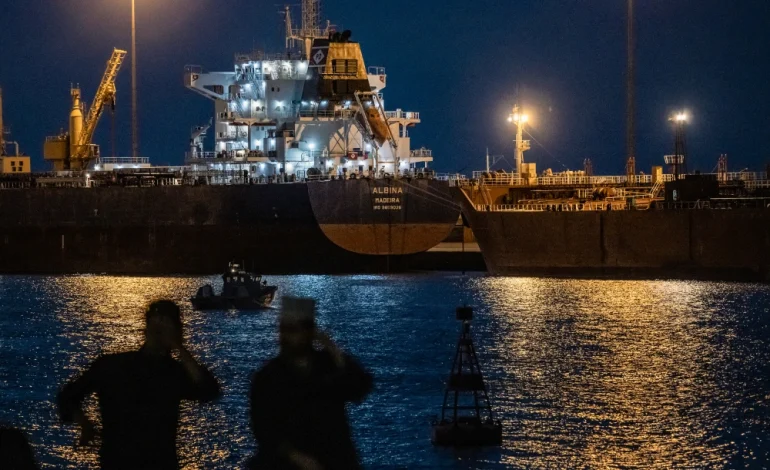
That’s a problem, because the Strait of Hormuz isn’t just another waterway – it handles about 20% of the world’s oil supply. Even partial disruption there can ripple through the entire global economy.
Prices at the pump are already reflecting that tension. In the US, gasoline is averaging $3.98 a gallon, the highest level since 2022. Analysts estimate drivers have already spent billions more on fuel in just the past few weeks.
And there’s talk it could get much worse.
Some forecasts now suggest oil could spike to $200 a barrel if the conflict escalates further – a level that would likely hit growth hard and push economies toward recession territory.
The pressure isn’t limited to energy markets. Stocks have been wobbling globally, with major indexes in Asia dropping sharply to start the week. Investors are trying to price in a scenario where high energy costs squeeze consumers, slow businesses, and drag down demand.
There’s also a lag effect at play. Oil shocks don’t hit all at once. Fuel already shipped before the conflict is still working its way through the system, meaning the full impact hasn’t landed yet.
In other words, what people are paying now may not be the peak.
Even if the war ended tomorrow, prices wouldn’t instantly snap back. Infrastructure damage, shipping delays, and supply chain bottlenecks would take time to unwind. Key energy facilities in the region have already been hit, adding another layer of uncertainty.
Meanwhile, the conflict keeps expanding in unpredictable ways. Houthi attacks have raised fears about another critical chokepoint near Yemen, which could further choke off global supply if targeted.
All of this leaves markets stuck in a familiar place: reacting to headlines, second-guessing political signals, and bracing for what comes next.
For now, oil is climbing, stocks are slipping, and the one thing traders don’t have is clarity.



The latest news in your social feeds
Subscribe to our social media platforms to stay tuned