



Australia cuts fuel tax as global oil shock hits at the pump

Australia is moving to cushion the impact of rising global oil prices by cutting fuel taxes, as the effects of the US-Israel war on Iran begin to filter directly into domestic costs.
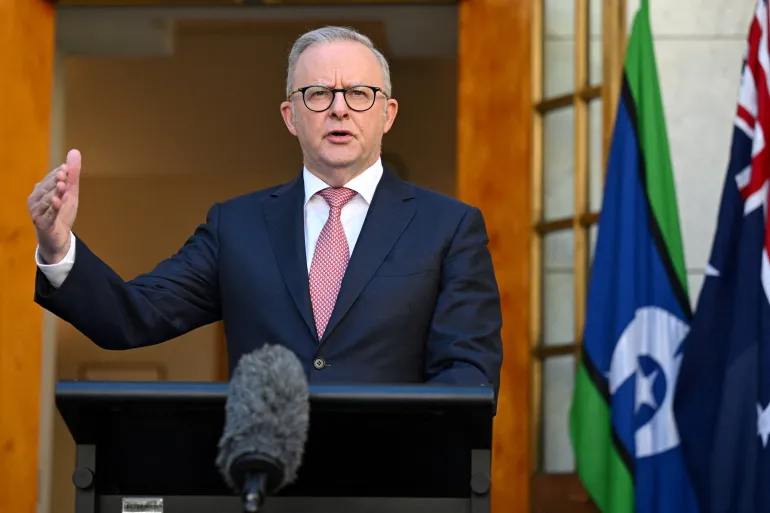
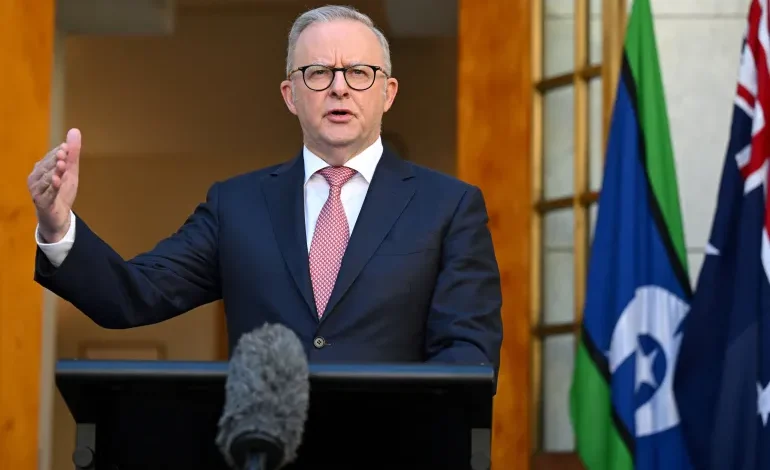
Prime Minister Anthony Albanese announced on Monday that the government will halve the fuel excise from April 1 to June 30, framing the decision as a response to mounting pressure on household budgets. The move comes as benchmark crude prices climbed above $116 a barrel, their highest level in nearly two weeks, amid escalating tensions linked to the conflict.
Speaking in Canberra, Albanese said the temporary cut would lower petrol prices by 26.3 Australian cents per litre, saving motorists about $19 on a standard 65-litre tank.
“We understand the cost pressures for people are very real as the impact of the war on the other side of the world plays out right here,” Albanese said.
“We’re acting now to be over-prepared.”
The government will also suspend charges on heavy vehicles for the same three-month period, a measure aimed at easing pressure on transport costs in an economy heavily reliant on road freight.
Despite being a major exporter of coal and natural gas, Australia depends on imports for roughly 80 percent of its refined fuel. That exposure has made it particularly sensitive to global price shocks.
The impact is already visible. In the week to March 25, petrol prices in the country’s five largest cities rose by 8 percent, while diesel increased by 10 percent, according to the national competition watchdog.
Still, there are questions about how much relief the tax cut will actually deliver. Peter Khoury, a spokesperson for the National Roads and Motorists’ Association, said the rise in global oil prices has outpaced any benefit from the policy.
“It’s not a tax that’s putting up the price, it’s oil prices,” Khoury said.
“The Australian economy runs on diesel,” he added. “Most of our foods and services are delivered by heavy vehicles, and they run on diesel.”
He pointed to a similar measure introduced after Russia’s full-scale invasion of Ukraine in 2022, which had limited effect on prices at the pump.
“I think they are desperate for change, but what we saw last time is [that] it just didn’t register at the bowser,” Khoury said.
So far, the government has stopped short of introducing stricter measures such as fuel rationing or mandated reductions in consumption, though officials have encouraged the public to avoid unnecessary fuel use.
Signs of strain are already emerging in the supply chain. Energy Minister Chris Bowen told parliament that more than 500 service stations had recently run out of at least one type of fuel, driven in part by panic buying.
At the same time, Bowen has sought to reassure the public that overall supply remains stable. Over the weekend, he said all expected deliveries were arriving on schedule, and that Australia holds about 39 days of petrol in emergency reserves, along with roughly 30 days each of diesel and jet fuel.


The latest news in your social feeds
Subscribe to our social media platforms to stay tuned