



The Iran War Shadow Reaches Yerevan

It didn’t take a missile strike to send a message. Classes were simply canceled.
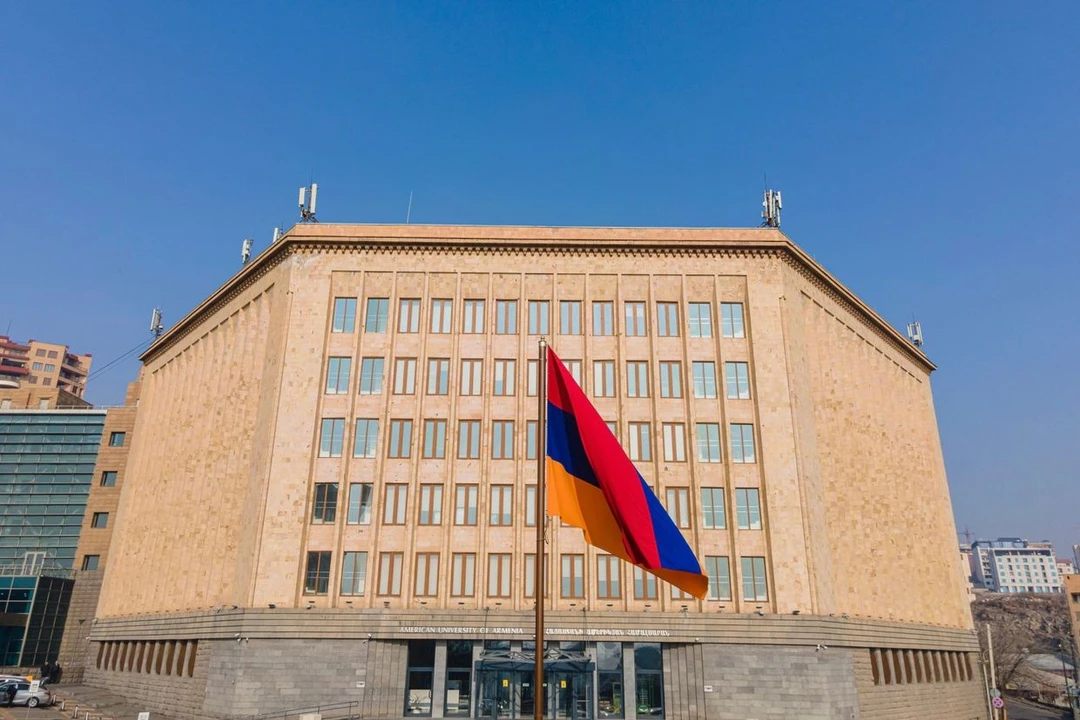
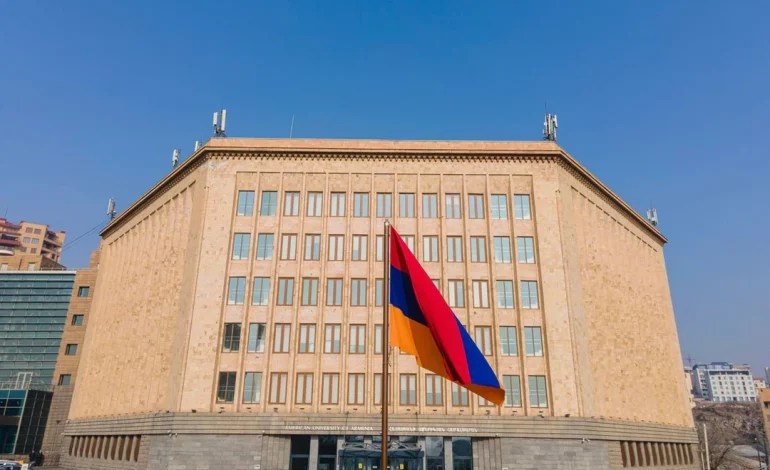
The American University of Armenia – located uncomfortably close to the residence of Nikol Pashinyan – shut down in-person teaching this week and moved everything online. The reason very was specific: threats tied to Iran’s warning that US-linked institutions across the region could become targets. A response to US/Israeli strikes on Iran’s education system.
That one decision says more about the regional security picture than any official statement. The war is no longer distant. It’s brushing up against Armenia’s borders – and, increasingly, its cities.
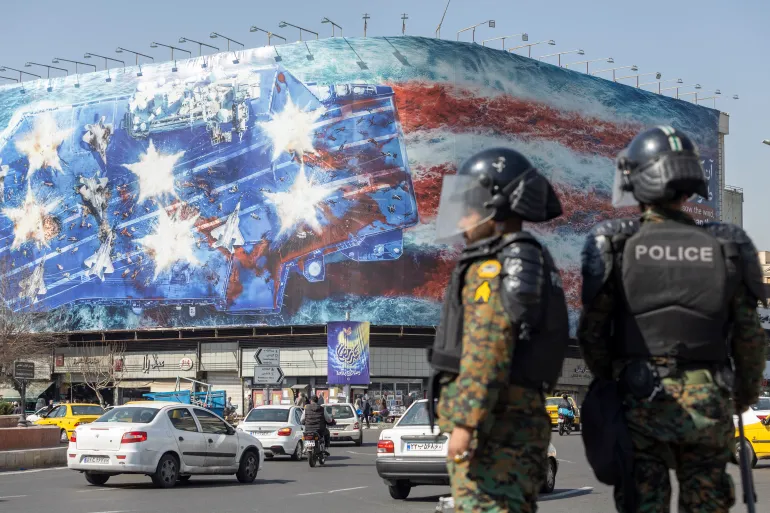
Iran has made its messaging clear. As tensions escalate with the United States and Israel, Tehran has signaled that American-affiliated infrastructure – including universities – could be considered legitimate targets.
That shifts the map.
Armenia, which hosts US-linked institutions but maintains working ties with Iran, suddenly finds itself in a dangerous overlap. The evacuation of the American University was a recognition that the country sits in a grey zone – close enough to be exposed, not strong enough to deter.
Students sent home. Lectures on Zoom. A quiet campus in central Yerevan. No explosions, but the signal lands anyway. Armenia’s vulnerability isn’t new.
The South Caucasus has always been a corridor – for trade, energy, influence. Now it’s also a pressure point in a widening conflict. As the war drags on, the region’s strategic weight is rising fast, drawing in global and regional powers alike.
That comes with risk. Iran’s access routes, US interests, and shifting alliances all intersect here. Armenia doesn’t control those dynamics.
When Tehran looks outward, it doesn’t just see distant adversaries. It sees nearby nodes – logistics, diplomacy, soft targets – scattered across neighboring states.
The government insists it is navigating a delicate path.
On one hand, Armenia has sent humanitarian aid to Iran and maintained diplomatic engagement, with officials publicly emphasizing cooperation. On the other, it has paused talks on a deeper strategic partnership with Tehran, signaling hesitation or recalibration.
However right now, there seems to be no clear doctrine, no visible effort to reduce exposure to potential strikes, no meaningful public plan to protect critical or symbolic infrastructure. The university evacuation happened quietly, as if it were a weather disruption rather than a security shock.
Yet there’s been no statements from PM Pashinyan. He seems to be preoccupied with his on reelection. He’s riding the ghost of the last lost war, completely ignoring the conflict at the border.
Meanwhile, the risks are stacking up. Universities aren’t military bases. But in modern conflicts, symbolism carries weight.
The American University of Armenia is exactly the kind of site that fits Iran’s warning: visible, Western-linked, and accessible. It doesn’t need to be strategic in a military sense to become relevant in a geopolitical one.
That’s the shift.
War is no longer confined to frontlines. It spills into networks – economic, educational, diplomatic. Soft targets become pressure points. And countries caught in between, like Armenia, struggle to shield them.
The idea that Armenia could stay insulated is fading.
Shipping routes are under strain. Energy corridors are disrupted. Regional actors are recalculating. Even without direct involvement, Armenia is being pulled into the orbit of the conflict – politically, economically, and now, potentially, militarily.
Analysts have already warned that the Iran war is reshaping the broader region, complicating everything from infrastructure projects to security alignments.
The university closure fits into that pattern. Small on its own. Larger in context.
What comes next?
Right now, the government’s response looks reactive. A threat appears, a facility shuts down, life adjusts. There’s no sign of a broader strategy to reduce Armenia’s exposure – whether through diplomacy, security measures, or clearer alignment.
And that’s the concern.
Because in this kind of conflict, ambiguity can be dangerous. Being seen as connected – even indirectly – to US infrastructure may be enough to draw attention. Being geographically close does the rest.
The war hasn’t reached Armenia in the traditional sense. There are no strikes, no troop movements. But the distance is shrinking. And for a country already navigating fragile security realities, that may be the real risk.


The latest news in your social feeds
Subscribe to our social media platforms to stay tuned