

Trump floats seizing Iranian oil hub as war tensions deepen
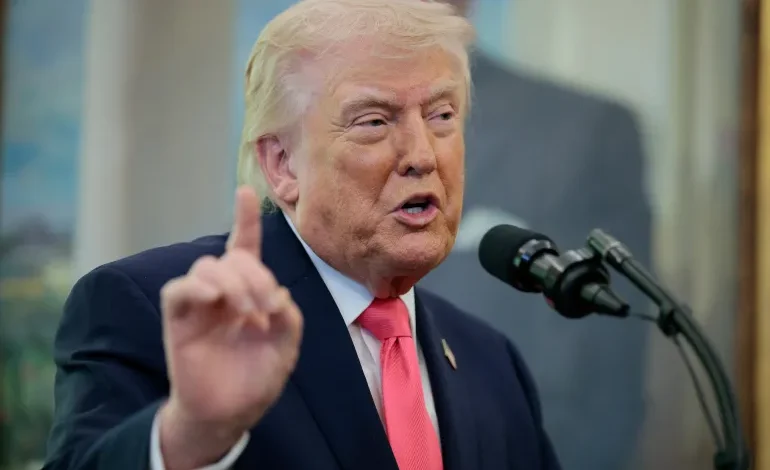


US President Donald Trump has openly raised the possibility of seizing Iran’s key oil export hub, Kharg Island, as the conflict between Washington, Israel and Tehran enters its fifth week and continues to reshape both military and economic calculations.
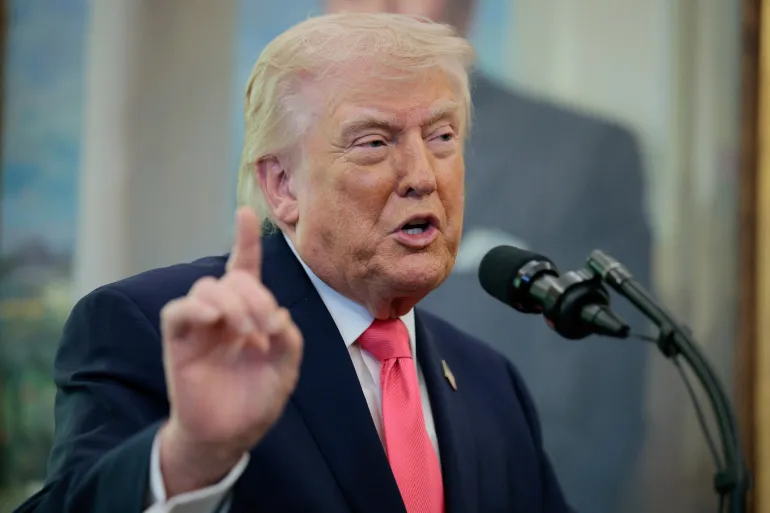
In an interview with the Financial Times published on Sunday, Trump said he favours taking control of Iranian oil assets, though he acknowledged opposition at home.
“To be honest with you, my favourite thing is to take the oil in Iran, but some stupid people back in the US say: ‘Why are you doing that?’ But they’re stupid people,” Trump said.
“Maybe we take Kharg Island, maybe we don’t. We have a lot of options,” he added. “It would also mean we had to be there [on Kharg Island] for a while.”
The remarks align with ongoing discussions inside the administration. US officials have told The Washington Post that potential plans under consideration include seizing Kharg Island — a central node in Iran’s oil export system — as well as conducting operations along the Strait of Hormuz.
Kharg Island functions as the core of Iran’s energy infrastructure. According to Iran’s Ministry of Petroleum, it receives crude from major offshore fields including Aboozar, Forouzan and Dorood, before routing it through subsea pipelines to processing and storage facilities for export.
Any attempt to capture or disrupt the site would therefore strike directly at Iran’s economic backbone.
At the same time, the US is expanding its military footprint in the region. US Central Command said that about 3,500 additional troops arrived aboard the USS Tripoli, including marines from the 31st Marine Expeditionary Unit, supported by aircraft and amphibious assets. Plans are also under way to deploy additional forces, including units from the 82nd Airborne Division.
Iran has responded with direct warnings. Parliament Speaker Mohammad Bagher Ghalibaf said earlier that any move to seize Kharg Island would trigger attacks on “vital infrastructure” in countries supporting the operation.
On Sunday, he escalated that message further.
“Our men are waiting for the arrival of the American soldiers on the ground to set them on fire and punish their regional allies once and for all,” Ghalibaf said, according to the IRNA news agency.
The military escalation is unfolding alongside diplomatic efforts to contain the conflict. Officials from Pakistan, Saudi Arabia, Egypt and Turkiye met in Islamabad in an attempt to lay the groundwork for de-escalation, as the war continues to ripple through global markets.
Oil prices have reacted sharply. Brent crude rose more than 3 percent on Monday to exceed $116 a barrel, reflecting concerns over supply disruptions tied to the fighting and threats to shipping routes.
Trump indicated that some limited movement through the Strait of Hormuz had resumed, saying Iran had allowed 20 oil tankers to pass “out of a sign of respect”.
When asked about the prospects for a ceasefire, he suggested a deal could be reached quickly, while also pointing to the scale of ongoing military operations.
“We’ve got about 3,000 targets left – we’ve bombed 13,000 targets – and another couple of thousand targets to go. A deal could be made fairly quickly,” Trump said.
“I would only say that we’re doing extremely well in that negotiation, but you never know with Iran because we negotiate with them and then we always have to blow them up,” he added.
At the same time, Trump repeated claims about Iran’s leadership, asserting that Mojtaba Khamenei, son of the country’s former supreme leader, had been seriously injured or killed.
“The son is either dead or in extremely bad shape,” Trump said. “We’ve not heard from him at all. He’s gone.”
Iranian authorities have rejected those claims, maintaining that the country’s leadership remains intact.
As the war continues, Tehran has outlined its own conditions for ending hostilities, including a halt to attacks, compensation for damages and guarantees against future conflict, as well as recognition of its control over the Strait of Hormuz.

The latest news in your social feeds
Subscribe to our social media platforms to stay tuned