
From Yellowstone’s Mushroom Pool to Modern Science: How a Hidden Hot Spring Changed the World

A seemingly unremarkable hot spring in Yellowstone National Park has quietly shaped some of the most influential scientific and cultural developments of the modern era—from COVID-19 testing to true crime media.
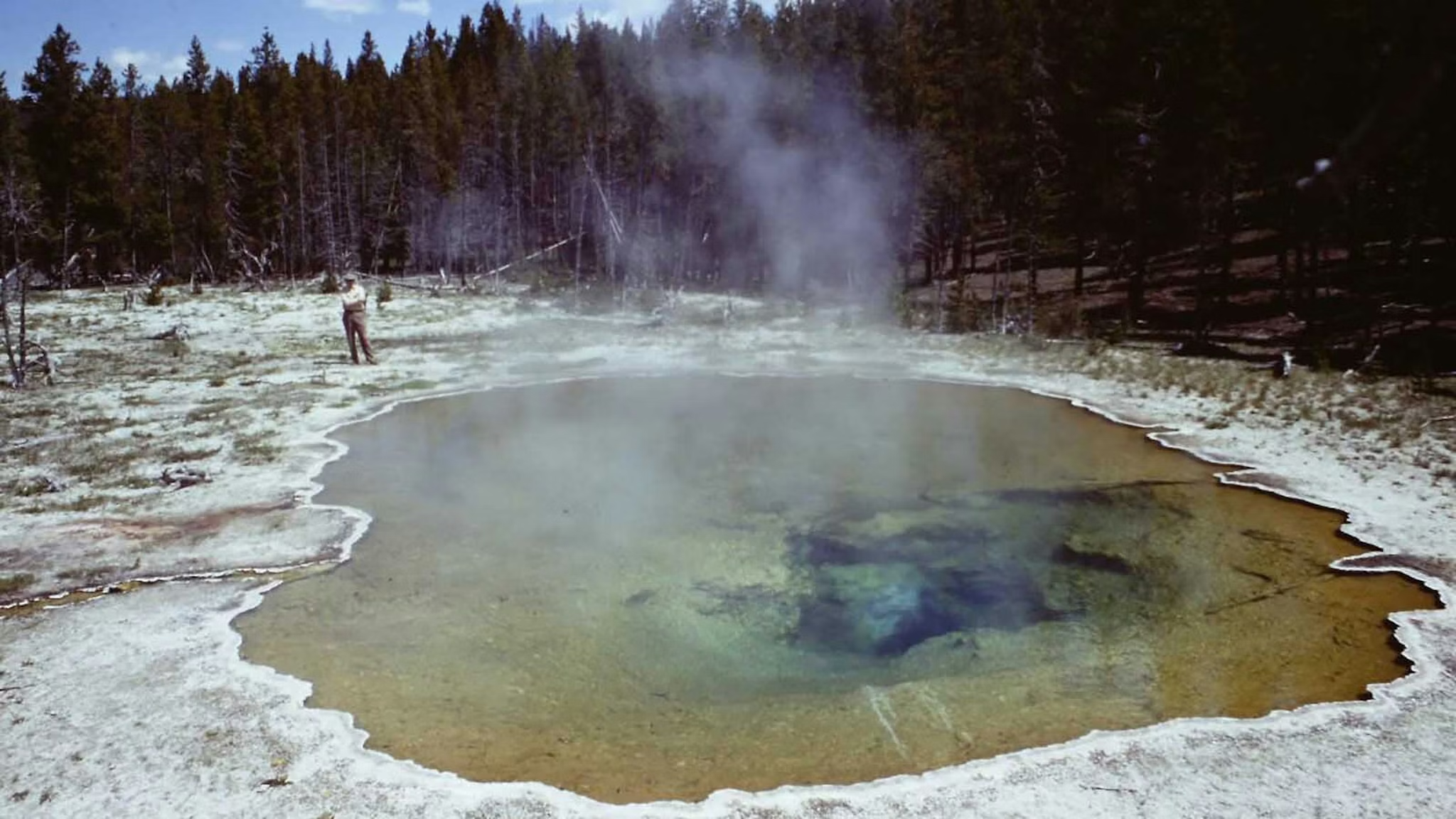
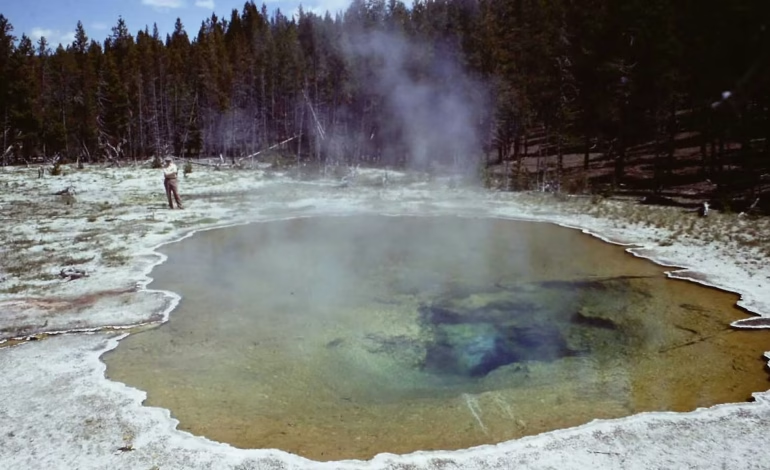
Known as Mushroom Pool, the thermal feature sits among thousands of geothermal sites in the park. At first glance, it appears ordinary. Yet in the 1960s, microbiologist Thomas Brock discovered a heat-resistant bacterium in its waters—Thermus aquaticus. That finding would later revolutionize molecular biology.
The bacterium’s unique enzyme, capable of withstanding extreme heat, became the foundation of polymerase chain reaction (PCR), a method that allows scientists to amplify tiny amounts of DNA. Developed in the 1980s, PCR quickly became indispensable across multiple fields. It enabled researchers to generate genetic material from even the smallest samples, transforming everything from medicine to criminal investigations.
In forensic science, PCR made it possible to identify suspects—or exonerate the innocent—using minimal biological evidence. Hair follicles, skin cells, or trace fluids could now yield reliable DNA profiles, reopening cold cases and reshaping justice systems worldwide.
Beyond the lab, the technology seeped into popular culture. The rise of DNA-based evidence fueled the boom in true crime storytelling, from podcasts to documentaries, where genetic breakthroughs often play a central role in solving decades-old mysteries. Even daytime television, including paternity-focused talk shows, owes part of its format to early DNA testing made possible by PCR.
More recently, PCR became a household term during the COVID-19 pandemic. A refined version of the technique, known as quantitative PCR (qPCR), allowed for rapid detection of the virus, forming the backbone of global testing efforts. Millions relied on these tests to confirm infections and curb the spread of the disease.
Despite its profound impact, the origins of this breakthrough remain relatively obscure to visitors. Mushroom Pool itself draws little attention, and the broader story highlights a missed opportunity: neither the park nor the U.S. government initially benefited financially from the discovery.
Still, the legacy of this quiet geothermal pool endures. What began as basic scientific curiosity in a remote corner of Yellowstone has evolved into a cornerstone of modern science—demonstrating how even the most unassuming natural features can change the world.



The latest news in your social feeds
Subscribe to our social media platforms to stay tuned